Color is King
70% of quality comes from hue, tone, and saturation. "Deep Siberian" is the aesthetic standard.
The definitive resource for enthusiasts and collectors. From commercial abundance to the "Deep Siberian" renaissance, master the grading matrix of 2026.
70% of quality comes from hue, tone, and saturation. "Deep Siberian" is the aesthetic standard.
Provenance and "untreated" status are the new rarity multipliers this year.
Top-tier specimens are increasingly difficult to find compared to commercial stock.
GIA reports are essential to rule out sophisticated hydrothermal synthetics.
Amethyst is not just "purple." Its rarity is derived from a complex hierarchy of Color (Hue, Tone, Saturation), Clarity, and Cut. Use the controls below to configure a virtual stone and see how it grades on the 2026 scale.
Goal: Strong reddish-purple. Avoid blue/grey.
Sweet spot: 75-80%. Avoid extinction (too dark).
Goal: Vivid to Strong. Brownish reduces purity.
Must be eye-clean. Inclusions are rarely accepted.
Minimizes windowing and extinction.
The rarest grade. Primary purple hue with secondary flashes of red/blue. Represents top 0.5% of supply.
Origin isn't just geography; it's a color signature. Click to explore the "Big Four" sources.
Status: Historically Depleted / Collector's Only
The holy grail. Deep purple with distinct red and blue flashes. 75-80% Tone.
Most "Siberian" sold today is actually top-tier African material. True Siberian stones are antiques.
Availability for heirloom-grade gemstones is non-linear. While commercial material remains abundant, the availability of "Deep Siberian" material is exceptionally low.
| Grade | Description | Relative Rarity |
|---|---|---|
| Commercial (C-B) | Pale, zoned, standard cuts | Abundant |
| Fine (A-AA) | Medium purple, eye-clean | Common |
| Extra Fine (AAA) | Deep rich purple, uniform | Scarce |
| Deep Siberian | Intense red-purple, rare | Very Rare |
* Note: A 20-carat Deep Siberian is exponentially rarer than a 5-carat stone.
Unlike diamonds, amethyst is available in large sizes. However, clean, top-color stones over 20 carats are exceptionally rare museum pieces.
~7mm
Ring Size
~12mm
Cocktail Ring
~16mm
Pendant Size
~20mm+
Museum/Collector
A definitive breakdown of the 4Cs, availability factors, and technical grading standards for Amethyst.
Tap sections below to expand full research.
Iron Centers, Radiation, and the GIA Scale
Amethyst is macrocrystalline quartz (SiO2) where the purple coloration is caused by specific impurities and natural irradiation. Specifically, trace amounts of Iron (Fe3+) replace Silicon in the crystal lattice. When exposed to natural gamma radiation from surrounding host rock (often granite), these iron ions lose an electron, creating a "color center" (Fe4+) that absorbs yellow-green light, transmitting the purple spectrum we see.
Quality Implication: The intensity of the color depends on the concentration of iron and the duration of radiation exposure. However, too much iron can lead to "over-dark" stones (blackout/extinction), which drastically reduces desirability.
Eye-Clean Expectations vs. Emeralds
According to GIA classification, Amethyst is a Type II Gemstone. This means it is typically found with few inclusions.
The "Eye-Clean" Mandate: Unlike Emeralds (Type III), where inclusions ("jardin") are accepted and even prized, Amethyst must be eye-clean to be considered heirloom grade. Visible inclusions in an amethyst drastically reduce its desirability because the material is abundant enough that clean stones are readily available.
Native Cuts vs. Precision Lapidary
Because Amethyst rough is relatively accessible, the effort of labor often determines the final aesthetic appeal. This creates a bifurcated market based on cutting quality.
Cut primarily to retain weight. Often features "bulging bellies" (excess depth) and "windowing" (a see-through area in the center where light leaks out). Commonly found in standard jewelry store pieces. Standard quality.
Cut for light performance. Lapidaries sacrifice significant weight to achieve perfect angles. Styles like "Concave Faceting" or "Munsteiner Cuts" are highly prized in 2026 because they intensify the saturation of lighter stones (like Rose de France) through internal reflection.
Collector's Note: A precision-cut stone is highly prized by collectors compared to a native-cut stone of the same rough material.
Heat, Irradiation, and Stability
Most amethyst on the market is untreated, as the natural color is stable. However, enhancements do exist and affect desirability.
Amethyst is heat-sensitive.
- 400-500°C: Can lighten overly dark stones to a more commercially desirable shade. This is undetectable and generally accepted.
- 500°C+: Turns Amethyst into Citrine (Yellow/Orange). Most commercial Citrine is actually heated Amethyst.
- Prasiolite: Specific deposits (Montezuma, Brazil) turn green when heated.
Less common than in Emeralds or Rubies, but occasionally used in large, heavily included cabochons. Oil or resin is used to hide surface-reaching fissures. Quality Impact: Significant reduction. Collectors usually avoid filled stones.
Amethyst color centers are stable under normal conditions but can fade with prolonged exposure to strong UV light (sunlight). This is called "solarization". High-quality geodes should never be displayed in direct window sunlight.
Supply Chain, Trends & Future Availability
Brazil: Remains the volume leader, producing tons of commercial-grade rough annually. Availability of Brazilian material remains high.
Zambia: Production issues and political changes in 2025 have constrained supply of high-grade Zambian rough, making it harder to source.
Uruguay: Demand for high-quality geodes for interior decor (China and Middle East markets) has skyrocketed, affecting the availability of cut Uruguayan stones.
Commercial Grade: Mass-market amethyst is mainly for decorative use. It is a fashion item.
Top-Tier "Deep Siberian": As collectors seek high-saturation gems, the very best Amethyst (top 0.1%) is seeing renewed interest for its beauty.
Antique/Provenanced: Victorian or Art Deco jewelry featuring original Russian Siberian amethyst is highly prized for its historical significance.
Evaluating a stone in person? Use this interactive protocol to spot flaws before you acquire.
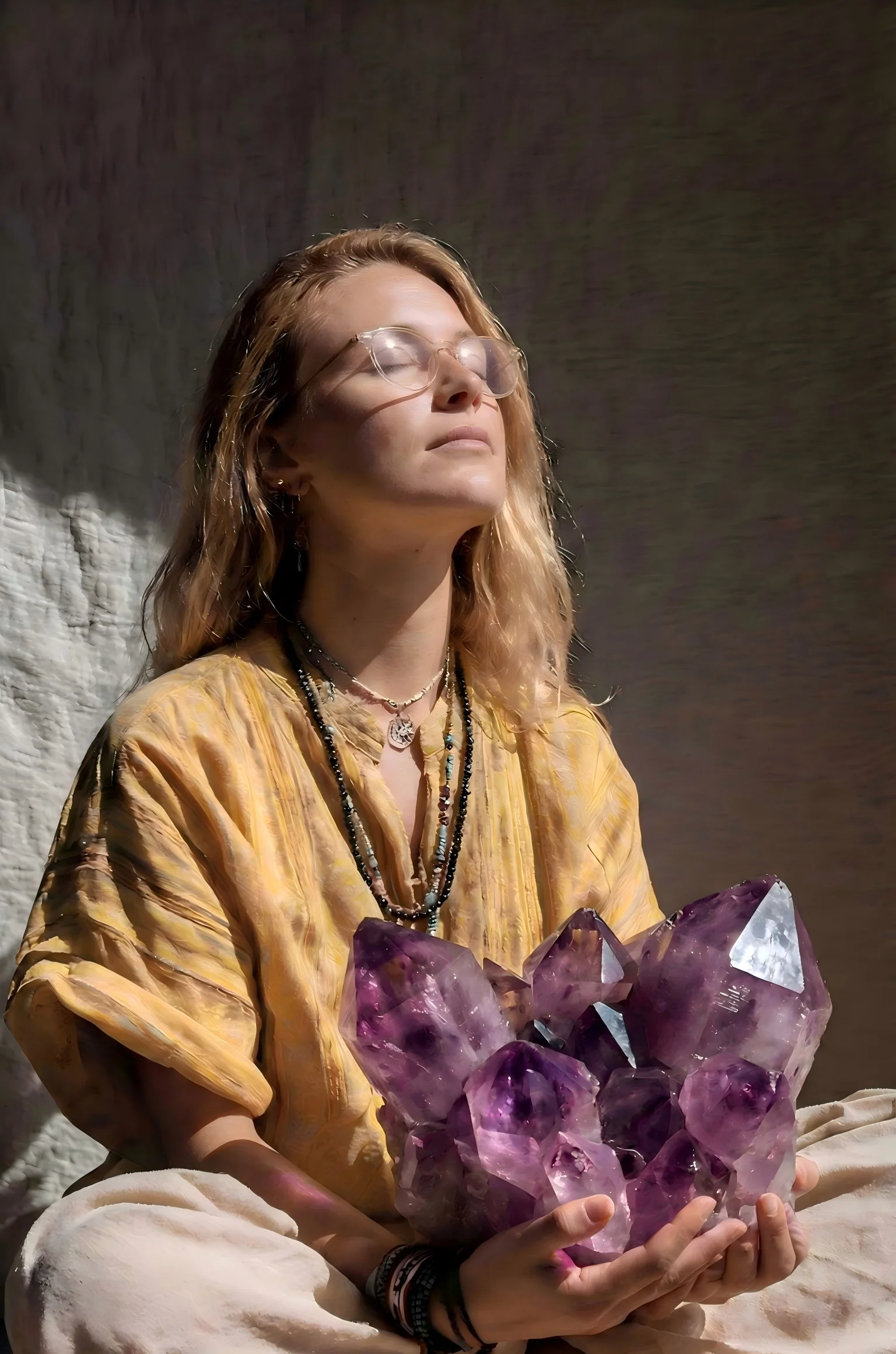
I’m Sarah Whitmore, a U.S.-based crystal practitioner and spiritual writer with a long-term focus on Amethyst, meditation, and intuitive awareness.