Amethyst View
home / geology of amethyst / The "Perfect" Trap: Why Flawless Amethyst Should Make You Suspicious

Evaluation Protocols for High-Clarity Amethyst Specimens: Differentiating Natural Growth from Hydrothermal Synthetics

Acquiring a 20-carat Uruguayan amethyst often presents a specific technical challenge. When a specimen appears deep purple and exhibits an "eye clean" clarity under magnification—devoid of veils, fingerprints, or mineral inclusions—this visual perfection serves as a primary diagnostic indicator.

In the gemstone trade, absolute structural uniformity in quartz is statistically infrequent. If a stone displays the characteristics of mass-produced material at a low price point, it likely represents a successful hydrothermal laboratory process rather than a natural geological occurrence.

The "Perfection Discrepancy"

This refers to the cognitive tendency to associate lack of internal characteristics with high market value. This fails to account for synthetic amethyst, which is chemically congruent with natural quartz ($SiO_2$) but is manufactured in flawless batches.
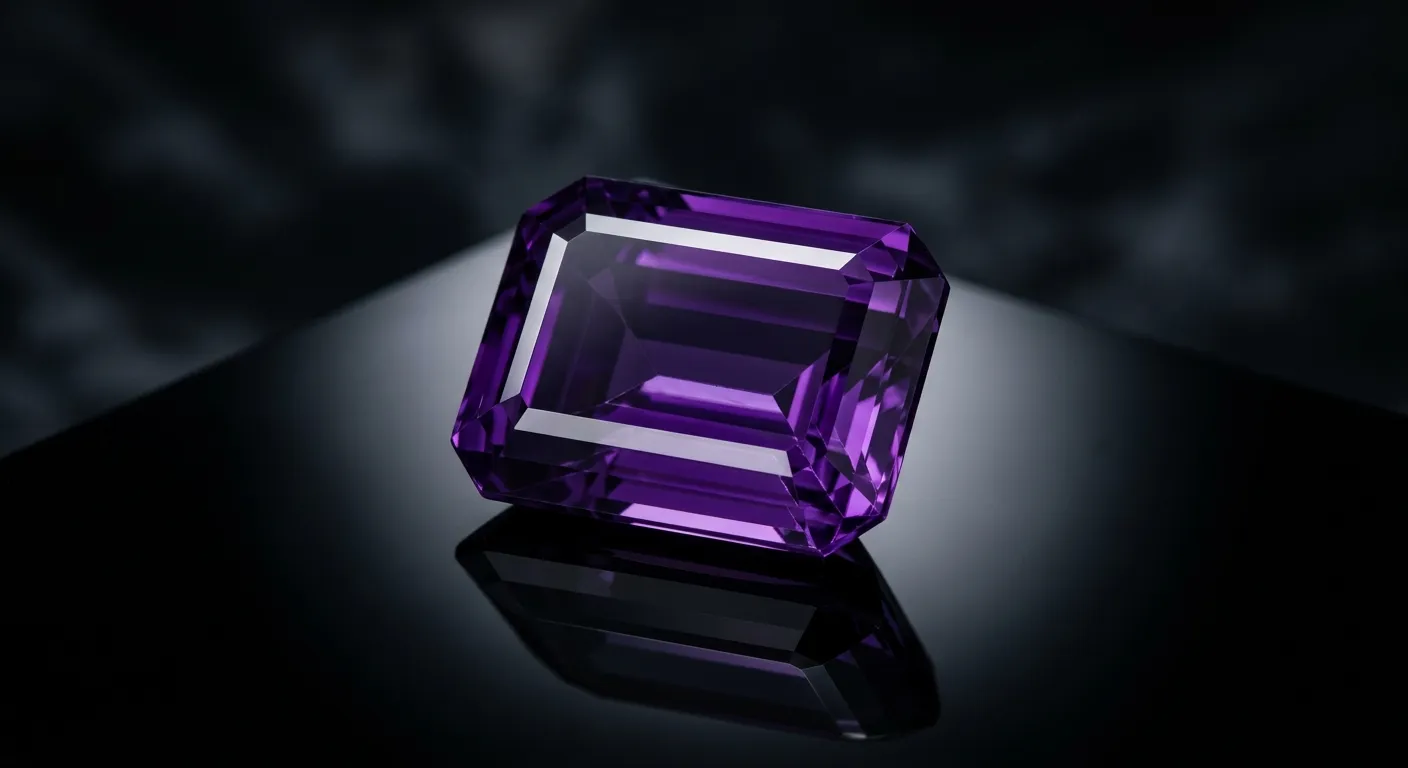
High-clarity Uruguayan amethyst specimen
Fig 1.0: High-carat specimen exhibiting extreme saturation and clarity.

This technical briefing provides the operational framework to diagnose specimens directly at the jeweler's bench using standardized mechanical tests.
1 Technical Discrepancies & Material Diagnosis

The primary technical hurdle for gemologists is the "Undisclosed Synthetic." Amethyst is classified as a Type I gemstone, which typically implies high clarity, yet the current market contains a high volume of hydrothermal synthetics. These lab-grown stones maintain a refractive index of 1.544–1.553 and a Mohs hardness of 7, making them indistinguishable from natural quartz through basic chemical or hardness testing alone.

Thermal Conductivity

Natural quartz possesses higher thermal conductivity than glass. Material should maintain a low temperature for several seconds against skin.

Saturation Symmetry

While rotating the stone in the light, observe pigment distribution. Natural specimens typically display geometric or triangular color zoning.

Price-to-Clarity

High-carat (10+) specimens entirely eye-clean and priced significantly below market rates are almost certainly synthetic.

2. Inventory of Required Diagnostic Equipment

Structural analysis requires a specific tools required list to move beyond visual estimation. High-end synthetics cannot be confirmed via the naked eye.

  • 01 10X Achromatic Triplet Loupe: The baseline tool used to look for inclusions under 10X.
  • 02 Polariscope: Essential to observe under the polariscope and locate the optic axis.
  • 03 Dichroscope: Necessary to use a dichroscope to check for dichroism.
  • 04 Refractometer and RI Liquid: Used to verify the refractive index (1.544–1.553).
  • 05 Gemological Microscope: Required for microscopic "breadcrumb" inspection.

Low-Cost Procedural Alternatives

Digital Screen Polariscope

In the absence of a dedicated unit, a laptop screen emitting polarized light can be utilized. By wearing polarized sunglasses and rotating the specimen against a white screen background, the technician can observe the "blink" reaction.

Macro Imaging Integration

Utilizing a macro lens attachment for a smartphone can provide stable magnification. This allows the technician to document and look for little bubbles or other microscopic markers.

Procedural Methodology for Structural Verification

1

Step 1: Surface and Tactile Inspection

Initiate the step-by-step process by examining the exterior of the stone. Secure the specimen with tweezers at the girdle under a diffused light source.

Action: Inspect the convergence of facets. Natural and high-precision machine-cut stones feature sharp junctions.

Pro Tip: Specifically check for curved facet junctions. If the intersections appear rounded, the specimen may be molded glass.

Surface Luster Check: If the specimen exhibits a "greasy" texture, perform a thorough amethyst cleaning using high-purity alcohol. Natural quartz maintains a "dry," crisp luster.

2

Step 2: Magnified Internal Inspection

This phase involves searching for the internal "fingerprints" of the specimen. The goal is to identify markers that deviate from natural growth patterns.

Action: Use darkfield illumination to examine it with a loupe. Systematically scan the internal volume to look for little bubbles.

Pro Tip: Spherical bubbles are definitive indicators of glass. Distinguish these from "negative crystals," which are angular, hollow voids found in natural quartz.

Clarity Assessment: If the stone appears "Loupe Clean," higher magnification (30X+) is required. Synthetics often contain "breadcrumbs" from the seed crystal. Natural stones frequently exhibit "tiger stripes."

3

Step 3: Polariscope Analysis (The Definitive Test)

This represents the most technical phase of the verification to fix any uncertainty regarding synthetic versus natural origin.

[Visualizing Brewster Fringes vs Bulls-eye]

Action: Place the specimen within the polariscope and rotate it to the point of extinction. Then, attempt to look down the optic axis to identify interference figures.

Pro Tip: Natural amethyst almost universally exhibits Brazil-law twinning. The technician should check for Brewster fringes, which appear as smoky, fan-shaped shadows. A perfect "Bulls-eye" without fringes suggests hydrothermal quartz.

4

Step 4: Dichroscope Analysis

Quartz is a doubly refractive mineral, which necessitates a color-shift observation.

Action: Align the specimen with the aperture of the instrument to check for dichroism.

Pro Tip: In natural specimens, observe a shift between reddish-purple and bluish-purple hues. If both windows display an identical shade, the material is singly refractive (glass or synthetic spinel).

5

Step 5: Immersion and Zoning Test

Natural growth occurs in pulses, creating distinct layers, whereas synthetics are grown in static, controlled environments.

Action: Submerge the specimen in a white container filled with water or vegetable oil. Observe the stone laterally against the white background.

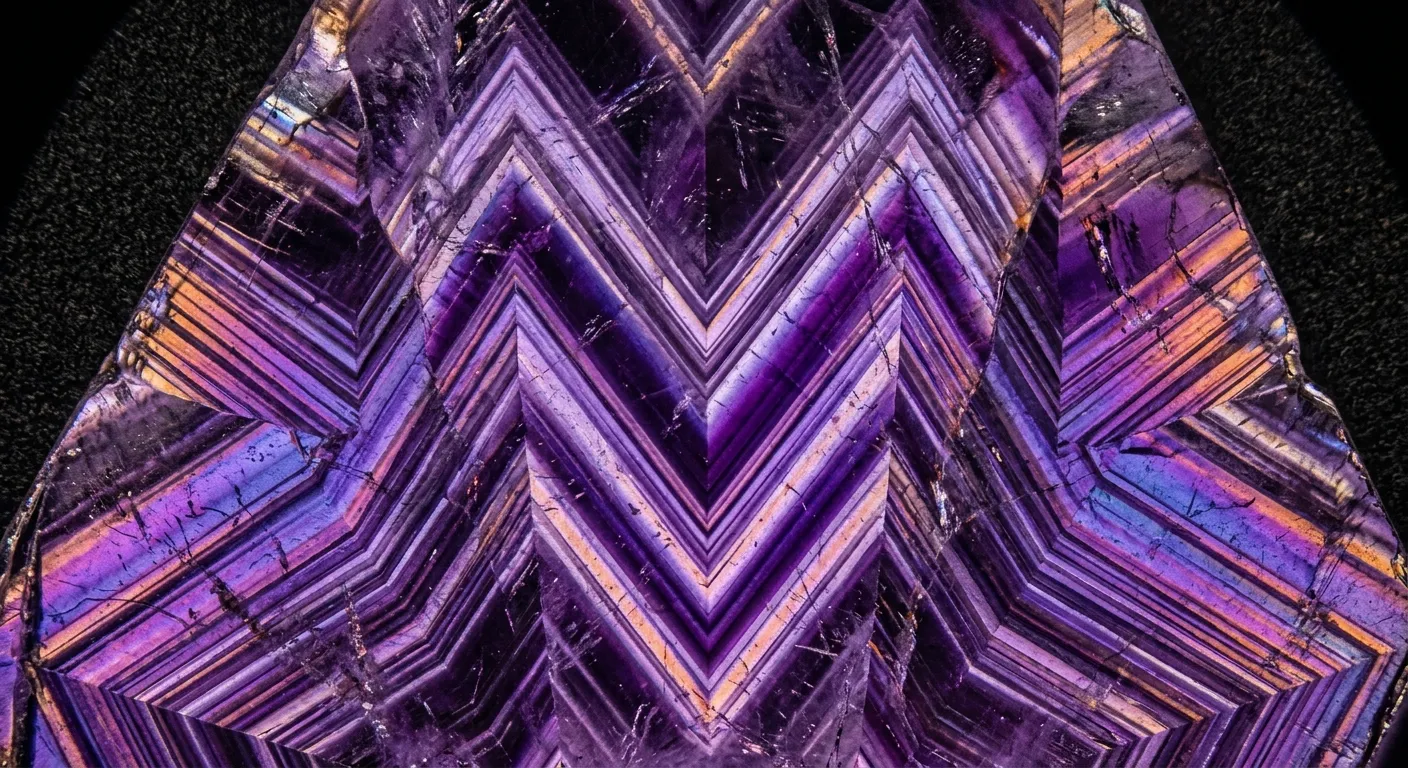
Pro Tip: Use this method to identify distinct color zoning. Look for straight, angular bands or "chevron" (V-shaped) patterns. A uniform "grape juice" color suggests synthetic origin.

Chevron color zoning in natural amethyst

4. Critical Operational Errors to Avoid

!

Hardness Test Misapplication

Technicians must avoid the scratch test with a piece of amethyst or steel tools on faceted stones. Synthetic amethyst shares the same hardness (7) and will pass the test, risking damage to natural specimens.

!

Misinterpretation of Trade Labels

Terms like "Uruguayan" or "Siberian" are often used to categorize color saturation rather than geographic origin. They do not guarantee natural status.

!

Disregard for Mounting Quality

When inspecting amethyst jewelry, evaluate the setting. High-quality natural stones are generally placed in premium mounts (e.g., gold). A "flawless" stone in a cheap silver setting is often a sign of a synthetic.

5. Troubleshooting & FAQ

Q: Can standard jewelry appraisals distinguish between natural and hydrothermal amethyst?

A: Many general practitioners lack the specialized equipment for polariscope testing. Troubleshooting the supply chain requires specifically requesting stones that exhibit natural inclusions or color zoning.

Q: Does "Eye Clean" imply a lack of all inclusions?

A: No. An eye clean amethyst indicates that no inclusions are visible to the unaided eye. However, a natural stone should still show internal markers when you examine it with a loupe. A stone "Loupe Clean" at 10X is highly suspect.

Q: Are there diagnostic uses for an amethyst eye mask?

A: No. An amethyst eye mask is a lifestyle product. When maintaining an amethyst eye mask, use lukewarm water and neutral soap to prevent the degradation of the polish on the beads.

Q: Is heat treatment equivalent to synthetic growth?

A: No. Heat treatment is a post-extraction process used to modify color in natural stones. A synthetic stone is laboratory-grown and was never part of a natural geological deposit.

Q: How should specimens be prepared for detailed inspection?

A: Understanding how to clean amethyst jewelry is essential. Use a soft brush with warm water and mild detergent. Accumulated debris can obscure Brewster fringes or color zoning. Avoid ultrasonic cleaning for stones with significant fractures.

By adhering to this technical protocol, the technician transitions from subjective observation to objective verification. In the study of amethyst, internal irregularities are the primary evidence of natural formation.

Technical References

GIA (2019)

A Simple Procedure to Separate Natural from Synthetic Amethyst on the Basis of Twinning

View Publication →

GIA (2014)

Pleochroism in Faceted Gems: An Introduction

View Publication →

The Gemology Project (2023)

Dichroscope - The Gemology Project

View Wiki →