Reclaiming Amethystos: Utilizing the Historic "Sober Stone" as a Modern Workflow Buffer
Modern technology environments force professionals to process massive data loads continuously. Industry observers frequently note a state of mental saturation among developers, system architects, and data analysts, often compared to the "Cognitive Intoxication" described in historical texts. You face relentless blue light exposure, continuous notification streams, and workflow interruptions that drain your operational capacity. Users consistently report feeling as though their internal processing bandwidth is maxed out, leading to perceived mental fatigue and reduced output efficiency.
Address this operational bottleneck by modifying your physical workspace hardware rather than relying solely on software blockers. Enthusiasts increasingly utilize Amethyst—historically referenced as Amethystos (meaning "not drunken")—not for mystical reasons, but as a reported functional grounding tool against hyper-stimulated routines.
The Problem & Deep Diagnosis
Deep Diagnosis Dimensions:
Systemic Latency
Evaluate your cognitive retrieval speed. When users stare at command line interfaces for extended periods without executing tasks, they frequently report a subjective feeling of mental saturation.
Schedule Desynchronization
Monitor your deployment habits. Executing late-night code pushes often correlates with disrupted routines. Practitioners note that excessive screen time reportedly interferes with natural resting cycles, mirroring the restlessness documented in early historical records.
Stress Overclocking
Assess your reaction to high-pressure deployments, such as complex database migrations. Professionals commonly describe a sensation of being overwhelmed by strict deadlines and rigorous protocols, a state historically labeled as "Saturnian stress."
Cognitive Saturation Metrics
Live TrackingPrerequisites & Alternatives
Gather the necessary physical components before executing this workflow adjustment. Quality variations exist among physical specimens, and selecting the correct material is crucial for the setup.

The Core Stack:
-
Natural Amethyst Specimen: Procure the primary hardware. You will need one of the essential tools required for this setup: a solid piece weighing at least 100g for desktop placement. For wearable setups, select a 10-20ct faceted piece. Target deep purple variants, as users suggest pale versions lack the density historically associated with optimal grounding experiences.
-
Purified Aqueous Solution: Prepare distilled or filtered liquids for the initial initialization phase.
-
Conductive Setting: If you choose a wearable configuration, check the metal used in its setting. Opt for 925 Sterling Silver or 24K Gold mountings. Industry feedback suggests avoiding nickel-heavy alloys, as they frequently cause localized skin irritation.
Alternative Options:
-
Low-Cost Alternative: Substitute a Fluorite crystal if high-grade purple quartz exceeds your budget constraints. Users report similar subjective experiences of mental clarity, though operational feedback indicates you must execute maintenance routines more frequently.
-
Software-Assisted Alternative: Deploy high-intensity screen filters in conjunction with Smoky Quartz. Practitioners note this combination offers a comparable grounding sensation, primarily focused on perceived environmental mitigation rather than direct tactile feedback.
Step-by-Step Execution
Step 1: Provisioning and Quality Inspection
Execute a rigorous physical audit before integrating the mineral into your active workspace.
- Clarity Check: Position the material under a 5000K light source. Identify internal inclusions. While natural formations are standard, heavy internal fracturing reduces structural integrity and alters light refraction inefficiently.
- Cut Optimization: Select a cluster formation for broad desk placement. For targeted tasks, utilize a single-point cut, which users claim helps direct their focus toward specific operational goals.
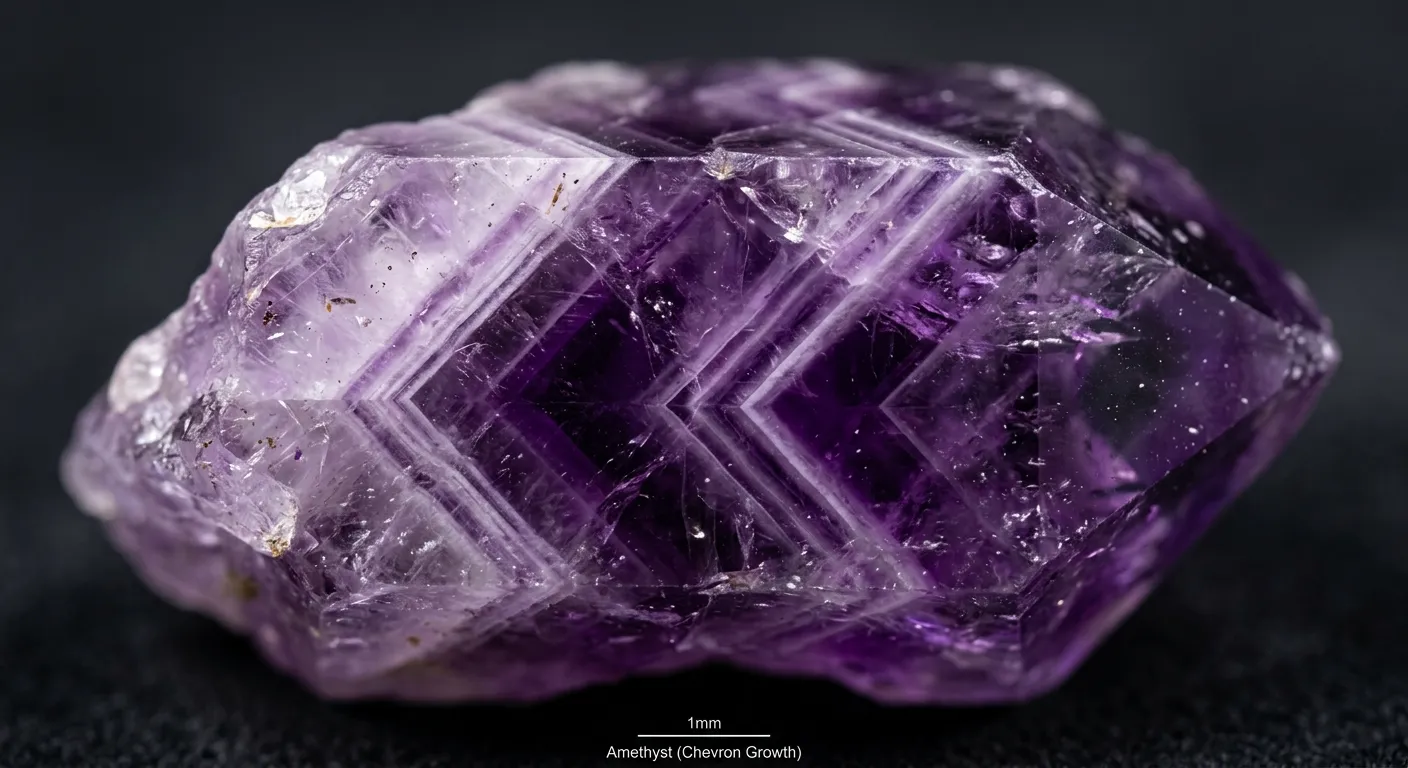
- Authenticity Validation: Verify the material composition. Authentic specimens register a 7.0 on the Mohs hardness scale and remain cool to the touch, unlike heat-treated quartz variants.
Pro Tip: Utilize a 10x jeweler's loupe to examine the color zoning. Authentic pieces display distinct chevron growth patterns. Completely uniform coloration often indicates synthetic manufacturing.
If X happens, do Y: If the material feels unusually warm upon initial handling, practitioners recommend immediate discharge. Proceed directly to Step 2.
Step 2: Environment Initialization
Establish a baseline by clearing accumulated environmental debris. You must clean the gemstone regularly to maintain its structural appearance and reported grounding capabilities.
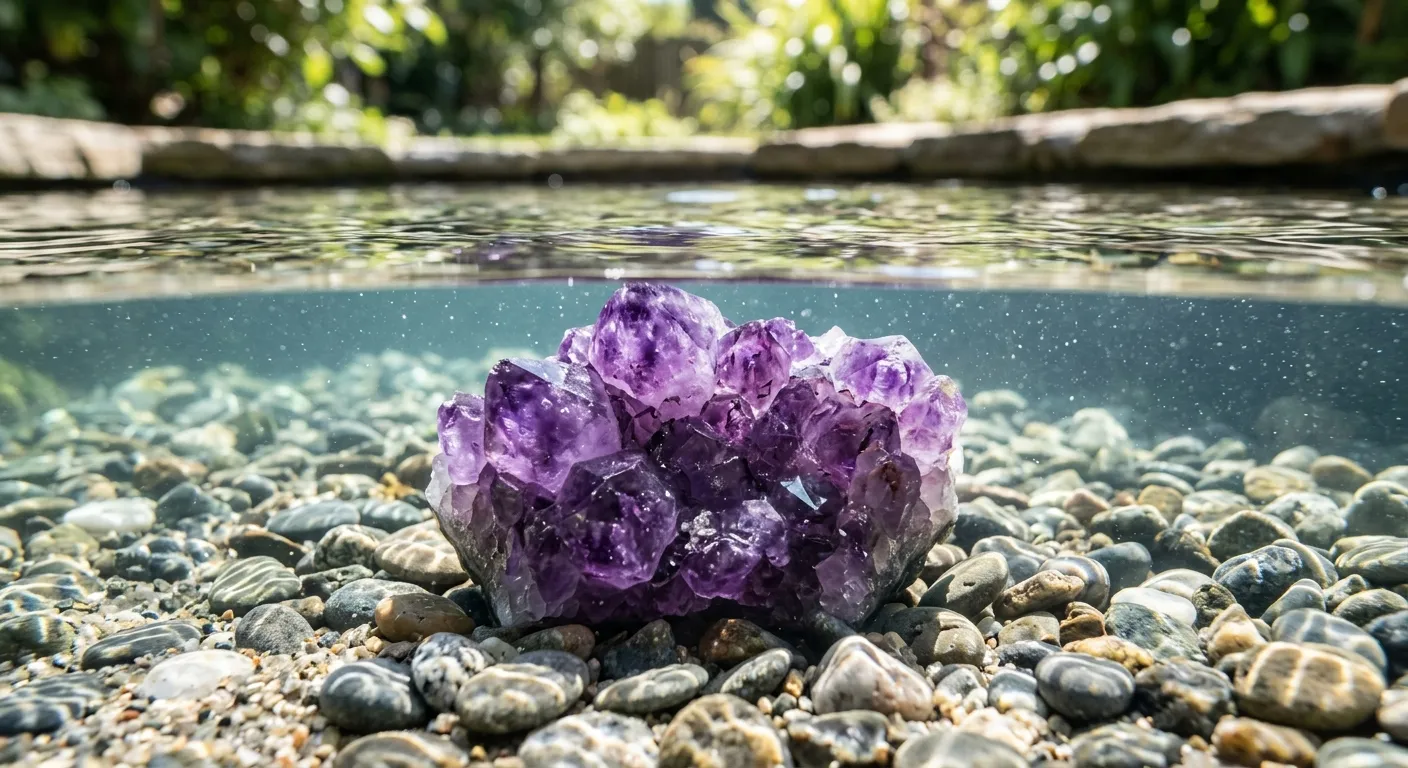
- Aqueous Purge: Initiate the physical reset by gently rinsing it in clean water. Restrict temperatures to ambient room levels.
- The Baseline Soak: Execute a deep reset by placing it in clean water combined with a standard measure of sea salt for exactly 4 hours. Enthusiasts describe this process as a method to clear perceived energetic static.
- Thermal Protection: Always avoid chemical cleaners or hot water. Extreme temperatures physically alter the iron impurities within the crystalline lattice, permanently shifting the purple hue to an undesirable yellow.
Pro Tip: Schedule this maintenance protocol for Sunday evenings. Treat it as a routine environmental restart to prepare your physical workspace for upcoming project sprints.
If X happens, do Y: If the surface appears cloudy post-rinse, it has likely accumulated natural oils. Apply a soft-bristled brush with minimal organic soap, then execute the rinse protocol again by gently rinsing it in clean water.
Step 3: Deployment and Integration
Position the physical hardware within your daily operational environment. Follow these step-by-step instructions carefully to ensure proper integration.
- The Visual Buffer: Place the specimen directly on your workstation, positioned between your keyboard and monitor. Users report this physical barrier serves as a visual reminder to maintain focus during intense coding sessions.
- The Tactile Hold: Halt typing immediately upon encountering critical system errors. Pick up the object. Users note that holding a natural amethyst stone for 60 seconds provides a tactile distraction, reportedly aiding the transition from a highly frustrated state back to baseline focus.
- Wearable Deployment: Ensure direct skin contact if utilizing ring or pendant configurations. However, practitioners warn that when worn without proper guidance, the object simply blends into the background and loses its subjective impact as a mindfulness trigger.
Pro Tip: Apply container logic to your physical habits. Establish a mental rule: physical contact with the object equals dedicated work time. This builds a psychological boundary for productivity.
If X happens, do Y: If you experience subjective feelings of detachment from your immediate tasks, you may be over-relying on the object. Limit your exposure to amethyst to a maximum of 4 hours daily until your workflow normalizes.
Step 4: Monitoring and Mitigation
Track your operational metrics continuously. Implement basic troubleshooting if you notice deviations from your baseline routine.
- Behavioral Audit: Monitor your frustration levels. If you notice increased irritability during work hours, practitioners suggest the environmental setup might be overly distracting.
- Rest Tracking: Evaluate your nightly routine. If you record disrupted sleep patterns or unusual restlessness, stop wearing the gemstone before going to bed.
- Physical Check: Inspect your skin for redness around the contact area. If irritation occurs, verify the mounting materials. This is typically a standard allergic reaction to nickel alloys.
Pro Tip: If the workspace environment feels too rigid or heavy, enthusiasts recommend placing a Rose Quartz specimen nearby to visually balance the aesthetic and soften the perceived atmosphere.
If X happens, do Y: If you develop tension headaches during long shifts, discontinue use of the stone for a minimum of 48 hours. Allow your routine to stabilize without the physical object present.
Step 5: Decommissioning and Storage
Spin down the physical resource once your project sprint concludes.
- Storage: Secure the specimen inside a dark, opaque container. Continuous exposure to direct ultraviolet radiation physically degrades the pigmentation, permanently fading the material.
- Routine Discharge: Rest the object on a Selenite plate overnight. Practitioners utilize this method to reportedly clear the object of accumulated daily usage fatigue.
Pro Tip: Treat the Selenite base as a localized reset station, ensuring your primary hardware is prepped for the next morning's deployment.
If X happens, do Y: If the crystalline structure fractures or shatters, do not apply synthetic adhesives. Treat this as a total hardware failure. Dispose of the fragments outdoors and provision a replacement unit to fix the setup.
Critical Mistakes to Avoid
1. The Dependency Loop:
Always avoid focusing too much on the gemstone as a standalone solution for workflow errors. A physical object cannot rewrite bad syntax; it merely serves as a focal point for the operator. Neglecting fundamental biological requirements, such as adequate hydration and scheduled screen breaks, guarantees an eventual drop in performance.
2. Thermal Shock:
Never transfer the material directly from heavily air-conditioned server rooms to high-temperature environments. Rapid thermal expansion causes catastrophic structural fragmentation.
3. Chemical Contamination:
Exposing mounted rings to industrial solvents or alcohol-based sanitizers causes severe physical degradation. These compounds strip away the surface polish. To mitigate accidental exposure, immediately execute an aqueous purge.
Quick FAQ (Technical Edition)
Q1: Can this physical object resolve system-level compilation errors?
Coach's Answer: Negative. Physical minerals do not interact with software logic. However, users suggest that utilizing the object as a pacing tool—specifically choosing to reduce the time you wear the gemstone to enforce mandatory screen breaks—can lower human error rates by mitigating operator fatigue.
Q2: Why does the object feel subjectively "heavy" after prolonged virtual meetings?
Coach's Answer: Enthusiasts describe this phenomenon as energetic accumulation from prolonged desk sessions. To reset the physical baseline, practitioners recommend placing it in clean water to clear the perceived static immediately.
Q3: Does astrological compatibility impact the deployment of this hardware?
Coach's Answer: Industry lore associates this specific mineral with Saturn-ruled periods. Practitioners suggest that individuals who naturally lean toward high-energy, restless work styles should limit your exposure to amethyst to prevent subjective feelings of restriction or frustration.
Q4: Is it beneficial to expose the material to direct solar radiation?
Coach's Answer: Avoid this practice entirely. Ultraviolet light physically bleaches the crystalline structure. For maintenance purposes, enthusiasts prefer nocturnal exposure to lunar light, which they claim provides a safe reset without risking structural degradation.
Q5: What occurs if I neglect the maintenance protocols for an extended period?
Coach's Answer: Operators report that neglected specimens lose their subjective effectiveness as a focal tool, often becoming associated with the very workspace stress they were meant to alleviate. If you notice increased workspace anxiety, discontinue use of the stone for seven consecutive days before attempting a fresh initialization.
Academic References & Literature
Gem Rock Auctions (2023). How To Care For Your Crystals and Gemstones. Gem Rock Auctions.
https://www.gemrockauctions.com/learn/holistic-gemstone-information/how-to-care-for-your-crystals-and-gemstonesGemological Institute of America (2023). Gemstone Durability: Design to Display. GIA.
https://www.gia.edu/doc/Gemstone-Durability-Design-to-Display.pdfNational Center for Biotechnology Information (2020). Study on the effect of heat treatment on amethyst color and the cause of coloration. NCBI.
https://pmc.ncbi.nlm.nih.gov/articles/PMC7483767/