Amethyst View
home / geology of amethyst / Nature’s Fingerprint: Why "Tiger Stripes" Prove Your Amethyst is Real
Gemological Authentication Protocol

Authenticating Amethyst: Identifying Brazil-Law Twinning and Origin Markers

Look at the purple quartz currently resting on your workbench. Clients frequently request verification regarding whether a specimen emerged from a geological formation or grew inside an industrial autoclave.

The reality of modern gem identification is rigid: separating synthetic amethyst from natural remains one of the most demanding technical tasks in the industry.

Because laboratory-grown quartz shares the exact chemical makeup, specific gravity, and refractive index as earth-mined material, basic gemology testing may not be sufficient.

Structural Origin Determination

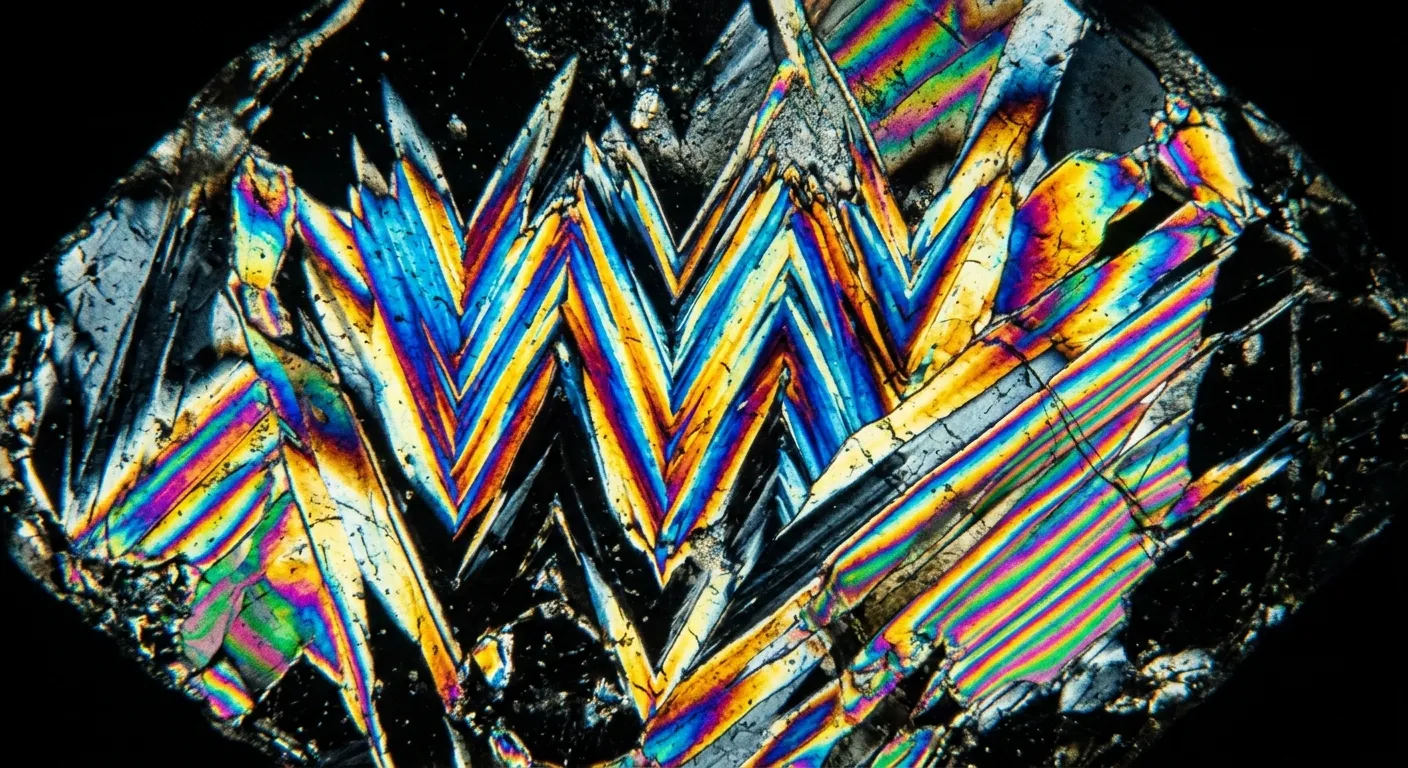
To determine the origin, you must locate specific structural markers. Industry practitioners recognize the visual manifestation of Brazil-law twinning—an alternating intergrowth of right-handed and left-handed quartz—as a feature reportedly absent in commercial hydrothermal synthetics.

01

Optical Interference

Manipulate polarized light to expose internal structural lattice features.

02

Microscopic Topography

Execute careful observation of twinning patterns to verify jagged growth marks.

03

Co-existing Inclusions

Scan the interior for secondary indicators like fluid pockets.

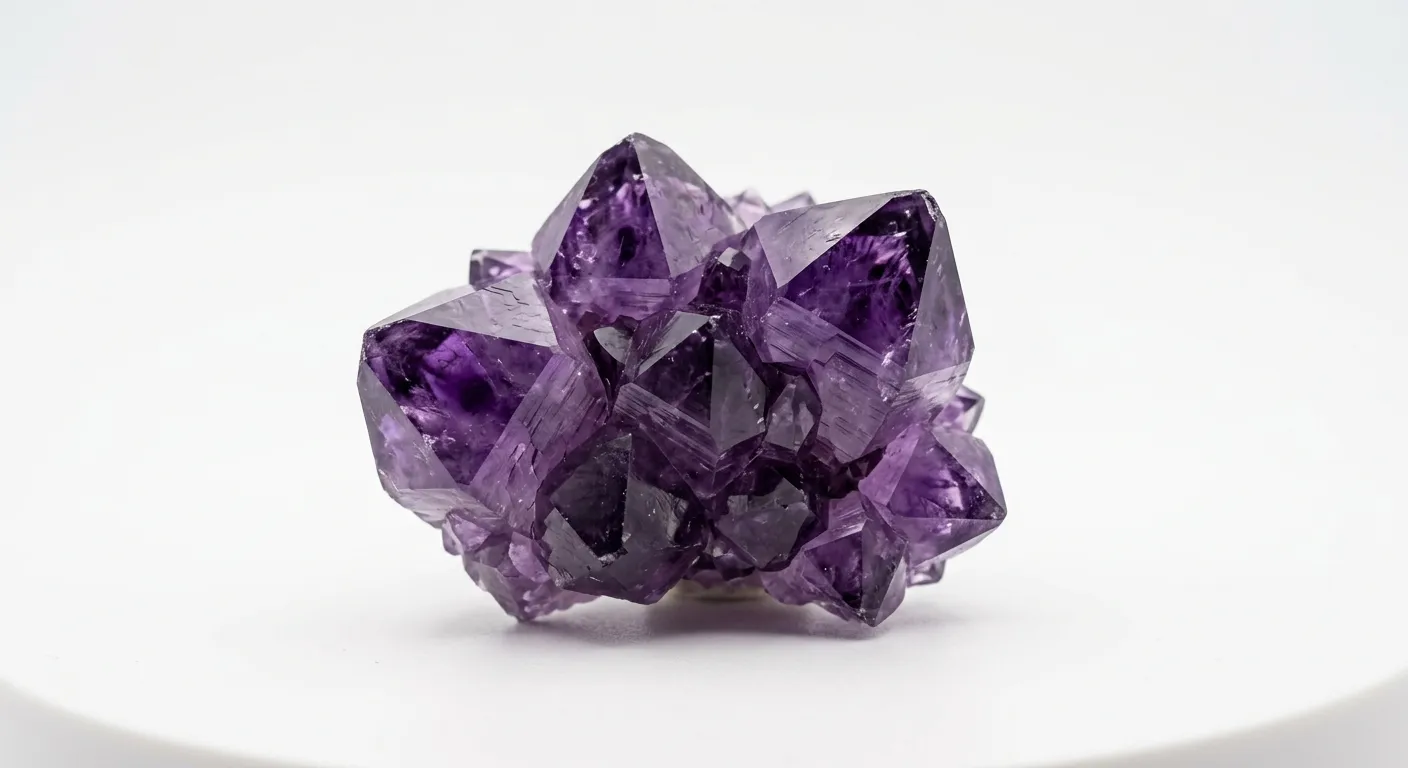
Macro view of natural amethyst crystal structure
Figure 1: Natural amethyst exhibiting characteristic rhombohedral growth planes.

Set up the bench. We will put this material under magnification to extract the necessary data.

Tools Required and Alternative Setup

Before hunting for specific inclusions, configure your workspace. Abandon the standard jeweler's loupe for this procedure. You require controlled, polarized illumination to execute these tests properly.

Core Equipment

  • Gemological Polariscope: The primary instrument for isolating optic axes and crossing polarization fields.
  • Gemological Microscope: Ensure the rig handles 10x to 60x magnification and features both darkfield and transmitted light options.
  • Immersion Cell & Liquid: Procure a glass cell and fill it with benzyl benzoate to suppress surface reflection.
  • Monochromatic Sodium Light Source: Deploy this specific lamp to resolve tight interference figures without wavelength distortion.
  • Acid-Washed Tweezers: Grip the specimen with pristine instruments. Frequently, rough material is examined after acid cleaning to strip away external iron oxides.

Alternative 1 (Tablet Polariscope)

Lacking a dedicated polariscope, construct a functional substitute. Display a blank white screen on a tablet to emit linearly polarized light. Rest the specimen directly on the glass and view it through a single polarized sunglass lens. Rotate the lens manually to cross the polarization field.

Alternative 2 (Water Cell)

Without professional refractive fluids, fill a clear glass container with distilled water. Add exactly one drop of dish soap to break the surface tension. Industry feedback suggests this setup reduces glare enough to spot internal twinning.

Step-by-Step Execution Protocol

1

Surface Preparation and Glare Elimination

Clear away surface debris and polishing oils before attempting internal evaluation. Wipe the exterior facets using a lint-free cloth dampened with isopropyl alcohol. Submerge the material entirely within the immersion cell fluid. Position the cell directly over the transmitted light stage of your microscope.

Pro tip

Orient the specimen so the largest facet points directly at the objective lens. For rough material, align a flat rhombohedral face upward to maximize light transmission.

Troubleshooting

If the material exhibits heavy fracturing and fluid seeps into the cavities to create silver flashes, switch to a high-viscosity mineral oil.

2

Locating the Optic Axis and the "Bullseye"

Align the crystal lattice before searching for twinning planes. Move the immersion cell to the polariscope deck. Activate the monochromatic sodium light source. Rotate the specimen slowly until the classic quartz bullseye interference figure emerges—a dark cross bracketed by concentric rings.

Simulated Interference Figure
Pro tip

Industry veterans note that natural specimens rarely display a perfectly solid center. Look for a distorted or hollow spiral.

Troubleshooting

If rotating the stone 360 degrees yields only a solid dark shadow, you are viewing it perpendicular to the optic axis. Rotate the material exactly 90 degrees.

3

Microscopic Hunting for the Internal Structures

Transfer the aligned setup back to the microscope stage. Maintain the crossed orientation of the polarizing filters. Adjust the magnification to 30x or 40x and pull focus just beneath the surface facet, looking straight down the optic axis. Scan for a series of jagged, V-shaped parallel lines. These formations represent episodic shifts during geothermal growth where the crystal lattice reversed its orientation.

Jagged Brazil-law twinning patterns under polarized light
Figure 2: Microscopic view of jagged twinning planes diagnostic of natural origin.
Pro tip

Manually open and close the iris diaphragm. This action restricts the light into a narrow beam, which reportedly increases visual contrast.

Troubleshooting

If you observe perfectly straight, uniform color bands lacking jagged edges, flag the specimen. Lab-grown quartz frequently displays ruler-straight color zoning.

4

Cross-Verifying with Secondary Inclusions

Validate optical findings with secondary checks. Switch the illumination from polarized to standard darkfield. Scan the interior for 2 and 3 phase inclusions—cavities holding liquid, a gas bubble, and occasionally a solid mass.

Pro tip

If the refractive index numbers obtained with a Duplex II refractometer fall within 1.544-1.553, yet the material lacks twinning, treat it as lab-grown.

Troubleshooting

If you detect inclusions resembling breadcrumbs or metallic triangles, halt the evaluation. These are recognized as synthetic seed plates or autoclave residue.

Critical Handling Errors to Avoid

Rushing the evaluation process leads to misidentification. Prevent these three operational errors when handling inventory:

1. Polishing Marks

Inspecting material without an immersion cell and misidentifying parallel surface scratches as internal twinning.

The Fix: Always deploy an immersion cell to eliminate surface interference.

2. Thermal Shock

Dropping the specimen into a steaming ultrasonic cleaner or holding it against a hot incandescent bulb.

The Fix: Utilize cool LED sources and avoid sudden temperature shifts.

3. Synthetic Twinning

Assuming any visible line guarantees a natural origin. Advanced synthetics can mimic zoning.

The Fix: Verify that lines are undeniably jagged and bound to rhombohedral planes.
Technical Q&A

Q1: Are these specific structural markers unique to natural amethyst, or can they be found in other quartz varieties?

While Brazil-law twinning serves as a primary indicator of natural origin in purple quartz, gemologists occasionally note its presence in natural citrine and ametrine. It rarely appears in natural smoky quartz or rock crystal.

Q2: What if the exterior is heavily damaged and internal visibility is blocked?

If the exterior is severely abraded, the rough must be broken and repolished to expose inclusions, or at minimum, given one perfectly flat, polished window facet. Evaluating internal structures through a frosted surface remains impossible, even with immersion fluid.

Q3: Can I see these twinning planes when the stone is observed with a polariscope alone?

No. The polariscope functions solely to locate the optic axis and isolate the interference figure. To visually confirm the physical jagged lines of the twinning planes, the specimen must be observed with a gemological microscope while positioned between crossed polarizing filters.

Q4: Will heating the material to lighten its color destroy the internal inclusions?

No. Commercial heating routines—typically running between 350 and 450 degrees Celsius to lighten dark material—alter the iron valence state to shift the color. This thermal process does not melt or restructure the physical crystal lattice. The twinning planes remain intact and visible under polarized light post-treatment.

Q5: I have a massive, flawless specimen with zero structural markers and zero inclusions. What is it?

If the material appears flawless under 60x magnification, exhibits no twinning under crossed polars, and displays a perfectly solid bullseye interference figure, standard industry practice flags it as synthetic hydrothermal quartz. Send the piece to a major grading laboratory for FTIR spectroscopy to acquire definitive data.

Authoritative References

GIA (2023)
A Simple Procedure to Separate Natural from Synthetic Amethyst on the Basis of Twinning
GIA (2023)
Infrared Spectroscopy of Natural vs. Synthetic Amethyst: An Update
ScienceDirect (2023)
Brazil twinning in natural and synthetic amethyst crystals