A bounded practice for non-coercive love
Moving Past Eros: How to Attract Unconditional Agape Love
A piece of amethyst can show uneven violet bands without pretending every zone carries the same depth; love asks for a similar kind of discernment. The direct answer is this: Agape love manifestation is best treated as a practice of becoming more capable of unconditional, non-coercive love, not as a method for making a specific person choose you. To move past eros, shift the question from “How do I get this outcome?” to “How do I embody compassion, consent, steadiness, and honest boundaries?”
Eros-like desire can be beautiful. It notices chemistry, beauty, longing, and the ache of wanting to be chosen. But when desire becomes outcome fixation, it narrows the heart. Agape points toward love that does not grasp. In a manifestation practice, that means setting intentions around the quality of love you are willing to give and receive while leaving another person’s freedom intact.

broader context
Amethyst context note
This narrower page lands better after the broader amethyst context page.
From Wanting a Person to Becoming Available for Love
If your practice begins with one name, one face, and one required ending, it is probably still organized around possession. That does not make you wrong or unspiritual; it means longing has taken the lead. Many people arrive at unconditional love manifestation through heartbreak, soulmate connection language, or the hope that a bond can return. The first correction is gentle but firm: agape cannot be built on control.
A more grounded intention sounds less like “Make them love me” and more like “May I become honest, compassionate, and receptive to love that is freely chosen.” This does not remove desire. It places desire inside a wider container where consent, mutuality, and emotional safety still matter.
The useful question is not whether you can stop feeling attraction. It is whether attraction can stop ruling your spiritual practice. Eros may notice beauty and longing; agape asks what remains when the outcome is not guaranteed. If nothing remains except panic, bargaining, or self-abandonment, the practice needs to slow down.
In this sense, attracting unconditional compassionate love begins with the inner conditions you are cultivating. You are not proving that manifestation can deliver a soulmate. You are clarifying the kind of love you will recognize, the kind you will not chase, and the kind you are willing to offer without erasing yourself.
What Changes the Answer
The path depends on what you mean by “attract.” If you mean becoming more open, less defensive, more compassionate, and more discerning, then a reflective spiritual practice can be useful as a personal orientation. If you mean securing a particular partner, overriding silence, or turning rejection into destiny, the answer changes: that is not agape love; it is control wearing spiritual language.
Non-coercive intention
Non-coercive love does not ask the universe, a ritual, or a crystal arrangement to pressure someone else’s will. It asks for alignment with love that can meet you freely. That distinction is small in wording and large in ethics.
Real boundaries
Strengthening boundaries in love is not the opposite of unconditional love. It is one way love stays real. You can wish someone peace and still decide not to reopen a painful conversation. You can feel compassion and still refuse emotional chaos. You can honor a soulmate connection reflection without making it the whole map of your future.
Released outcomes
Releasing control in love does not mean becoming passive or pretending not to care. It means you stop using spiritual practice to negotiate against reality. If someone has said no, disappeared, chosen another path, or repeatedly made you feel unsafe, agape does not ask you to wait forever at the altar of possibility.
A simple verification point helps: after your practice, do you feel more spacious, truthful, and respectful of everyone’s freedom? Or do you feel more obsessed, more certain that signs are instructions, and more willing to ignore what is actually happening? The second pattern deserves attention, not amplification.
A Compassionate Intention Practice That Does Not Chase
You do not need an elaborate system to work with high-frequency love in a grounded way. Treat “high-frequency” as symbolic language for the tone you are choosing: less grasping, more mercy; less fantasy, more integrity. It should not become a badge of superiority or a promise of romantic results.
Try a short practice that begins with the visible world. Place an amethyst where you can see it, if that is already part of your spiritual symbolism. Notice it as a specimen first: color, shape, weight, the way light enters and leaves. Then let it become a quiet marker for your intention, not proof that the intention will control events.
Use three sentences
- “I release the need to force love into one outcome.”
- “I welcome love that is mutual, honest, and freely chosen.”
- “I practice compassion without abandoning my boundaries.”
That is enough. The point is not to perform longing with more decoration. The point is to train your attention away from fixation and toward values. Compassionate intention setting is strongest when it can survive disappointment without turning bitter or manipulative.
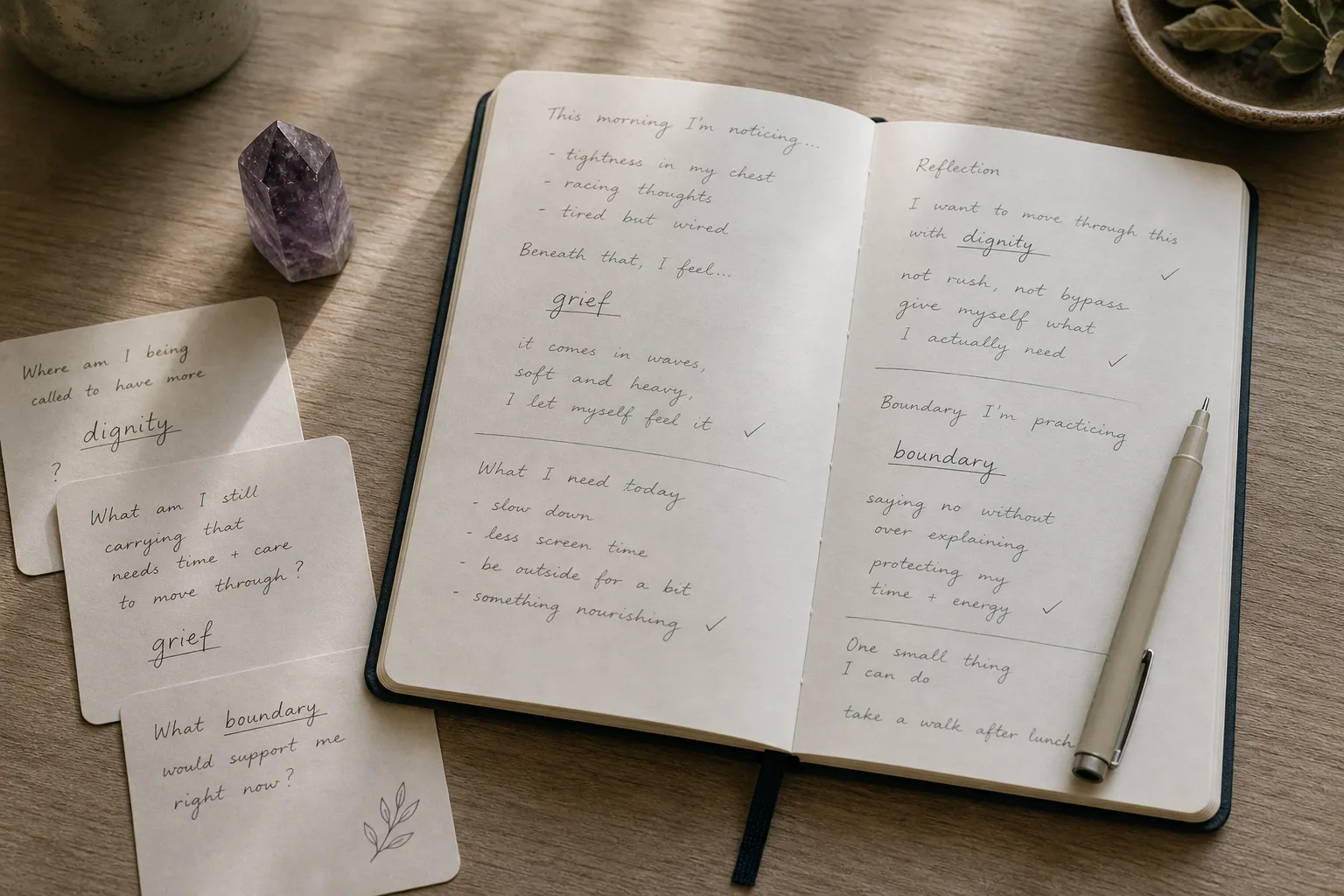
Practical journaling prompts
- Where am I confusing intensity with love?
- What would unconditional love look like if it included my dignity?
- What am I trying to control because I am afraid to grieve?
- Which boundary would make my love cleaner, not colder?
- If this person never becomes my partner, what kind of heart do I still want to have?
These agape love journaling prompts are not a substitute for support when you are overwhelmed, and they should not be used to rationalize staying in a harmful pattern. They are a mirror. A good mirror does not flatter the fantasy; it gives form to what is actually there.
Common Confusion Around Soulmates, Signs, and High-Frequency Language
The most common confusion is treating unconditional love as unlimited access. Agape does not mean accepting every behavior, waiting without end, or calling repeated hurt a spiritual test. Unconditional love may be generous in spirit, but relationships still require mutual care, truthful communication, and the freedom to leave.
Another confusion is turning soulmate language into a verdict. A soulmate connection may be meaningful to you as a reflective phrase, but it should not cancel what someone is showing you in real life. If the connection requires you to ignore their lack of consent, their inconsistency, or your own distress, the language has become heavier than the evidence.
Signs can create a similar problem. Repeated symbols, songs, numbers, or crystal associations may feel emotionally significant. Within a spiritual practice, you may choose to treat them as invitations to reflect. But they should not overrule direct communication. If a person’s actions say distance, ambiguity, or refusal, agape listens to that reality.
High-frequency love is also easy to misuse. The phrase can help some readers name a desire for kindness, patience, and emotional clarity. It becomes less useful when it implies that wanting hard enough makes someone spiritually obligated to arrive, or that people who do not choose us are simply on a lower level. That turns love into hierarchy. Agape moves in the opposite direction.
A cleaner question is: “Does this belief make me more compassionate and more honest?” If yes, it may be serving your practice. If it makes you more entitled, more dismissive of boundaries, or more detached from observable behavior, it needs to be softened.
Where the Evidence Ends and Discernment Begins
There is an important limit here: the available material for this page does not provide public sources that can support theological history, psychological mechanisms, clinical advice, or claims that manifestation produces specific romantic outcomes. So this article treats agape, eros, unconditional love, soulmate connection, and high-frequency language as reflective and spiritual terms, not as proven systems.
That boundary does not make the practice meaningless. It simply keeps it honest. You can use symbolic tools, prayerful language, journaling, meditation, or amethyst as part of a personal ritual without claiming that they guarantee another person’s love. You can work with unconditional love as an ethical aspiration without turning it into a promise from the universe.
This matters especially when longing is sharp. A vulnerable heart can mistake certainty for comfort. It can prefer a dramatic sign to a plain answer. It can call anxiety devotion because devotion sounds nobler. Discernment asks you to slow down before naming every ache as destiny.
Compare your intention with your behavior. If your manifestation practice leads you to respect no-contact, stop monitoring someone, tell the truth about incompatibility, and care for your own life, it is moving toward agape. If it leads you to chase, decode, pressure, or keep reopening wounds, it has drifted back into eros-driven fixation.
The goal is not to become desireless. The goal is to let desire be refined by compassion and reality. Love that must be forced is not the love you are trying to attract.
A Small Boundary Checklist Before You Call It Agape
Before naming a practice “agape love manifestation,” pause with these questions:
- Am I asking for love in general, or am I trying to spiritually corner one person?
- Can I bless someone’s freedom even if their choice disappoints me?
- Do my intentions include my own emotional safety?
- Am I confusing unconditional love with unlimited tolerance?
- Have I made room for grief instead of turning every loss into a sign?
- Does this practice make me kinder in daily life, not just more hopeful in fantasy?
If the answers are uncomfortable, that is not failure. It may be the beginning of a more truthful practice. Unconditional love is not sentimental softness; it can require the discipline of stepping back, telling the truth, and choosing not to feed obsession.
For spiritually curious readers, this is where amethyst symbolism can stay modest and useful. The stone does not prove the relationship, restore the bond, or certify the outcome. It can simply mark the place where you choose clarity over compulsion. That is a meaningful use, as long as the meaning remains chosen rather than claimed as certainty.
The Real Attraction Is Alignment
To attract unconditional agape love, become less available to coercion and more available to compassion. Set intentions around mutuality. Release the demand that love arrive through one predetermined person. Let your rituals make you more honest, not more attached to fantasy. Let your longing teach you tenderness without letting it write false contracts for someone else.
The quiet test is simple: agape leaves room for another soul to be free. It also leaves room for you to be whole.
On the shelf, amethyst remains purple quartz with its own visible features; in practice, it can become a reminder to separate what is observed from what is hoped. Keep that same discipline with love. Honor the symbol, but do not ask it to overrule consent, boundaries, or reality.