Collector locality note
The American Premium: Four Peaks Amethyst and the “Magenta Flash”
Four Peaks Amethyst is distinctive because it is discussed as a named Arizona amethyst, not just as purple quartz. Its appeal usually comes from three things working together: a Four Peaks / Mazatzal Mountains locality story, attractive violet color that may show a reddish or magenta overtone, and collector interest in documented American gem localities.
The careful answer is this: the “American premium” can be real as a market preference, but it is not automatic. “Magenta Flash” is best read as descriptive collector language, not a formal gemological grade or a guaranteed visual effect.
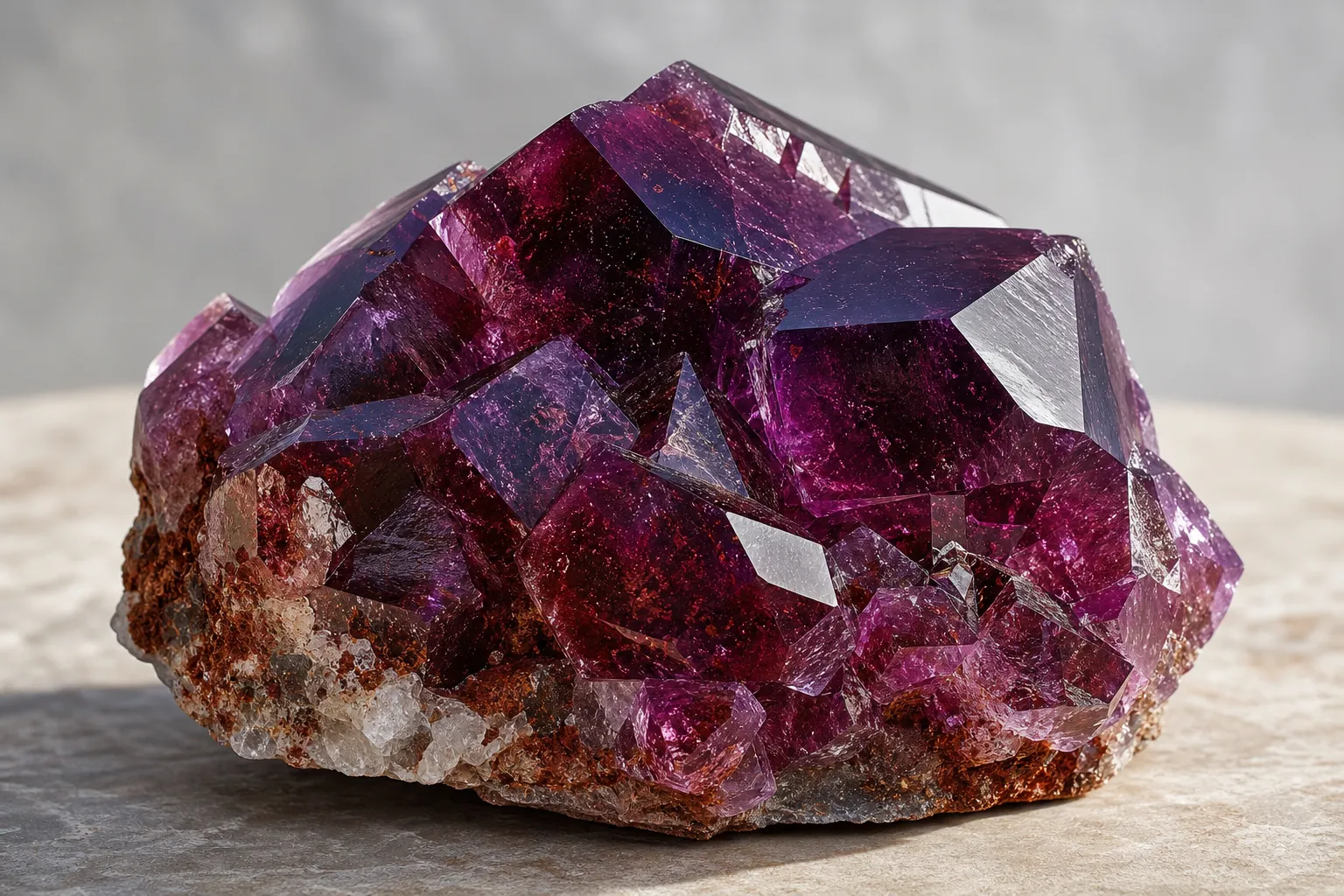
What makes Four Peaks Amethyst different?
Most amethyst is valued first by color: violet quartz that may range from pale lavender to deeper purple, sometimes leaning reddish, bluish, or grayish depending on the stone and light.
Four Peaks Amethyst adds a second layer before color is even judged: locality. A stone represented as coming from the Four Peaks area of Arizona carries a more specific identity than a generic amethyst listing. For collectors, that named U.S. origin can make the stone feel more traceable, regional, and story-rich.
That is where the “American premium” idea begins. But the word “premium” can mean different things:
Locality premium
A locality premium because the stone is represented as coming from a recognized Arizona source.
Color premium
A color premium because the purple is vivid or has a desirable reddish overtone.
Jewelry premium
A jewelry premium from cutting, setting, metal, or design.
Story premium
A story premium because American origin language adds collector appeal.
Those are not the same as proven scarcity, certified origin, or fixed market value. A stone labeled Four Peaks is not automatically better than other amethyst. Its distinction is that locality, color, and collector language are tied together more tightly than they are in ordinary amethyst sales.
Origin is the claim to verify
When a piece is called Four Peaks Amethyst, the origin claim is doing much of the work. “Arizona amethyst” is already more specific than a broad amethyst label; “Four Peaks” is more specific still.
For a buyer or collector, the useful question is simple: what connects this stone to that locality?
Stronger support
Older collection labels, invoices, a reputable dealer’s provenance note, mine-linked paperwork, or a gemological report when one is relevant and available.
Weaker support
Nothing more than a product title, marketplace description, or repeated sales phrase.
That distinction matters because amethyst occurs in many parts of the world. Scientific literature can help explain amethyst color and treatment behavior, but it does not verify the origin of an individual ring, loose stone, crystal, or pendant. A Four Peaks attribution still needs its own paper trail.
If a listing says “Four Peaks Arizona amethyst,” “Four Peaks amethyst ring,” or “Four Peaks mine amethyst,” the wording may be accurate. It just is not proof by itself. Ask whether the seller can explain the source, distinguish Four Peaks material from other Arizona amethyst, or provide records that came with the stone.
“Magenta Flash” means color impression, not a formal grade
“Magenta Flash” is best understood as collector or market language for a reddish-pink impression within purple amethyst, often seen only in certain lighting or viewing angles. It is not established here as an official grade, a universal Four Peaks trait, or a guaranteed optical effect.
Amethyst color is a real and studied subject. Research links purple coloration in quartz to iron-related defect centers, and heat-treatment studies show that amethyst color can shift or weaken under certain conditions. That helps explain why careful color description matters.
It does not prove that every Four Peaks stone has a magenta overtone. It also does not prove that a magenta impression is natural, untreated, rare, or unique to that locality.
A reddish-purple “flash” may be influenced by:
- The stone’s body color.
- Cut and orientation.
- Color zoning or banding.
- Daylight versus warm indoor light.
- Background color or metal setting.
- Camera exposure, saturation, and white balance.
A careful description would be: “represented as Four Peaks Amethyst, with a reddish-purple or magenta overtone visible in some lighting.” A less careful description would turn “Magenta Flash” into a guarantee without defining the standard or showing reliable support.
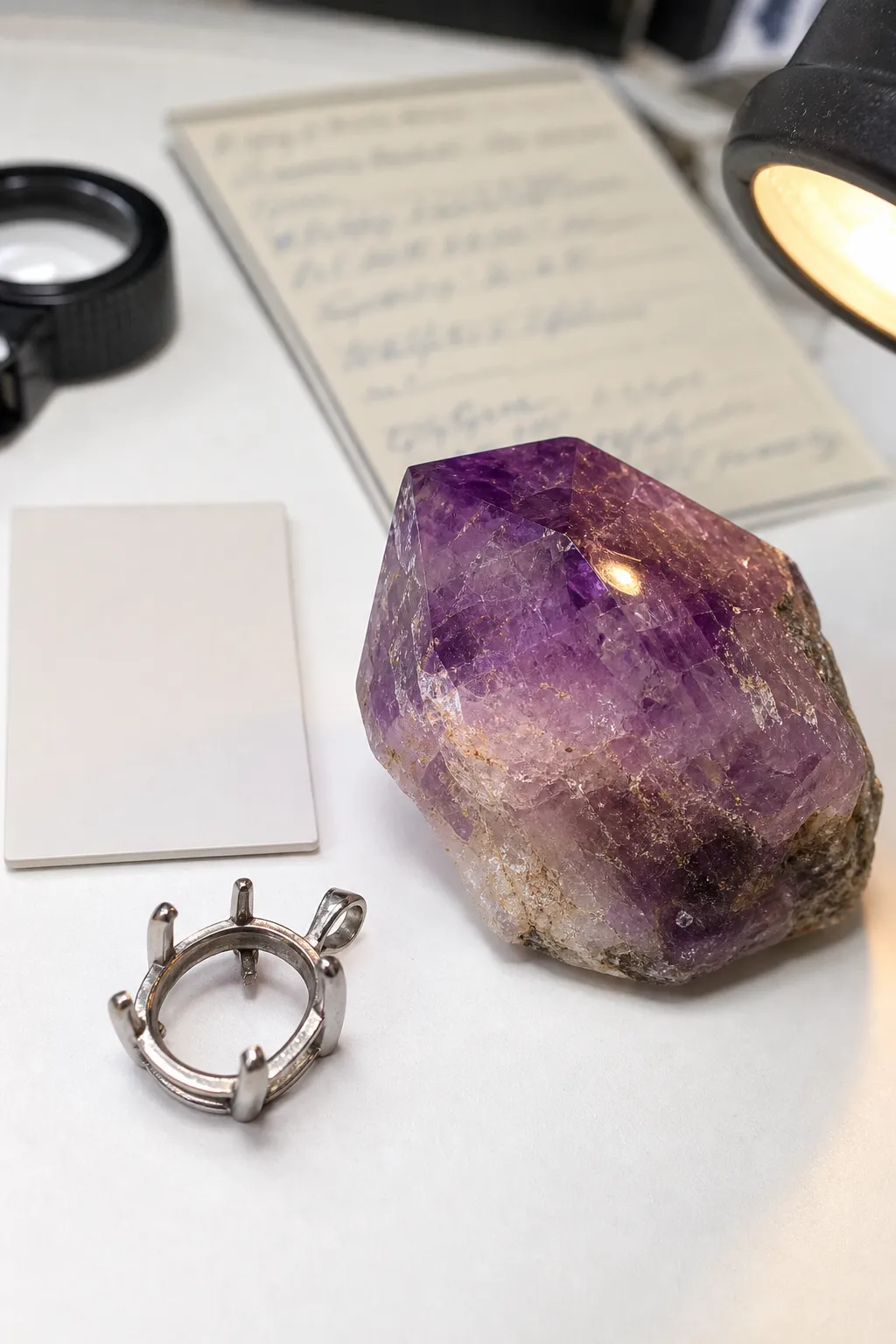
How to read rarity language
Four Peaks Amethyst often appears in the same conversation as rare American gems. That phrase has appeal because it suggests local origin, limited availability, and a story outside mass-market gemstone sourcing.
But rarity has layers. Amethyst as a mineral variety is not globally rare. A specific Arizona locality may still be collectible. A stone may also be uncommon because it has fine color, larger clean cutting material, old provenance, or better documentation. Those are different claims.
The safer wording is: Four Peaks Amethyst is marketed and collected as a distinctive Arizona locality material. Stronger claims about production limits, current mine access, unusual scarcity, or exceptional value need direct evidence beyond general amethyst color science.
This also applies to search interest around mine tours, mine trails, mine location, or public access. Those searches show curiosity, but the sources available for this article do not verify current access, tour availability, legal routes, operating status, or production scale. This page should not be read as a mine-access guide.
A practical hierarchy helps:
- Amethyst — violet quartz.
- Arizona amethyst — an origin category that needs support.
- Four Peaks Amethyst — a specific locality claim that should be documented.
- Magenta Flash amethyst — a color-description phrase to assess visually.
- Premium or rare — a market conclusion that depends on provenance, color, cutting, condition, and documentation.
What to check before accepting the premium
If you are evaluating a stone represented as Four Peaks Amethyst, focus on the parts that can be checked.
Look for specific origin language. “Four Peaks, Arizona” is more meaningful than “American amethyst,” but only if the seller can explain why that attribution is being used.
View the color in more than one condition. If the appeal is a magenta overtone, ask for daylight and neutral indoor-light images. A stone that looks reddish-purple only in one highly staged photo may still be beautiful, but the effect should not be treated as constant.
Separate the gem from the setting. Rose gold, yellow gold, and nearby accent stones can make an amethyst look warmer. That does not make the color false, but the gem’s body color is easier to judge apart from the jewelry design when possible.
Be careful with treatment assumptions. Studies show that heat can alter amethyst color, and heat treatment exists in the broader quartz market. The available sources here do not establish treatment status for Four Peaks Amethyst as a category. Claims such as “untreated,” “natural color,” or “mine-direct” should be supported rather than implied by the locality name.
Finally, match the price to the full picture. A higher price may reflect locality, color, cutting, jewelry craftsmanship, dealer reputation, or documented provenance. It may also reflect storytelling. The label alone should not carry the whole premium.
The grounded answer
Four Peaks Amethyst stands out because it combines familiar violet amethyst with a specific Arizona locality identity. That origin story can give it stronger collector appeal than generic amethyst, especially when the stone also shows attractive reddish-purple color.
The limits are part of the answer. “Magenta Flash” should be treated as descriptive market language, not a formal grade. “Rare” and “premium” should depend on evidence, not on the label alone. The strongest Four Peaks piece is one where origin, color, condition, and any treatment claims are each shown clearly.
Enjoy the Arizona story, study the color in real light, and let documentation—not just the phrase—do the heavy work.