Amethyst care ritual
Smudging Purification Techniques for Raw Amethyst Clusters
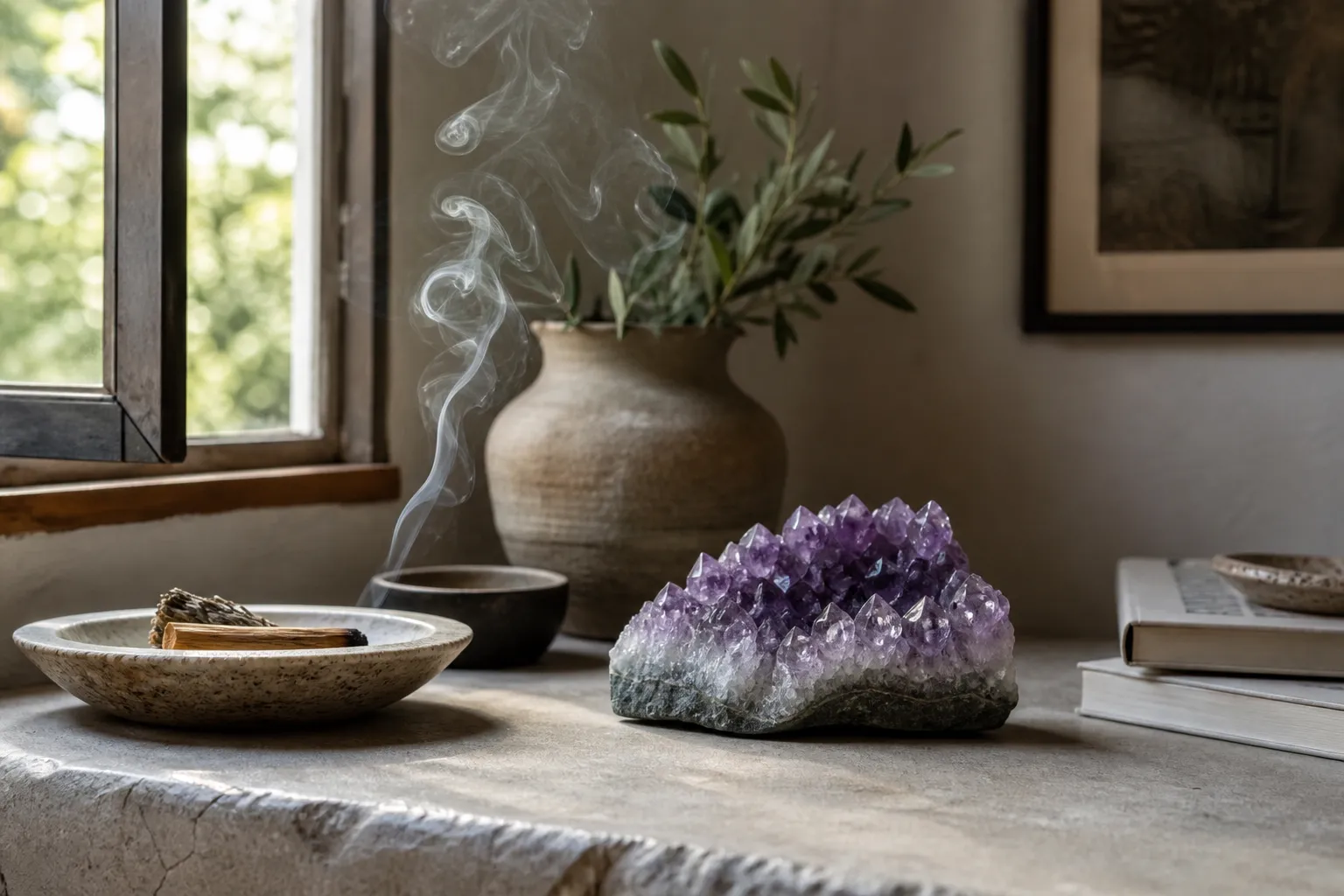
A Smudging Purification Technique for a raw amethyst cluster is best understood as a symbolic smoke ritual, not as a physical cleaning method for the stone. A simple version is: place the cluster on a stable surface, open a window, light a small amount of ritual smoke material such as white sage or Palo Santo, let the smoke move around the crystal for a short moment without heating or coating it, then close with a brief intention such as, “I release what no longer belongs here.”
The key limit is simple: amethyst is a quartz-family mineral. Smoke may help you mark a personal reset, but it does not replace ordinary mineral care, dust control, careful handling, or indoor ventilation.
broader context
Amethyst context note
This narrower page lands better after the broader amethyst context page.
A gentle smoke routine for a raw amethyst cluster
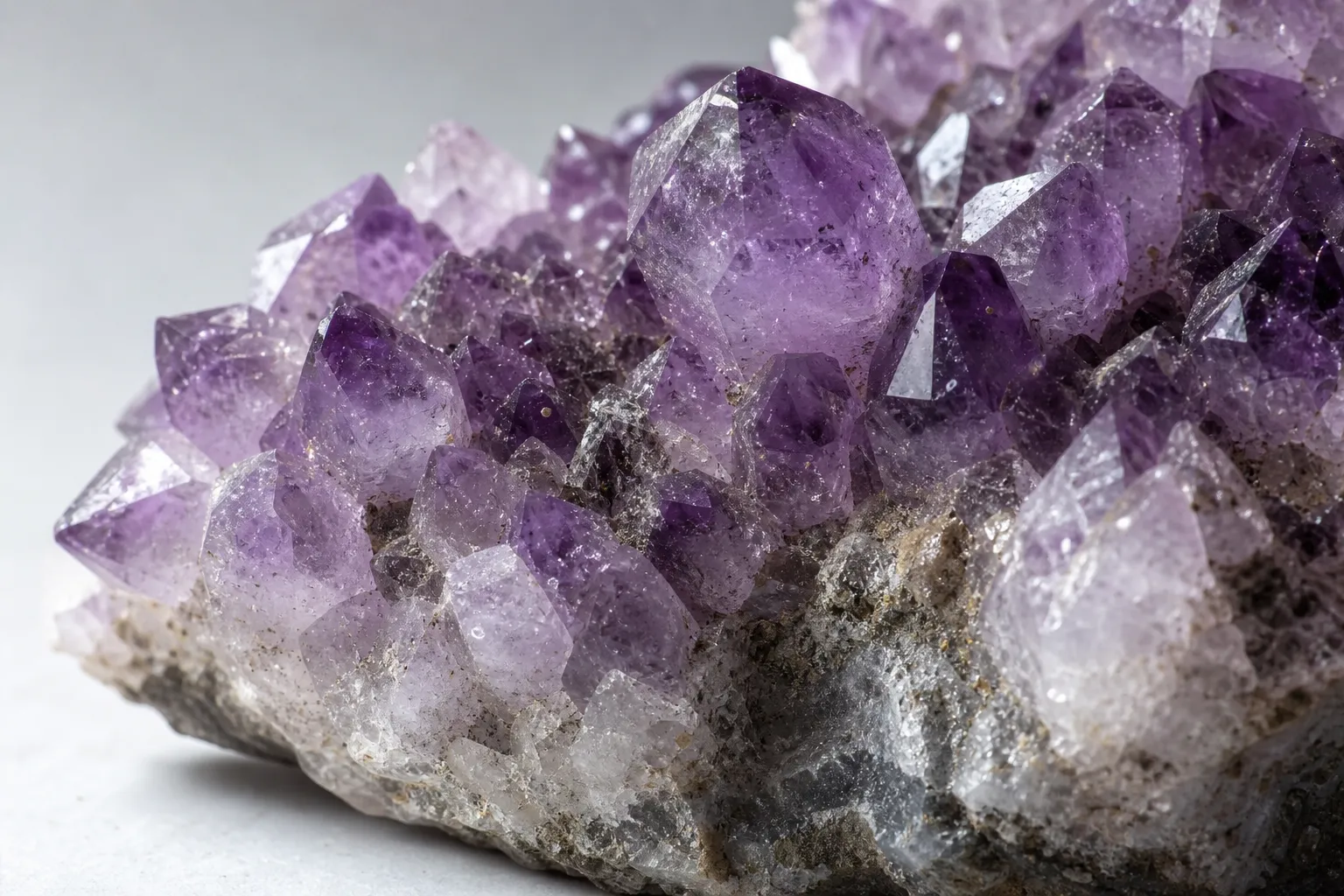
Raw amethyst clusters are uneven. They may have points, crevices, matrix rock, and delicate-looking terminations, so the ritual should stay light and hands-off. You are not trying to heat the stone, scrub it, wet it, or force a visible change. You are creating a quiet symbolic moment around the object.
A careful routine can look like this:
-
1. Prepare the space first.
Choose a steady table or shelf away from curtains, loose paper, pets, and drafts that could move ash. Open a window or use a well-ventilated room. Indoor smoke can add particles to the air, so ventilation belongs inside the ritual, not after it.
-
2. Set the amethyst down.
Place the raw cluster on a clean, stable, heat-safe surface. Avoid holding it over flame. Raw clusters can be awkward to grip, and sharp points or matrix edges may chip if the piece is dropped.
-
3. Use only a small amount of smoke.
White sage and Palo Santo are common examples in modern crystal practice, but they are not required. If you use either, light it briefly, let it catch, then extinguish the flame so only a thin trail of smoke remains.
-
4. Move smoke around the cluster, not heat into it.
Pass the smoke near the amethyst for a few seconds on each side. Keep the burning material far enough away that the crystal is not warmed, darkened by residue, or exposed to falling ash.
-
5. Name the intention plainly.
You might say, silently or aloud: “I clear this piece for calm, clarity, and fresh attention.” If you use the phrase “energy reset,” treat it as spiritual or metaphorical language—a way to describe your relationship with the stone, not a measured change in the mineral.
-
6. Close the ritual cleanly.
Put the ember out completely in a fire-safe dish. Let the air clear before returning the cluster to its display spot.
That is enough. Longer smoke exposure does not make the practice more certain, and it adds more indoor smoke. For raw amethyst cluster cleansing, restraint is usually the better choice.
What smoke can mean, and what it does not do
Symbolic meaning
The word “purification” can blur two different ideas: symbolic meaning and physical care. Keeping them separate makes the practice clearer.
As a symbolic practice, smoke can mark a transition. It may signal that the amethyst is entering a new room, a new altar, a new season, or a new role in the home. The ritual can help the owner pause, focus attention, and handle the crystal with care.
Material care
As mineral care, smoke is not a cleaning method. Amethyst is a variety of quartz, and its appearance depends on the condition of its surfaces, points, inclusions, and any attached matrix. Smoke does not remove grit from crevices in a controlled way. If overused or held too close, it may leave scent, ash, or residue.
A good rule is: ritual smoke may support meaning; it does not replace material care. If the cluster is dusty, use a separate cautious care method suited to the specimen, such as gentle dusting with a soft brush when appropriate.
White sage, Palo Santo, and respectful use
A white sage smudging example might involve one brief waft of smoke around the cluster while you name an intention for calm or release. A Palo Santo smudging example might look similar: a small piece of fragrant wood is lit, allowed to smoke lightly, moved near the amethyst, and then placed safely back in a fireproof holder.
These examples are common in consumer crystal language, but they need care. “Smudging” can carry cultural meaning beyond a casual home ritual. Some readers prefer broader phrases such as “smoke cleansing,” “symbolic smoke ritual,” or “ritual smoke practice,” especially when they are not working within a specific inherited tradition.
A respectful approach does not treat sacred or culturally specific materials as accessories with guaranteed outcomes. It also does not make one plant, wood, scent, or bundle mandatory for amethyst.
If you are unsure, keep the ritual plain. Use a small amount of ethically sourced material if you choose to use smoke at all. Avoid turning the practice into a shopping requirement. The center of the moment is the careful handling of the raw amethyst and the intention you bring to it.
Practical limits for raw clusters
Raw amethyst clusters are not the same as polished pocket stones. Their irregular structure creates a few practical limits:
- Avoid direct heat. The ritual needs smoke nearby, not flame or heat applied to the mineral.
- Avoid ash on the points. Ash can settle into tiny spaces and make the cluster look dull or dirty.
- Avoid oils, sprays, saltwater, and baths. Those raise different care questions and do not belong in this smoke-based method.
- Avoid rough handling. Move the smoke source, not the stone, when possible.
- Watch for visible residue. Pale matrix, fine points, and rough surfaces can show residue more easily than polished pieces.
These are practical amethyst care limits, not spiritual judgments. They come from treating the object as a real mineral specimen as well as a meaningful object. If a cluster is valuable, unusually delicate, repaired, dyed, coated, or part of a serious collection, be more conservative and skip anything that could leave residue or increase handling risk.
When to skip smoke
The smoke part is optional. If anyone nearby is sensitive to smoke, if the room is small or poorly ventilated, or if pets, children, smoke alarms, lease rules, or shared housing make smoke impractical, skip it.
A smoke-free version can preserve the same intention:
- Place the raw amethyst cluster in a clean, quiet spot;
- Clear dust from the surrounding surface;
- Take a slow breath;
- Name the intention for the piece;
- Leave it undisturbed for a few minutes.
For readers searching for amethyst energy reset meaning, this is the cleanest way to frame it: the reset is a symbolic reset of attention, relationship, and intention. It is not a physical reset of quartz.
Common confusion around ritual smoke and amethyst
Smoke purification is not mineral cleaning
One common mistake is treating smoke purification and mineral cleaning as the same thing. They are separate. If the cluster is dusty, use a care method suited to the stone. If you want a symbolic clearing, keep the ritual language symbolic and the smoke light.
White sage or Palo Santo is not required
Another mistake is assuming white sage or Palo Santo is required. They are examples, not rules. Some readers choose neither for cultural, ecological, personal, or indoor-air reasons. The ritual can still feel complete.
“Purified” is not a guaranteed result
A third misunderstanding is treating “purified” as a guaranteed result. In crystal communities, cleanse, purify, and reset are often shorthand for a personal or spiritual process. The more honest wording is softer: smoke can mark a meaningful pause, while ordinary care protects the mineral.
Simple checklist before you begin
Before smudging a raw amethyst cluster, check four things:
- Is the room ventilated?
- Is the flame or ember kept away from the crystal?
- Is the practice brief enough to avoid ash and heavy smoke?
- Are you treating the “energy reset” as symbolic rather than a physical mineral change?
If the answer is yes, a Smudging Purification Technique can be a calm, respectful way to reintroduce a raw amethyst cluster into your space. Keep the smoke modest, keep mineral care separate, and let the stone remain what it is: a quartz mineral with physical presence and personal meaning.