Practical amethyst care
The “Driving Arm” Phenomenon: Protecting Jewelry During Commutes
If your amethyst ring sits on the hand closest to the driver-side window, you do not need to stop wearing it for ordinary commutes. The better habit is simpler: reduce repeated, unnecessary exposure.
Good amethyst ring care for driving means avoiding long direct side-window sun when it is easy to do so, never leaving the ring in a parked car, wiping off lotion or steering-wheel residue after the trip, storing it in a soft separate pouch if you remove it before driving, and checking the setting after snags or knocks.
That is a precaution routine, not a panic routine. Available sources support gentle care for amethyst and show that car-window UV behavior can vary. They do not show that a normal commute through a side window will definitely fade an amethyst ring, and they do not prove that any specific car window fully protects it.
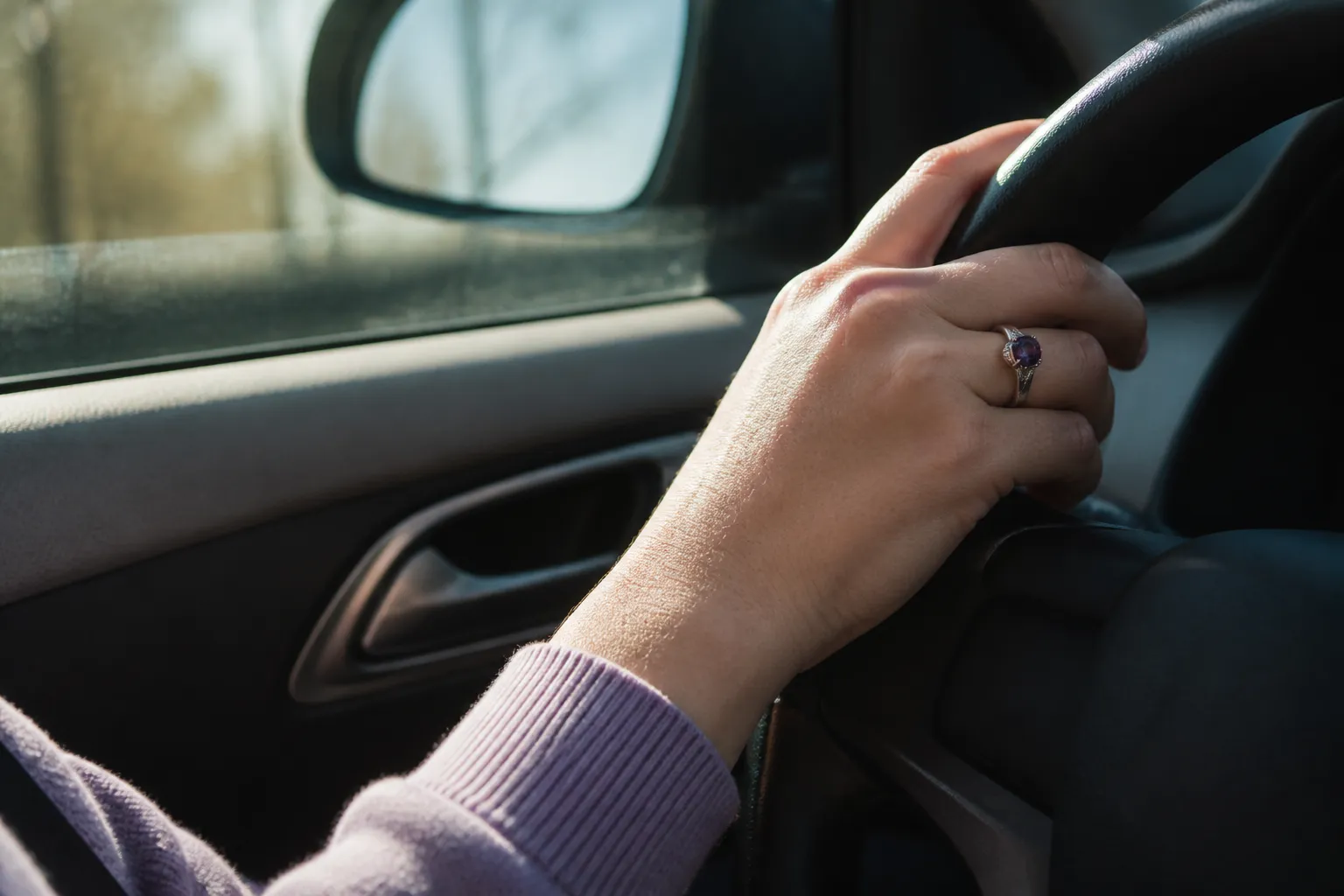
Why the driver-side hand needs a little extra attention
The “driving arm” is not a formal gemology term. It is the everyday pattern of one hand spending repeated time near the side window, often in angled sun, while also meeting the steering wheel, seatbelt, door handle, bag strap, keys, phone mount, and console.
For an amethyst ring, the commute can combine several small stressors:
- direct or angled sunlight through the side window
- heat buildup when the car is parked
- lotion, sunscreen, sweat, dust, and steering-wheel grime
- grit around the setting
- knocks from seatbelts, door handles, bags, keys, or textured steering-wheel covers
- unsafe temporary storage in cup holders, trays, dashboards, or loose pockets
None of this makes driving unusually dangerous for an amethyst ring. The issue is repetition. A single morning drive is unlikely to be the deciding factor; months or years of light, heat, residue, and impact habits are more relevant.
GIA’s amethyst care guidance supports this moderate approach: amethyst is durable enough for many jewelry uses, but it still benefits from gentle cleaning and sensible protection from harsh handling.
Car-window sun is not all-or-nothing
A common misunderstanding is that a closed car window makes sunlight irrelevant. The opposite mistake is assuming that any side-window sun will quickly damage the stone. Neither view is careful enough.
Studies on automobile glass show that UV transmission can vary by glass type, window position, coating, tint or film, vehicle design, and UV wavelength. Windshields are commonly laminated and often reduce UV transmission differently from side windows. Many side and rear windows use tempered glass, which is important for vehicle safety but should not be treated as a complete jewelry-care shield.
For an amethyst ring, the practical takeaway is narrow: because the driver-side hand sits close to the side glass, it is reasonable to limit long, direct sun exposure when convenient. But the evidence does not support a claim that routine driving will definitely fade the stone.
What to do while driving
Do not remove, clean, or adjust jewelry while operating the vehicle. Any ring-care decision should happen before you start driving or after you park.
If the ring feels secure and comfortable, wearing it during a normal commute is usually the simplest option. When the sun is intense and the ring hand is sitting in a bright beam for a long stretch, small non-distracting habits can help:
- keep the hand lower on the wheel when it feels natural and safe
- avoid resting the ring directly in a hot, sunlit window beam during long stops
- use normal glare-control features, such as a visor, only as part of safe driving
- avoid placing the ring hand on a sun-heated door trim, metal surface, or window ledge
The point is not to hide the ring from every flash of daylight. It is to avoid turning the side-window sunbeam into a daily display case.
Wearing the ring is different from leaving it in a parked car
The clearest rule is this: do not leave an amethyst ring in a parked car.
A ring on your hand moves, shifts in and out of shade, and gets noticed if it catches or feels uncomfortable. A ring left in the car can sit in direct sun, heat, dust, or a hard plastic cup holder with no one paying attention. Parked vehicles can become hot inside, and while that research is not about jewelry, it supports the ordinary care rule: a closed car is a poor storage place for a gemstone ring.
Amethyst color and heat are real gemological topics, but normal commuting is not the same as controlled high-temperature treatment. That distinction matters. The practical conclusion is not that your car is a gem-treatment chamber; it is that unnecessary heat storage is easy to avoid.
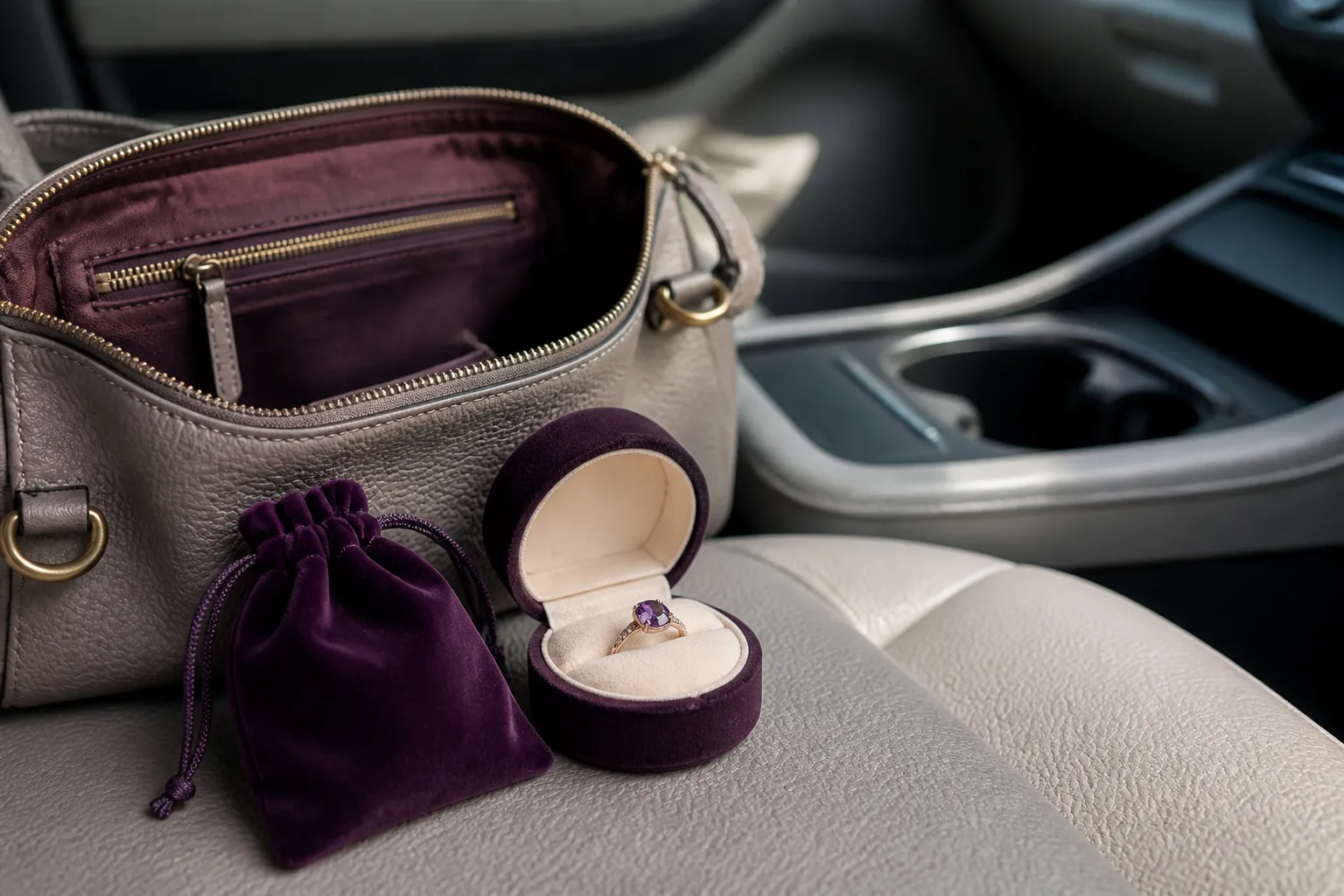
Better places if you remove the ring before driving
- a small soft pouch
- a lined ring box
- a dedicated zip compartment in a bag
- a compact ring holder that closes securely
Places to avoid
Avoid the dashboard, cup holder, open console tray, key pocket, loose change area, or mixed jewelry pouch. Those places add heat, grit, hard contact, and loss risk.
The best habit is almost boring: if the ring comes off, it goes into the same soft, closed place every time.
A simple commute routine for amethyst ring care
The routine should fit around the drive, not become a full jewelry-cleaning session.
Before driving
If your hands are covered in lotion, sunscreen, perfume, hand sanitizer residue, or heavy moisturizer, let products dry before putting on the ring when possible. These materials are part of ordinary life, but they can leave a film around the stone and setting. Film does not mean the amethyst is damaged; it can make the ring look dull and collect dust.
Before a long sunny drive, decide whether the ring will stay on or go into its pouch. Avoid making that decision at a red light. If the ring is already loose, catches on fabric, or feels unstable, leave it off and have the setting checked.
During the drive
Wear the ring normally, but avoid repeated contact with abrasive or hard surfaces. Steering wheels are not usually a problem by themselves, but grime, textured covers, grit, and repeated rubbing can collect around prongs and under the stone.
Watch for the real snag points:
- seatbelt edges catching raised settings
- bag straps scraping across the ring when you enter or exit
- door handles and seat-adjustment levers knocking the stone
- keys or metal objects held in the same hand
- rough steering-wheel covers rubbing the setting
You do not need stiff, unnatural hands. Just notice where the ring actually gets hit, rubbed, or caught.
After parking
For an ordinary commute, a quick wipe is often enough. Use a soft, lint-free cloth to remove skin oils, lotion film, dust, and steering-wheel residue. This is especially useful after hot, sweaty, or product-heavy drives.
If buildup remains, use a gentle method consistent with established amethyst care: lukewarm water, mild soap, and a soft brush used lightly around the setting, followed by careful rinsing and full drying with a soft cloth. Avoid harsh chemical cleaners, chlorine exposure, abrasive scrubbing, and very hot water. Longer soaking is not automatically better.
If the ring includes other gemstones, delicate treatments, glued elements, antique construction, or a fragile setting, care for the most delicate part of the whole ring, not just the amethyst.
After a snag, knock, or residue-heavy day
A seatbelt snag or door-handle knock does not automatically mean the ring is damaged. It does mean the setting deserves a calm check after you park.
Look for:
- a stone that shifts, clicks, or feels loose
- prongs that look lifted, bent, uneven, or sharp
- a new gap between the stone and setting
- a prong catching hair, fabric, or a towel
- a visible chip, scratch, or abrasion
- sudden dullness caused by residue around the stone
Do not try to tighten prongs yourself. If the amethyst moves in the setting or a prong appears lifted, stop wearing the ring until a qualified jeweler can inspect it. Continuing to wear a loose stone during driving, errands, and bag handling increases the chance of losing it.
Residue-heavy days are different. If the ring looks cloudy after sunscreen, lotion, dust, or sweat, start with a soft cloth. If the film remains, use mild soap and lukewarm water. Save professional help for loose stones, bent settings, buildup you cannot remove gently, or uncertainty about mixed materials.
The sunlight question: precaution, not panic
Many amethyst owners have heard that sunlight can affect amethyst color. It is a sensible warning to respect in daily habits, but the commute version needs a narrow answer.
A short drive with the ring near the side window is not the same as leaving amethyst on a sunny windowsill for long periods, storing it on a dashboard, or exposing it to controlled high heat. Current evidence does not give a commute-specific fading threshold for amethyst through car glass. It also does not allow a blanket promise that tempered glass or any side window fully protects the stone.
The balanced approach is to reduce the exposures you can control:
- do not store the ring in direct sun inside the car
- avoid the dashboard, cup holder, and hot console tray
- wipe away residue that can hold dust and dull the surface
- store the ring separately if you remove it before driving
- check the setting after snags or knocks
- use gentle cleaning instead of harsh chemical shortcuts
That is daily wear protection in the practical sense: small habits that preserve appearance and reduce avoidable stress, without treating every commute as an emergency.
Quick commute checklist for an amethyst ring
Before driving:
- Put the ring on after lotions or sunscreens have absorbed when possible.
- If removing it, place it in a soft pouch, lined box, or dedicated compartment before the car moves.
- Do not use the dashboard, cup holder, console tray, or key pocket as a ring holder.
During the commute:
- Avoid resting the ring in a strong side-window sunbeam for long periods when it is easy and safe not to.
- Keep the ring away from rough steering-wheel covers, keys, and hard surfaces.
- Do not adjust or clean the ring while driving.
After parking:
- Wipe the ring with a soft, lint-free cloth if it picked up sweat, lotion, dust, or steering-wheel grime.
- Use mild soap and lukewarm water only when a simple wipe is not enough.
- Check prongs and the setting after seatbelt snags, door-handle knocks, or bag-strap catches.
- If the stone feels loose, stop wearing it and have it inspected.
The “driving arm” problem is best handled with proportion. Your amethyst ring can remain part of daily life; it simply should not be treated like a loose object in a hot, sunny car. Wear it with attention, store it deliberately, clean it gently, and let repeated commute exposure become a manageable care habit rather than a source of worry.