Crystal care boundary
Stop Burning Your Stones: Why the "Hair Test" Fails
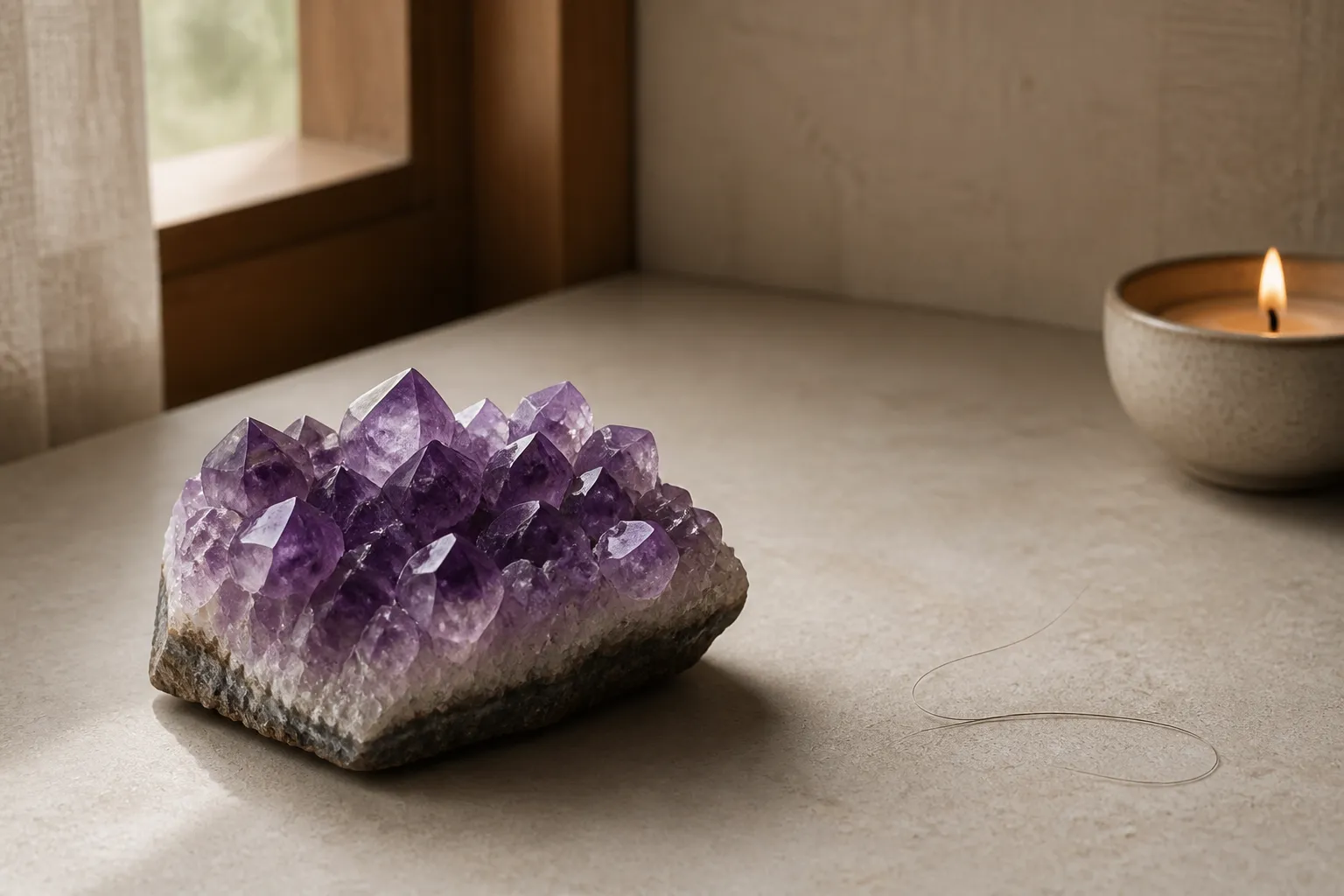
The Hair burn test is not a reliable way to tell whether a crystal is real, and it is a poor choice for amethyst. The shortcut usually claims that a strand of hair will react differently when touched to a “real” stone because of heat transfer. That turns one rough observation into a conclusion it cannot support.
A better answer is narrower: amethyst is a purple variety of quartz, heat is not good crystal care, and a burn trick cannot identify a stone’s material, origin, treatment history, or seller accuracy. If the piece matters to you, do not put flame, heated tools, or burning hair near it. Use non-destructive checks first, and get proper gemological help when the item has financial, collector, or personal value.
broader context
Amethyst context note
This narrower page lands better after the broader amethyst context page.
Why the hair burn test gives the wrong answer
The problem is not only that the burning hair test is unpleasant or risky. The bigger problem is that it asks one crude question and treats the result like a full authenticity verdict.
With amethyst, a real identification question may include several smaller questions:
- Is the material actually quartz?
- Is the purple color consistent with amethyst?
- Is the item natural, synthetic, treated, coated, dyed, assembled, or simply mislabeled?
- Is the seller using “real” to mean mineral identity, untreated origin, symbolic value, or just “not plastic”?
- Is the object a loose specimen, bead, carving, pendant, or decorative piece with adhesives or surface finishes?
A hair burn test cannot answer those questions. At most, it shows how hair, heat, and a surface behaved under uncontrolled conditions. That is not mineral identification.
This is why fake crystal tests spread so easily. They feel decisive: hold, heat, watch, decide. But a ritual can feel convincing and still be weak evidence. For amethyst care, the practical rule is simple: do not use flame as a quick crystal test.
Thermal conductivity is a clue, not an authenticity shortcut
Many versions of the hair test borrow the phrase “thermal conductivity.” The concept is real: materials transfer heat in different ways. Some objects feel cooler or warmer in the hand because of how they move heat away from your skin.
The myth begins when that general idea is used as if it can identify any “real crystal” at home. It cannot.
Several details can change what happens in a casual test:
- The object may be polished, carved, glued, coated, set in metal, or handled with oils.
- Size, thickness, room temperature, contact pressure, and surface condition all matter.
- “Real crystal” is not one material. Quartz, glass, plastic, calcite, fluorite, and other materials do not share one universal response.
- A heat reaction does not tell you whether amethyst is natural, treated, synthetic, dyed, or accurately described.
- The available visible sources for this page support mineral terminology and care boundaries, not a controlled study of the hair burn method itself.
That last point matters. This is not a claim that every version of the trick has been tested in a lab. It is a more careful conclusion: there is no solid reason to treat the hair burn test as a trustworthy diagnostic method, and there are good practical reasons not to expose amethyst or other crystal objects to flame.
What burning can risk, especially with amethyst
Mineral references describe amethyst as a purple variety of quartz. That places it in the quartz family, but it does not make every amethyst object safe to heat.
Care guidance for amethyst favors gentle handling and cautious cleaning. A flame-based trick adds heat, soot, hair residue, pressure, and sometimes contact with metal, glue, cord, or coating. It is not a clean test of the mineral.
The damage does not have to be dramatic to be a bad trade. A smoky film, scorch mark, loosened setting, or changed surface can be frustrating on a piece you wanted to keep. For a cheap tumble stone, the test still tells you very little. For a pendant, specimen, gift, or serious purchase, it risks too much for too little information.
“Real amethyst” is not one question
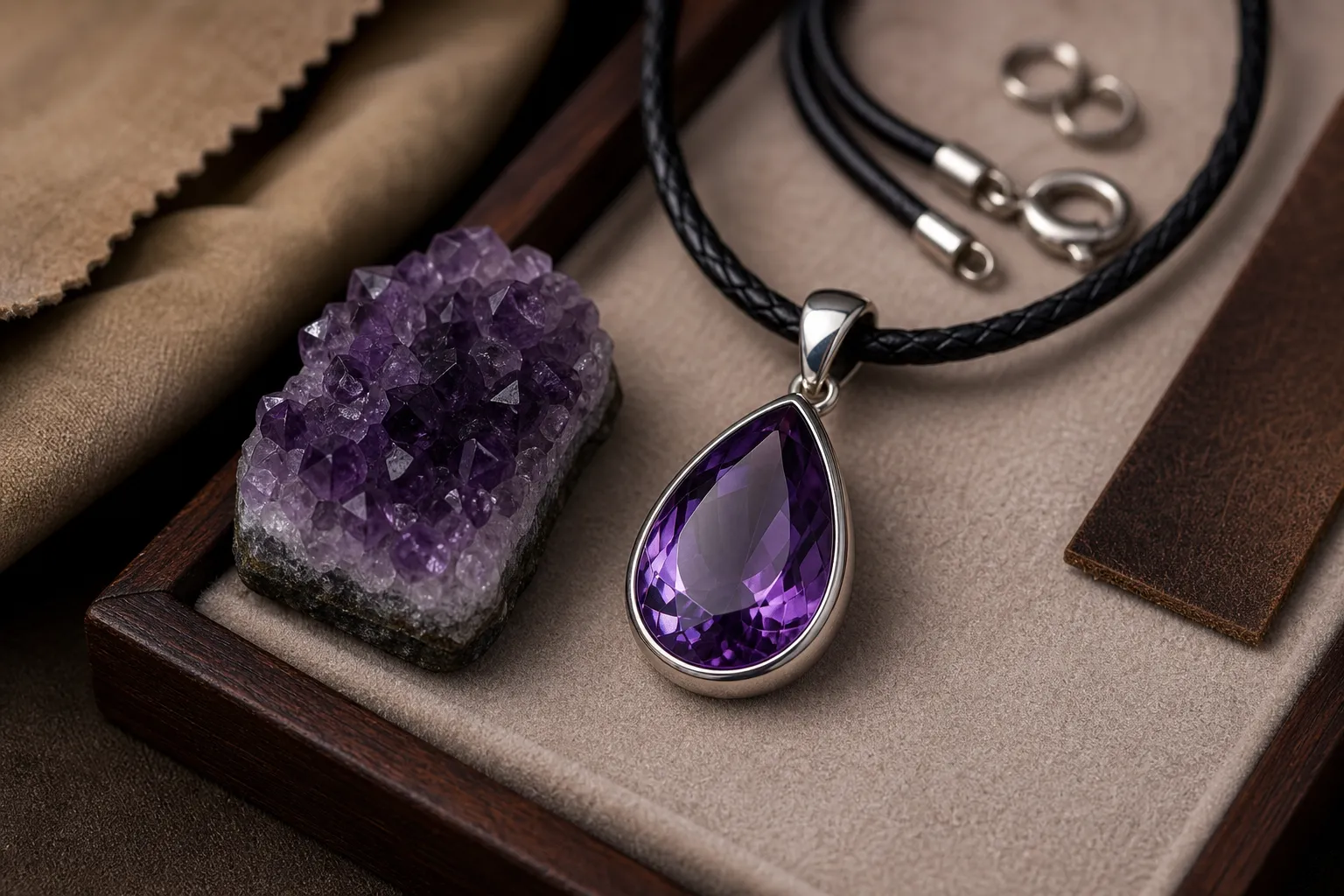
A lot of confusion sits inside the word “real.” In mineral language, amethyst means purple quartz. In buying language, “real amethyst” may also mean natural, untreated, not glass, not dyed, not synthetic, not coated, or not falsely advertised.
Those are related concerns, but they are not the same concern.
A piece could be quartz and still have unclear treatment claims. A purple object could resemble amethyst and still need closer identification. A bead could be genuine mineral material while also being enhanced or part of an assembled product. A seller could use collector language loosely. None of that is settled by watching a hair react near a hot surface.
That is where the hair test becomes especially misleading. It promises to solve “fake crystals,” but “fake” is not one material. It may refer to glass substitutes, dyed stones, mislabeled minerals, synthetic material, coated objects, or vague marketing language. Without a specific question and a proper method, the test has no clean target.
For amethyst, separate the question:
- For mineral identity, compare the piece with quartz-related properties and reliable references.
- For treatment status, ask for seller disclosure or documentation.
- For purchase confidence, review the seller’s claims, photos, pricing, return policy, and wording.
- For valuable, sentimental, or unusual pieces, skip home damage tests and use professional evaluation.
That is less instant than a viral trick, but it matches the real problem better.
Safer checks before any destructive test
A non-destructive approach will not answer everything, but it gives you better information without damaging crystals. The goal here is not to turn a simple care question into a gemology course. It is to move the decision away from fire.
Start with context. Where did the piece come from? Was it sold as natural amethyst, treated amethyst, quartz, glass, or a decorative “crystal”? Does the listing make broad promises? Do the photos match what arrived? Does the seller use clear material language?
Then examine the object gently. Look under good light. Use magnification if you have it. Notice color zoning, bubbles, surface coatings, chips, seams, drill holes, glue, and how the piece is mounted. These observations do not automatically settle authenticity, but they can show when “real or fake” is too simple a label.
Be careful with scratch tests too. Quartz has known hardness behavior, but scratching is still a destructive act. It can damage the object or the thing you test it against, especially with polished stones, jewelry, beads, carvings, and pieces you want to keep intact.
For more serious questions, match the check to the value of the item. Ask for documentation, compare with reliable mineral references, consult a local lapidary or gem professional, or use appropriate gemological testing. The more expensive or meaningful the item is, the less sense it makes to gamble on a fake crystal test from a short video.
Why the careful answer feels less satisfying
The hair burn myth survives because people want a home test with a clean answer. That desire is understandable. Crystal buying can be confusing, and amethyst listings often mix geology, décor, symbolism, and sales language in one small label.
But the careful answer is less dramatic because the evidence is narrower than the myth suggests. The sources available here support amethyst care, quartz terminology, and heat-risk boundaries. They do not provide a direct experimental record of the hair burn test, measured comparisons for this use, or documentation of every claimed pass/fail outcome.
That limitation does not make the test stronger. It means the conclusion should stay practical: do not treat burning hair on or near a crystal as an authenticity answer, and do not risk damaging amethyst for a result that cannot settle the full question.
If you are holding a piece right now, put away the flame. Photograph the stone in natural light, note what the seller claimed, look for non-destructive clues, and decide whether the item matters enough for proper evaluation. For most casual pieces, that is enough to avoid needless damage. For higher-value amethyst, it is the start of a more serious identification process.
Quick answers
Can the hair burn test show that amethyst is real?
No. It should not be used as a final answer for amethyst. Identification involves mineral and marketplace questions that a burning hair reaction cannot settle.
Is thermal conductivity useless for identifying minerals?
Not useless, but it is not a home shortcut by itself. Thermal behavior can be part of material science, while a casual hair burn test is not a controlled gemological method.
What should I do instead of burning a crystal?
Use non-destructive crystal care guidance: inspect the piece under good light, check seller claims, avoid scratch or flame tests on valued items, and seek proper evaluation when the object’s identity or value matters.