Gem color mechanism
Valence State Engineering: Creating Impossible Gemstone Colors in the Laboratory
Valence state engineering can make unusual laboratory gemstone colors scientifically plausible because gem color often comes from electron behavior inside a mineral, not from a paint-like surface layer. If controlled conditions change the oxidation state of certain ions, the bonding environment around them, or defect-related color centers, the stone may absorb different wavelengths of visible light and appear to shift color.
That does not mean every vivid gem is engineered, durable, rare, untreated, or more valuable. It means the color can be physically real while still needing careful treatment disclosure.
The useful reading is narrow:
Valence state engineering explains one possible color mechanism. It does not, by itself, settle natural origin, market value, long-term stability, or how a stone should be represented to a collector.
broader context
Begin with the main amethyst page
This narrower page lands better after the broader amethyst context page.
Why an Engineered Gem Color Can Be Physically Real
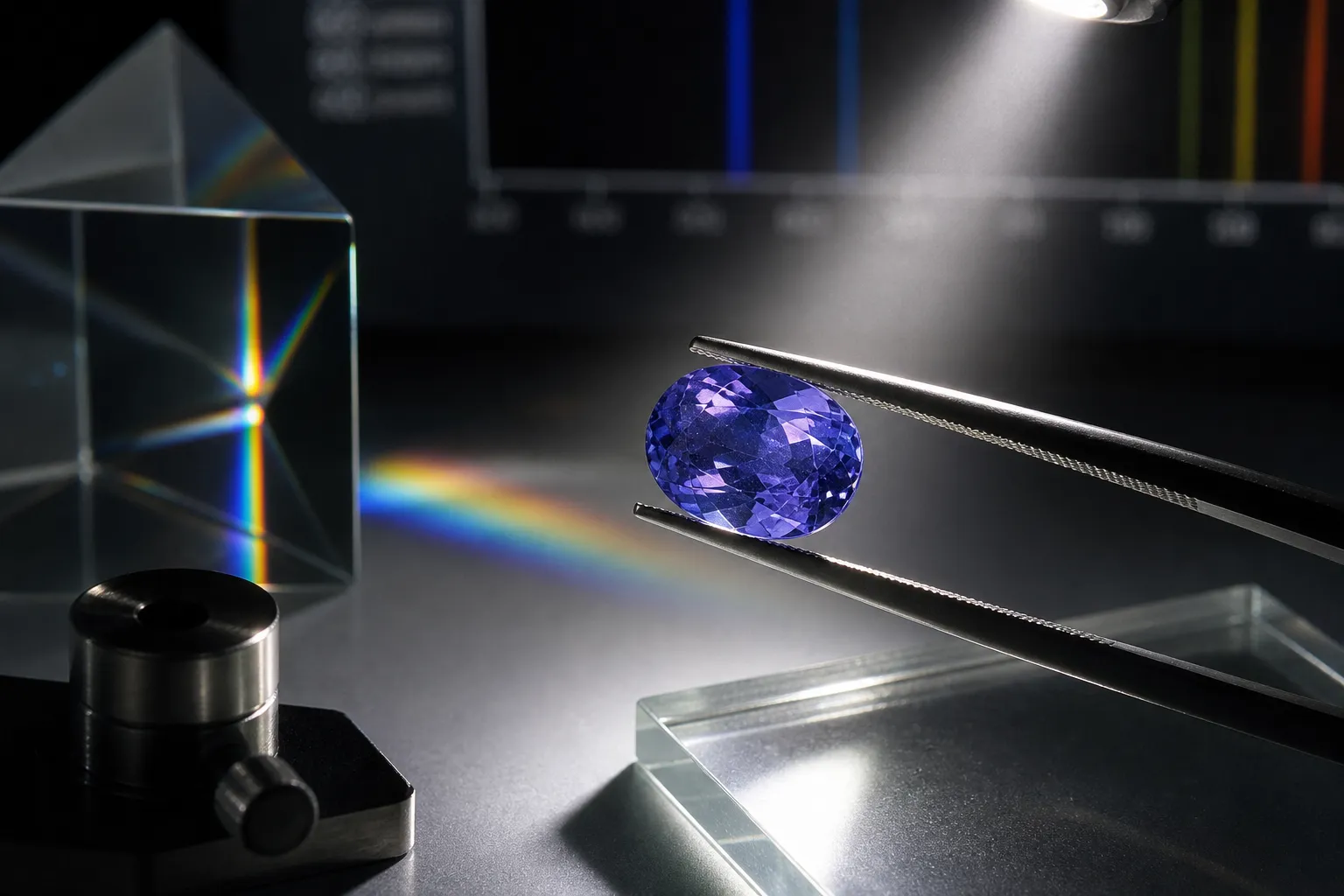
A gemstone’s visible color is the large-scale result of small-scale structure. To the eye, a stone may look violet, blue-green, orange, pink, or nearly colorless. Inside the crystal, the color depends on which parts of visible light are absorbed as electrons respond to their surroundings.
Several mineral color mechanisms can be involved. Transition metal ions matter because their electrons can interact with light in ways that produce strong color. Charge transfer can matter when electrons move between neighboring ions, or between an ion and its surrounding structure. Color centers, which are defect-related sites in a crystal, can also absorb visible light.
Valence state engineering fits into this picture when a laboratory condition changes the electron-related state of a coloring component. A transition metal ion, for example, may exist in more than one oxidation state, and those states may absorb light differently. A change in local bonding environment can also shift how electrons respond to visible light.
That is why “impossible” gemstone color needs careful wording. The color may look surprising compared with familiar natural material, but it is not magic, and it is not necessarily just a coating. It may come from real electronic color mechanisms inside the gem material. The better question is not only “Is the color real?” but “What caused it, how was it produced, and how should it be disclosed?”
What the Laboratory Is Actually Changing
In plain language, valence refers to electron arrangement and charge state. In gemstone color, the practical question is whether a coloring element or defect site absorbs visible light differently after its electronic condition changes.
A laboratory treatment may influence one or more broad factors:
- The oxidation state of a coloring ion
- The way nearby atoms bond around that ion
- The presence or behavior of defect-related color centers
- Charge-transfer pathways that affect visible absorption
- The balance between several color mechanisms in the same material
This does not mean color is always being added from the outside. In many mineral color explanations, the crystal already has the structural possibility for color. Treatment may alter which electronic arrangements are favored, changing which wavelengths are absorbed. The color seen by the viewer is the remaining transmitted or reflected light.
The limit is important. The available public references support the general mechanism: transition metal ions, charge transfer, color centers, defects, and local electronic structure can affect mineral color. They do not support a claim that a named gem species will reliably turn a specific color under a simple process. They also do not support instructions for heat, irradiation, chemicals, pressure, atmospheres, or other treatment conditions.
“Precise heat treatment” sometimes appears in discussions of gemstone color enhancement. Here, it should be understood only as a broad category of laboratory alteration, not as a recipe. The scientific point is that controlled conditions can sometimes change electronic color mechanisms. The gemological point is that an altered color should not be represented as naturally occurring if treatment changed it.
Mechanism Is Not the Same as Disclosure
The science explains why a color can happen. Disclosure explains how the stone should be described.
That distinction matters because a collector may care about the route by which a color appeared, not only the beauty of the finished gem. A laboratory-altered color can be visually appealing and physically real while still being a treated gemstone. Natural color, treated color, and laboratory-grown origin are different claims, and they should not be blurred together.
Terms such as treatment, enhancement, laboratory-altered color, natural color, and disclosure are not just wording choices. They shape what a buyer may believe about origin, rarity, and the history of the stone. A valence-related mechanism does not remove the need for transparent language.
This is especially relevant for purple and violet gems, including quartz varieties, because color often carries aesthetic and symbolic associations. A rich or unusual hue can invite assumptions about depth, rarity, or atmosphere. Those assumptions are not evidence. Color alone cannot show whether a stone is untreated, treated, synthetic, naturally uncommon, or commercially desirable.
A careful description keeps the claims separate:
- The visible color is produced by optical behavior inside the material.
- The color may involve electronic absorption mechanisms.
- The color may have been changed by treatment.
- Known treatment history should be disclosed.
- The color does not automatically prove rarity, value, or natural origin.
That separation keeps the mineral science useful without turning it into sales language.
Common Confusions Around “Impossible” Gem Colors
The phrase “impossible color” is usually more dramatic than scientific. It can describe a color that looks outside familiar expectations, but it should not be treated as proof of rarity, desirability, or a specific process.
Confusion: Laboratory-altered color must mean fake
That is too simple. A treated gemstone may still be a real mineral specimen or cut gem, and its color may arise from internal electronic mechanisms. “Treated” means the appearance has been altered or enhanced in a way that should be represented clearly.
Confusion: All color alteration is dye or coating
Some gemstone color changes may involve internal absorption rather than a surface layer. If transition metal ions, charge transfer, or color centers are involved, the color mechanism can be part of the crystal’s optical behavior. That does not mean every altered color has the same depth, stability, or treatment history.
Confusion: Every unusual color comes from valence state engineering
Mineral color has many causes. Some color relates to transition metal ions, some to charge transfer, some to color centers or structural defects, and some to other optical or chemical mechanisms. Valence-related effects are one family within a wider color system, not a universal explanation.
Confusion: Advanced-sounding color means higher value
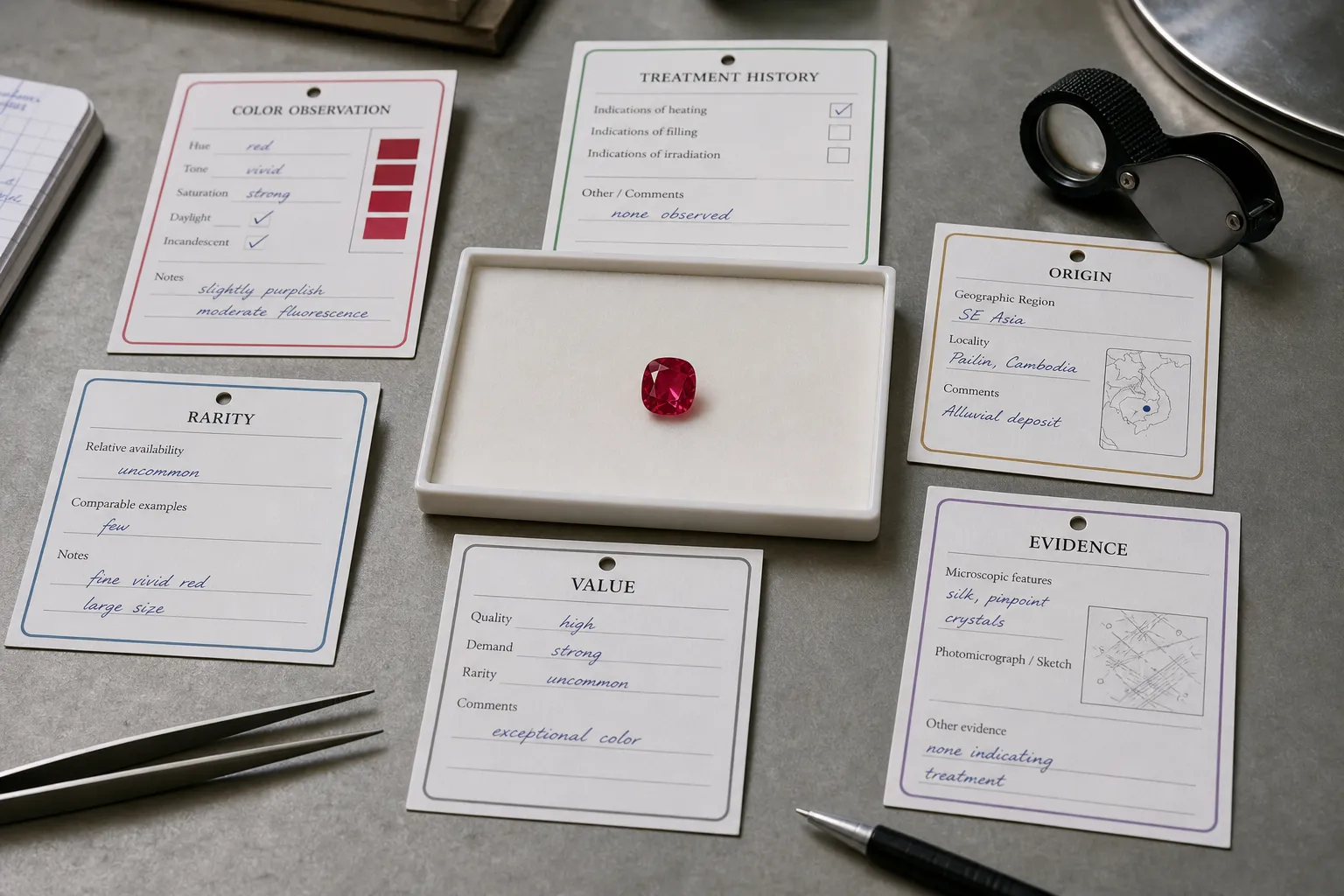
There is also a market shortcut: if a color sounds advanced, engineered, or rare, it may be tempting to infer higher value. The source set for this page does not support that leap. Value depends on identity, origin, treatment status, quality, demand, and documentation. This article is about scientific plausibility and disclosure boundaries, not appraisal.
What Changes the Answer in a Real Gemstone
Whether valence state engineering is a plausible explanation for a specific gemstone color depends on more than the final hue. A gemological laboratory would need to consider the material, trace elements, defects, treatment history, and optical evidence. Without that analysis, the phrase remains a possible mechanism rather than a verified cause.
The answer becomes more cautious when the gem species is not named, when the treatment route is unknown, or when a seller uses broad language such as “enhanced,” “lab perfected,” or “impossible” without documentation. Those words may describe marketing perception, but they do not identify an oxidation state, a color center, or a charge-transfer pathway.
The answer also changes when natural mechanisms can produce a similar look. If untreated material can occur in a comparable color range, appearance alone is not enough to prove laboratory alteration. Conversely, if a color looks unfamiliar, that unfamiliarity does not prove it came from a valence-controlled process. It only raises a question.
A grounded reading looks like this:
- Color appearance is evidence of optical behavior, not a complete history.
- Electronic color mechanisms can make unusual colors possible.
- Laboratory alteration can be real without being naturally occurring.
- Disclosure belongs to the treatment history, not just the chemistry.
- Claims about durability, safety, legality, or value need stronger support than color alone.
The visible gem is only the surface of the question. The more useful distinction is between what the stone does physically and what someone claims about it commercially.
Safety and Process Boundaries
Valence-related color change should not be treated as a home experiment. The public material available for this page supports a general explanation of mineral color mechanisms, not procedural guidance. Laboratory gemstone color alteration can involve controlled environments and technical processes that should not be simplified into casual instructions.
For that reason, this article does not give heating schedules, irradiation details, chemical conditions, pressure settings, atmospheres, or equipment advice. It also does not claim that any color alteration is simple, reversible, permanent, predictable, or appropriate to attempt outside qualified settings.
The editorial boundary is mechanism and representation: a lab may be able to alter electronic color behavior in a mineral, and a collector still needs clear treatment language. The explanation should not be converted into a method.
The Short Practical Answer
Valence state engineering can create unusual laboratory gemstone colors when controlled conditions alter electron-related color mechanisms inside the mineral. Changes in oxidation state, transition metal behavior, charge transfer, color centers, or local bonding environment can change visible absorption, so the eye sees a different color. That is the scientific reason an engineered color can be real rather than merely painted on.
The same science also sets limits. It does not prove that a particular stone is naturally colored, untreated, valuable, stable, safe to modify, or produced by a specific process. It does not replace gemological testing or treatment disclosure. For a collector, the accurate position is balanced: unusual laboratory gemstone colors can be physically plausible, but the history of that color must be described separately from the beauty of the result.