Ethical sourcing and provenance
Ethical Sourcing in 2026: How Blockchain Secures the Amethyst Supply Chain
A violet amethyst cluster can look settled and self-explanatory on a shelf: color zoning, crystal habit, a clean label, perhaps a place name. For an ethically minded buyer, the harder question sits behind the specimen: what can actually be known about the route it traveled before sale?
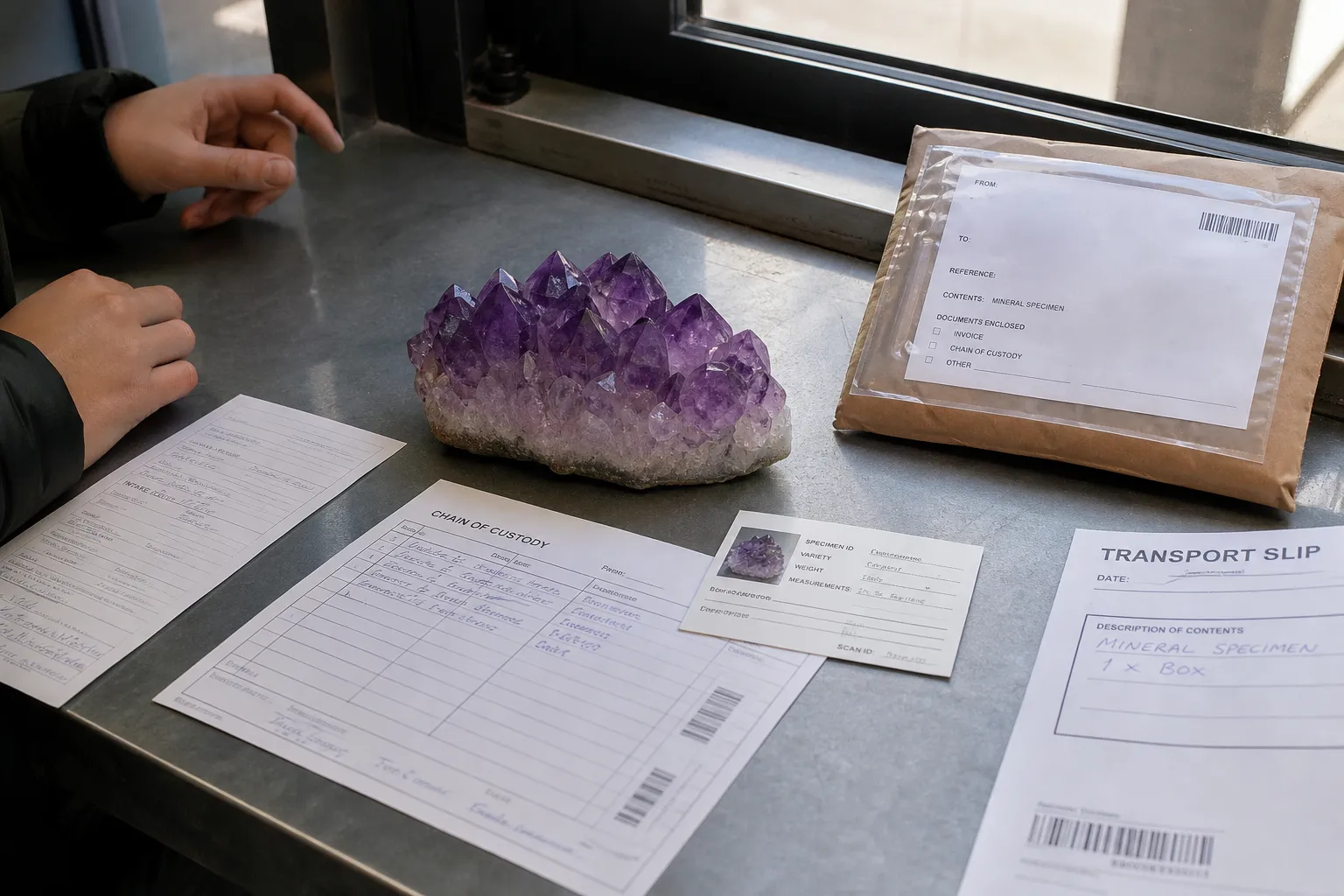
The direct answer is restrained. Blockchain can support ethical amethyst sourcing in 2026 by preserving chain-of-custody records in a tamper-resistant sequence, but it does not prove ethical mining by itself. Blockchain Traceability Gemstones is useful only when ledger entries are tied to real-world checks: source declarations, supplier identity, parcel controls, transport records, and reviewable documentation. Without those off-chain controls, an immutable ledger can preserve weak information as permanently as strong information.
broader context
Amethyst context note
This narrower page lands better after the broader amethyst context page.
What Blockchain Can Add to Amethyst Provenance
For amethyst buyers, provenance is not just a romantic origin story. It is a practical claim about where a specimen came from, who handled it, and whether a seller’s ethical sourcing language has documentary weight.
A blockchain ledger can create a shared record of supply-chain events. In broad terms, a parcel might be recorded when it leaves a mine or sourcing point, moves through a trader, enters sorting or cutting, reaches a wholesaler, and is later connected to a retail listing. Each step can be time-stamped and linked to the previous one, making later alteration harder than it would be in a loose spreadsheet or private sales note.
That is the useful part of blockchain traceability for gemstones: it can make the record more durable and easier to inspect. It may also reduce confusion when amethyst lots are split, mixed, renamed, or described only with vague origin language. If the system is designed carefully, a buyer or seller may be able to follow a documented path more clearly than with scattered invoices alone.
But the ledger is not the mine, the worker, the river, the road, or the sorting table. It records claims and events; it does not automatically confirm that those claims were true when entered. A strong provenance record should make the amethyst’s route more legible. It should not ask the buyer to treat digital permanence as moral certainty.
The Conditions That Make Ledger Records Useful
A ledger-based provenance record becomes more meaningful when it is connected to disciplined handling outside the digital system. The practical question is not simply, “Is there a blockchain entry?” It is, “What made that entry trustworthy before it became permanent?”
The important conditions are plain:
- The starting source should be clearly identified, not hidden behind broad language such as “ethically sourced region.”
- Each transfer should connect to a real supplier, shipment, parcel, or inventory unit.
- The physical amethyst should be controlled well enough that the recorded parcel is not quietly replaced, diluted, or merged without notation.
- Supporting documents should exist outside the ledger, such as source declarations, supplier records, transport paperwork, or review notes.
- The system should show who can enter data, who can correct errors, and how disputes are handled.
These conditions are less glamorous than the phrase “immutable ledger,” but they carry more weight for amethyst provenance verification. If a seller cannot explain how the digital record connects to the actual crystal, the record may be decorative rather than useful.
This matters because amethyst does not move through one tidy path. Rough points, geodes, tumbled stones, beads, carvings, and display clusters may pass through different handling stages. A large geode may be tracked differently from calibrated beads. A cut pendant may involve more processing steps than a raw cluster. The record needs enough detail to follow the item actually being sold.
The best buyer question is simple: “What real-world documentation supports this record?” If the answer is only “It is on blockchain,” the answer is incomplete.
What Blockchain Does Not Prove
The common confusion is to treat provenance proof as ethical proof. They overlap, but they are not the same thing.
A blockchain entry may support a claim that a parcel followed a documented route. It does not, by itself, establish fair labor practices, low environmental impact, legal extraction, responsible land use, or ESG compliance. Those outcomes require evidence from the physical world: site records, supplier review, chain-of-custody controls, labor and environmental documentation, and governance that can challenge bad entries.
There is also a source limit to name plainly. No public references were supplied for specific amethyst blockchain adoption, named gemstone traceability systems, 2026 market norms, mining compliance evidence, or confirmed ethical sourcing outcomes. The safest answer is therefore conceptual, not industry-wide: blockchain may support due diligence, but it should not be presented as proof that the amethyst trade has been secured.
An immutable ledger can make later changes more visible or more difficult, but it does not prevent false information from being entered at the beginning. If an origin is misstated, or a parcel is swapped before entry, the ledger may preserve the error. Digital strength can harden a weak starting point.
That is the central limit of ledger-based provenance records: the record can be strong while the input is uncertain. Ethical buyers should look for digital records and physical verification working together, not one standing in for the other.
How to Read Ethical Sourcing Language in 2026
Ethical sourcing in 2026 often arrives in polished phrases: traceable, transparent, responsibly sourced, ESG-aligned, mine-to-market. Some may point to meaningful work. Others may be broad market language. The buyer’s task is to separate a documented chain from a mood.
When a seller uses blockchain traceability concepts, look for concrete answers rather than technical sparkle. A useful explanation should tell you what was recorded, who recorded it, when the record began, and how the specimen remained connected to that record. It should also admit what the ledger does not cover.
A careful seller might say that ledger-based provenance records support chain of custody for a particular parcel, while separate documents address supplier review. That division is healthier than a sweeping claim that blockchain proves ethical sourcing. The first statement separates records from outcomes; the second asks the buyer to accept too much.
ESG compliance claims deserve the same caution. A ledger can store or link to information relevant to environmental, social, and governance reporting, but compliance depends on applicable rules, documentation, review processes, and real-world conduct. For an amethyst purchase, most buyers are not auditing a mine. They are deciding whether the seller’s claim is specific enough to trust at the level of a retail purchase.
A modest but useful standard is this: ethical sourcing language should become more specific when questioned. If it becomes vaguer, the claim is weak.
A Buyer’s Verification Point Before Purchase
Before paying a premium for blockchain-linked amethyst, ask for the record in a form you can actually inspect. A QR code, transaction page, or digital passport is only the beginning. The useful part is what the record contains and how it connects to the physical specimen.
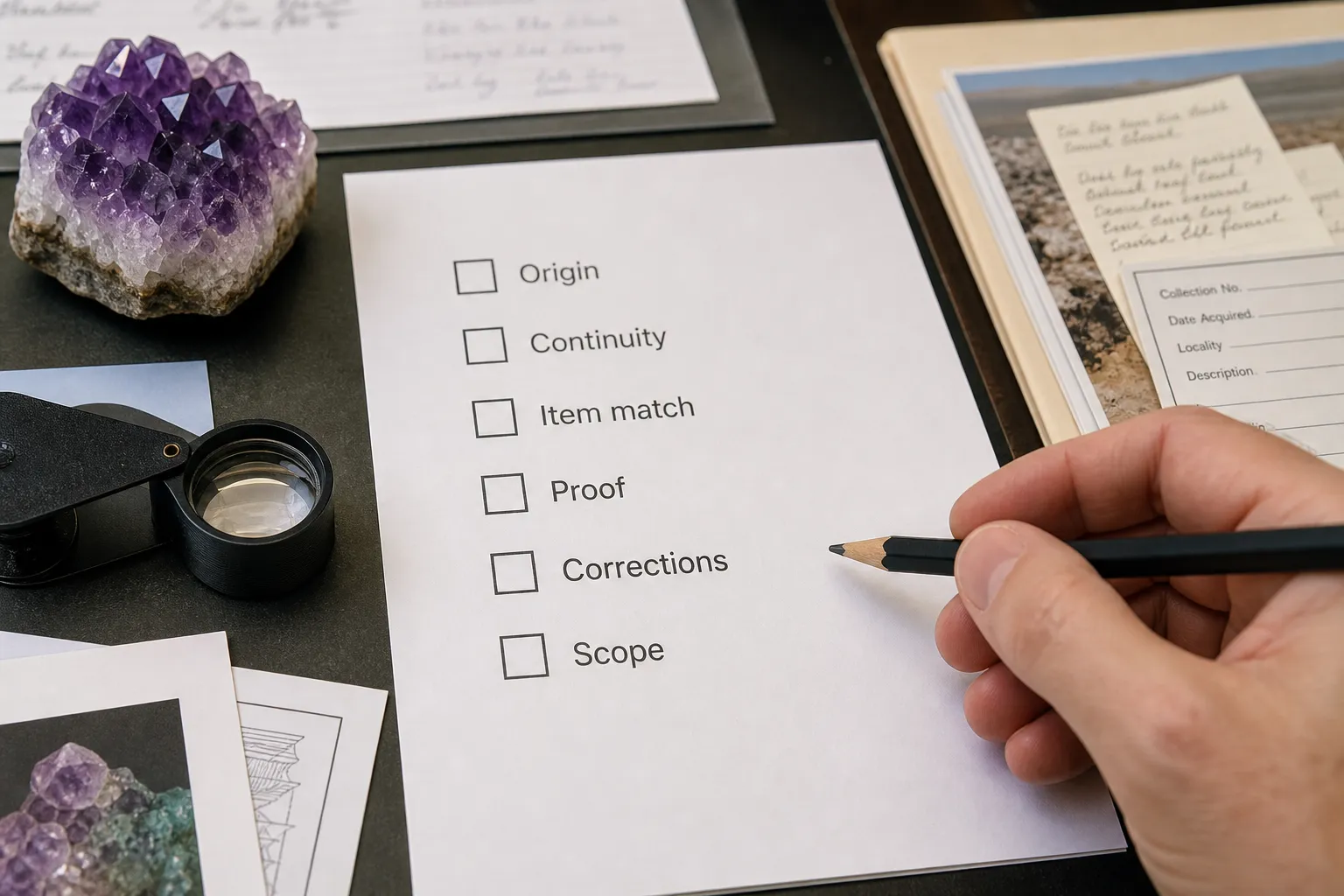
Check for these points:
- Origin detail: Is the mine, region, or source level described clearly, or only implied?
- Chain continuity: Are the steps between extraction and sale visible enough to follow?
- Item connection: Does the record identify this specimen, parcel, lot, or finished piece?
- Supporting proof: Are there documents or review notes outside the ledger?
- Correction process: Is there a way to address errors, substitutions, or disputed entries?
- Claim scope: Does the seller distinguish provenance from broader ethical outcomes?
This is not a demand for perfection. Smaller sellers may not have sophisticated systems, and not every modest amethyst specimen will carry a digital record. The point is proportionality. If a seller uses blockchain as a reason for trust or a higher price, the record should answer more than a slogan.
For display pieces, the same logic applies quietly. A crystal placed in a meditation corner or living room can carry symbolic meaning for the owner, but that meaning does not replace provenance. The specimen remains a material object first: quartz shaped by geology, moved through commerce, and then chosen for a personal space.
Where Blockchain Fits Beside Traditional Documentation
Blockchain should be understood as one layer in gemstone supply-chain verification, not the whole structure. Traditional paperwork, supplier relationships, parcel controls, and review processes still matter. A digital ledger may make those records easier to organize and harder to alter after the fact, but it cannot remove the need for trustworthy people and physical checks.
A gemstone certification overview can be useful only as a broad comparison. Documentation systems may address identity, quality, origin, treatment, chain of custody, or responsible practice. Blockchain may help preserve and share some of that information, but it does not automatically create the underlying knowledge. The strongest record is usually a combination: careful identification, consistent handling, clear documents, and a ledger that reflects them accurately.
For amethyst, buyers should also keep authenticity and ethics separate. A specimen may be genuine quartz with natural purple coloration and still have a vague supply-chain story. Another piece may have a better documented route but still require ordinary collector judgment about color, treatment language, condition, and suitability for display. Digital provenance does not replace looking closely at the crystal itself.
The practical conclusion is narrow: blockchain can support amethyst provenance when it preserves well-checked supply-chain records. It cannot, by itself, secure the moral reality of the supply chain.
Common Misreadings of Blockchain Amethyst Claims
“On-chain” means “ethically sourced”
It does not. On-chain means information has been entered into a ledger system. The ethical value depends on the quality of the information and the checks behind it.
An immutable ledger prevents deception entirely
It may make certain alterations more difficult to hide, but it cannot see inside a box, confirm a site visit, or assess working conditions without outside evidence.
A blockchain record replaces other documentation
The careful view is almost the opposite: the ledger is most useful when it points back to documents, controls, and accountable suppliers.
For a buyer, the language to trust is usually narrow. “This record documents these custody events” is more meaningful than “This crystal is ethically proven.” The first can be examined. The second asks for belief beyond the available record.
The Balanced Answer for Ethical Amethyst Buyers
Blockchain may help secure the amethyst supply chain by making provenance records more durable, connected, and inspectable. It can support ethical amethyst sourcing when paired with real-world verification: supplier transparency, parcel control, origin documentation, and a governance process that can question bad data.
Its limit is equally important. Ledger records and ethics are not the same thing. A permanent record can preserve a careful chain of custody, or it can preserve a poorly checked claim. Without off-chain evidence, blockchain does not establish mining compliance, ESG performance, fair labor conditions, environmental responsibility, or authentic origin.
So when a seller presents blockchain-linked amethyst in 2026, read the record as a tool for due diligence, not as a final verdict. Let the purple surface still invite attention; color zoning, crystal habit, and room presence have their place. But when the question is ethical sourcing, ask what the ledger records, what real-world checks support it, and where the claim stops.