Formation question
The Groundwater Paradox: How Uruguayan Amethyst Formed in Cold Water
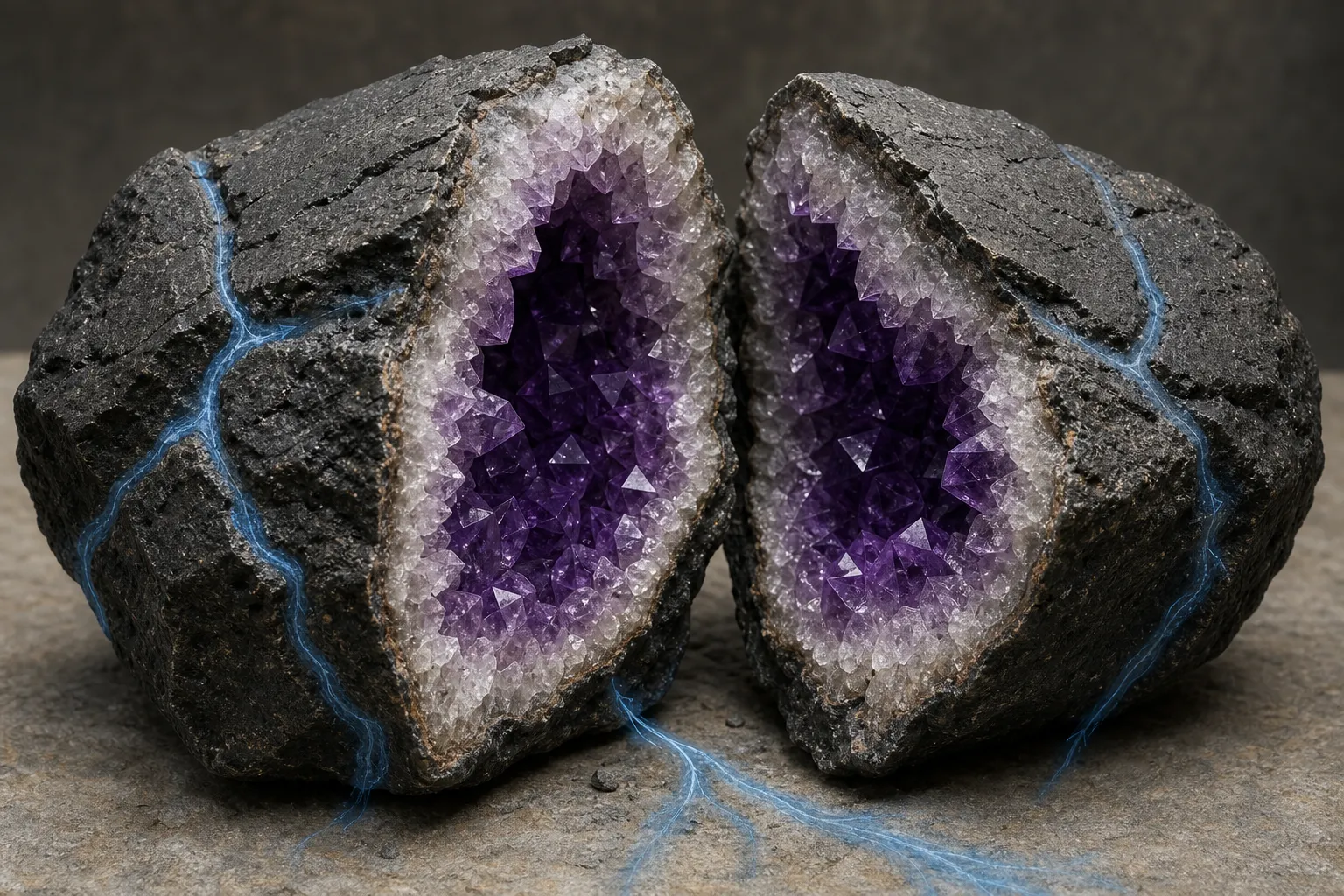
The short answer: Uruguayan Amethyst Origin is sometimes explained with a cold meteoric-groundwater model. In that model, rain-derived water moved through basaltic rock, entered open cavities, and helped grow quartz and amethyst inside geodes. The idea sounds odd only because the host rock is volcanic. “Volcanic setting” does not automatically mean the amethyst crystal grew directly from magma.
The cleaner distinction is this: the basalt came first; the amethyst may have grown later from circulating fluids. Whether those fluids were cold groundwater, hotter hydrothermal fluids, mixed fluids, or something else has to be tested with geological evidence, not assumed from appearance.
broader context
Begin with the main amethyst page
This narrower page lands better after the broader amethyst context page.
Why cold groundwater can belong in a volcanic story
Most people meet Uruguayan amethyst as finished geodes, polished clusters, or trade descriptions. The visual story is easy to simplify: dark purple crystals inside basalt must have a hot volcanic origin. That shortcut leaves out an important part of geode formation.
A basalt-hosted geode can record more than one event. The volcanic rock can provide the setting and the cavities, while later fluids can move through those cavities and deposit minerals. Those later fluids do not have to be molten rock. In the cold meteoric-groundwater model, the relevant water began as precipitation or surface water, entered the subsurface, and circulated through the rock system over geological time.
Four pieces that matter
- Host setting: basaltic volcanic rock with cavities or geodes.
- Crystal space: the open interior where quartz and amethyst can grow.
- Proposed fluid: meteoric water, meaning water ultimately derived from rainfall or surface water.
- Evidence needed: locality, fluid-inclusion, isotope, and regional geology data—not color, shape, or seller wording.
That is the real “groundwater paradox” in Uruguayan amethyst: a crystal found in volcanic rock may still have a growth history tied to later groundwater.
What the cold meteoric-groundwater model tries to explain
The cold-water hypothesis is not saying that groundwater created the basalt. It is trying to explain how amethyst could grow inside basalt-hosted geodes without requiring a simple hot-magmatic crystallization story.
A cautious version of the sequence looks like this:
- 1. Basaltic volcanic rock formed and contained cavities or open spaces.
- 2. Surface-derived water entered the subsurface.
- 3. That water circulated through the rock and interacted with available chemistry.
- 4. Silica-bearing fluids reached the cavities.
- 5. Quartz crystallized along the cavity walls under conditions that allowed purple amethyst color to develop.
- 6. Later erosion, mining, or collecting exposed the geodes.
This is a model, not a universal label for every specimen. It describes one proposed way to understand basalt-hosted amethyst geodes in Uruguay.
The Guarani Paleoaquifer is sometimes mentioned in this discussion because it offers a possible regional context for ancient groundwater movement. That connection should be handled carefully. It is better to say that some groundwater-based explanations look toward large ancient water systems, including the Guarani Paleoaquifer, as possible context. It is too strong to say the aquifer “made” Uruguayan amethyst unless specific hydrogeology and geochemistry support that claim.
What evidence would make the model stronger
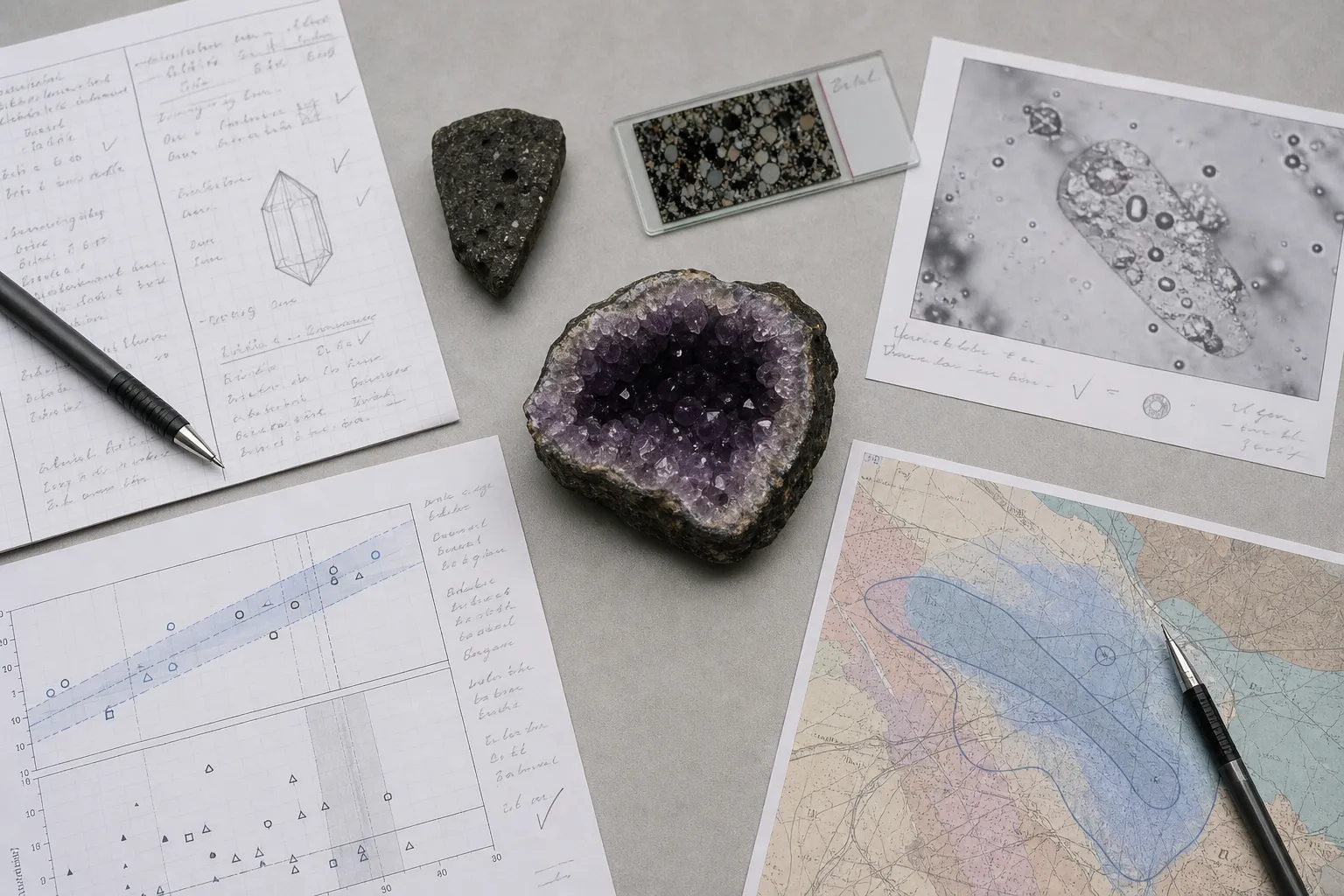
The most useful support would come from geology, not trade description. A credible explanation needs to connect the amethyst, the host rock, and the fluid history.
Without those evidence lines, the cold-groundwater explanation remains a useful hypothesis rather than a settled description for every Uruguayan amethyst geode.
What this does not tell you about a crystal in your hand
Appearance alone cannot verify Uruguayan origin or groundwater origin.
Deep purple color, small sparkling crystals, a dramatic geode shell, or a seller’s locality name may all matter in collecting language. They do not prove that a specimen came from Artigas, Uruguay, or that it formed through meteoric-water mineral growth.
This is where market wording can blur the issue. “Volcanic,” “Uruguayan,” “ancient,” “deep color,” and “premium” often appear together, but they are not the same kind of claim. Some describe provenance. Some describe appearance. Some are sales language. None replaces geological evidence.
The same separation applies to symbolic or spiritual language. A person may value amethyst for personal meaning or atmosphere, but that does not establish mineral origin. Geological claims need geological support.
A better collector question is not “does this look groundwater-formed?” It is:
- Is the locality documented?
- Is the provenance credible beyond seller wording?
- Is the claim about color, origin, or formation mechanism?
- Are those claims being mixed together?
- Is any geological explanation supported by a source that can be checked?
That approach is more reliable than trying to read a full origin story from the crystal face.
Why “hot magma versus cold groundwater” is too simple
It is tempting to frame the topic as a fight between a hot magmatic origin and a cold groundwater origin. That contrast is useful for breaking the first misconception, but it can still be too neat.
Geological systems often happen in stages. A volcanic rock forms. Cavities remain open or develop. Fluids circulate later. Mineral growth may occur in pulses. Temperature and chemistry can change across time. A later groundwater episode does not erase the volcanic host, and a volcanic host does not automatically mean direct crystallization from magma.
The better questions are:
- What fluid actually grew the amethyst?
- Was it magmatic, hydrothermal, meteoric, mixed, or something else?
- What temperature range fits the mineral growth?
- What evidence ties that interpretation to the Uruguayan deposit being discussed?
That is why fluid-inclusion and isotope studies are central to this topic. They are the kinds of evidence that can move the story from plausible to better supported.
A careful answer to the paradox
So how could Uruguayan amethyst form in cold water?
Under the cold meteoric-groundwater hypothesis, the volcanic host supplied the setting and cavities, while later groundwater moved through the subsurface and helped create the conditions for quartz and amethyst growth. “Cold” means low-temperature relative to simplified hot-magmatic explanations. “Groundwater” means meteoric water circulating underground, possibly within a broader ancient aquifer context if supported by regional evidence.
The answer should stay conditional. To present the model as established for Uruguayan amethyst, strong sources would be needed: locality-specific studies, basalt-hosted geode research, fluid-inclusion temperature constraints, isotope data, and hydrogeology that connects the system to ancient groundwater movement.
Even with that caution, the paradox is useful. It reminds readers that a volcanic-looking amethyst story is not always a purely magmatic story. The better reading is slower: rock first, cavities next, fluids later, evidence always.
Short answers
Does “basalt-hosted” mean the amethyst formed directly from magma?
No. Basalt-hosted describes the rock setting of the geode. It does not prove the fluid source or temperature of amethyst crystallization.
Can the Guarani Paleoaquifer connection be assumed for all Uruguayan amethyst?
No. It should be treated as a possible regional context unless specific hydrogeological and geochemical evidence supports the connection.
Can color prove Uruguayan amethyst origin?
No. Color can affect appearance and market description, but it cannot prove locality, groundwater involvement, or formation history.