Crystal sourcing analysis
Hyperspectral Imaging and the Future of Zero-Trace Crystal Mining
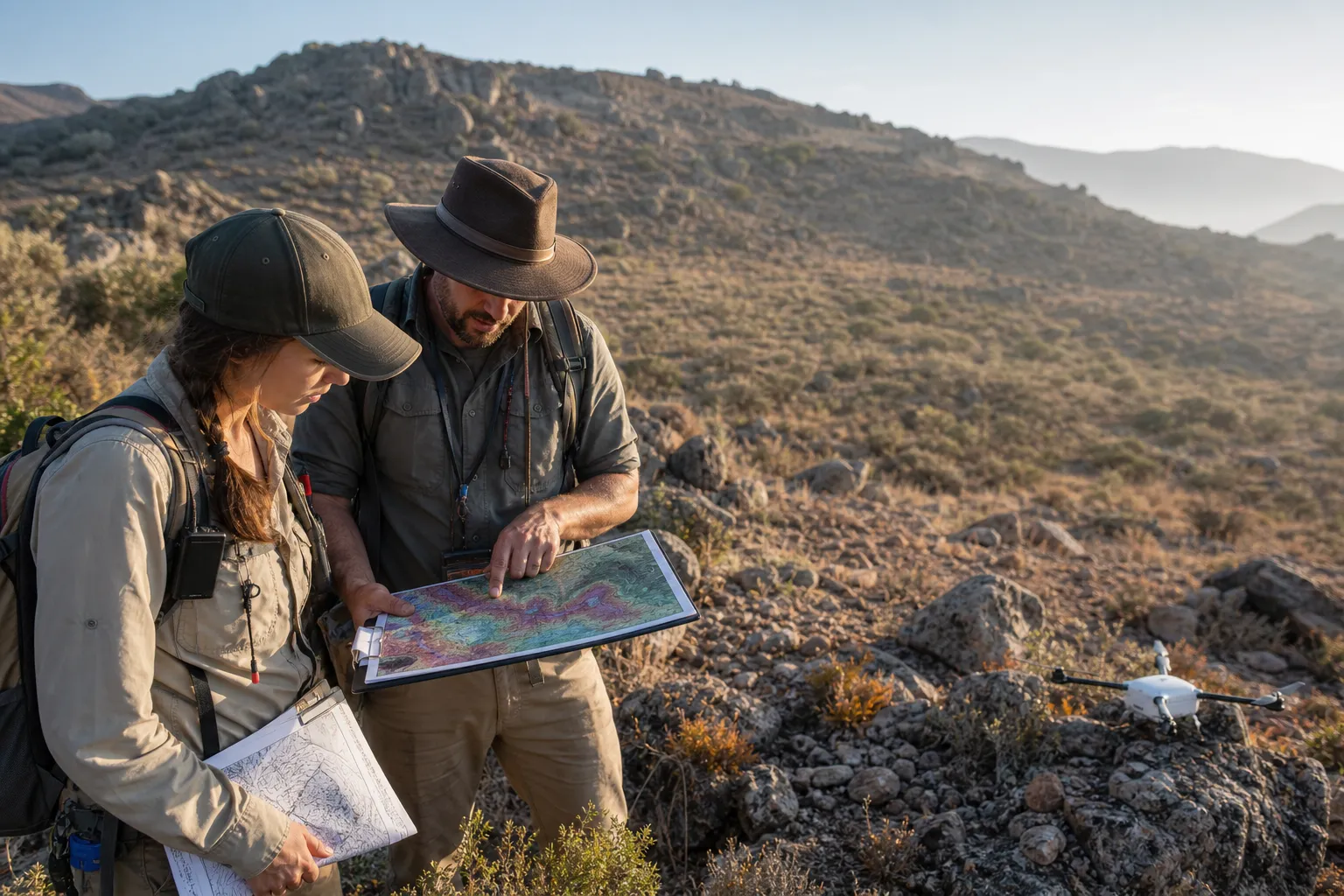
Hyperspectral imaging could support lower-disturbance crystal exploration by helping teams look more carefully before they dig. In a cautious Zero-Trace Mining framework, its value would be as an early filter: narrowing where field checks happen, showing where a site may not justify disturbance, and adding another layer of observation before physical work begins.
That is the useful promise. The boundary is just as important: imaging does not make mining impact-free. It does not confirm that a crystal source is ethical, legally approved, environmentally responsible, or safe to develop. It also does not replace field validation, land permission, environmental review, repair planning, or human judgment. At most, it could become one tool in a lower-disturbance exploration workflow.
broader context
Begin with the main amethyst page
This narrower page lands better after the broader amethyst context page.
What Hyperspectral Imaging Could Add
For a sourcing-conscious crystal reader, the appeal is straightforward. Exploration often begins before anyone knows whether a site is worth closer attention. People may walk land, cut access, sample material, clear vegetation, trench, drill, or otherwise disturb ground while still working with uncertainty.
A remote imaging layer could help reduce some of that uncertainty before the first physical check. In the narrowest and most defensible sense, hyperspectral imaging may help exploration teams separate “worth inspecting” areas from places that can be left alone.
In a lower-disturbance model, it could help with:
- Prioritizing where human inspection happens first
- Limiting unnecessary movement across sensitive terrain
- Comparing remote observations with maps and field notes
- Documenting surface conditions before and after work
- Making “look first, touch later” more realistic in some settings
Those points should be read as possibilities, not settled outcomes. The supplied material for this page does not include public technical sources, field trials, crystal-specific detection data, or measured environmental results. So this article cannot claim that hyperspectral imaging reliably identifies crystal deposits or reduces site disturbance by a known amount.
The careful answer is narrower: hyperspectral remote sensing could contribute to more selective exploration when it is paired with ground-truthing, clear decision rules, and responsible site management.
Why “Zero-Trace” Needs a Hard Limit
Zero-Trace Mining is an appealing phrase because it names something many crystal buyers would like to believe is possible: extraction without visible harm, hidden costs, or careless disturbance. As an aspiration, it can point toward better questions. As a literal claim, it goes too far.
Mining is physical. Even small-scale extraction involves contact with land, removal of material, access needs, sorting, transport, and some form of site responsibility. Imaging may happen before that work, around it, or after it, but it does not erase the act of removing crystal-bearing rock from the ground.
A more accurate frame is “trace-aware” rather than “zero trace.” The question becomes: where does disturbance begin, what can be avoided, what must be verified in the field, and what remains after the work is done?
The key distinction is between exploration and mining. Exploration asks where material might be. Mining asks how material will be removed. A tool that reduces unnecessary exploration disturbance does not automatically reduce later impacts from excavation, access routes, waste handling, water use, habitat disruption, transport, closure, or repair.
A responsible Zero-Trace Mining claim would need to answer:
- Was remote assessment used before ground disturbance?
- Were unnecessary pits, tracks, cuts, or routes avoided?
- Was field checking limited to what was needed?
- Were sensitive areas excluded, not merely documented?
- Was there clear responsibility for site repair and follow-up?
Even then, this would be a cautious framework, not a verified certification. The available material does not show that Zero-Trace Mining is a regulated label, formal standard, or established mining method. It should be treated as a phrase that needs explanation, not as proof by itself.
When the Technology Would Actually Matter
Hyperspectral imaging would matter only if it changed what happens on the ground. A detailed image, drone flight, or technical report is not enough. The useful test is whether the information leads to fewer unnecessary disturbances and better decisions.
Field validation
First, remote findings would need field validation. Ground-truthing is the step where observations from imagery are checked against real site conditions. Without it, an image is a lead, not an answer. For crystal exploration, this matters because it is easy to imagine that technology can simply “see crystals” and remove uncertainty. The current evidence packet does not support that idea.
Decision rules
Second, the survey would need a decision rule. If imaging highlights several possible areas, what changes next? Does the operator inspect fewer places? Avoid a slope? Change an access route? Cancel work in a sensitive zone? Lower-disturbance exploration depends on those decisions, not on imagery alone.
Measured benefit
Third, any environmental benefit would need to be measured beyond the survey itself. Drone-based environmental monitoring may document visible surface conditions, but documentation is not the same as reduction. A mine-site impact assessment would need independent methods and follow-up before anyone could responsibly say the overall footprint was lower.
Permissions and timing
Fourth, permissions and land questions still stand on their own. A lighter survey method does not remove the need for legal access, community awareness, Indigenous land considerations, habitat restrictions, regulatory duties, or repair obligations. This article does not provide compliance guidance, and remote sensing should not be framed as a shortcut around those responsibilities.
Finally, timing matters. Imaging used before disturbance may help narrow exploration. Imaging used only after heavy digging has begun may still help with documentation, but it does not support the stronger claim that exploration disturbance was reduced.
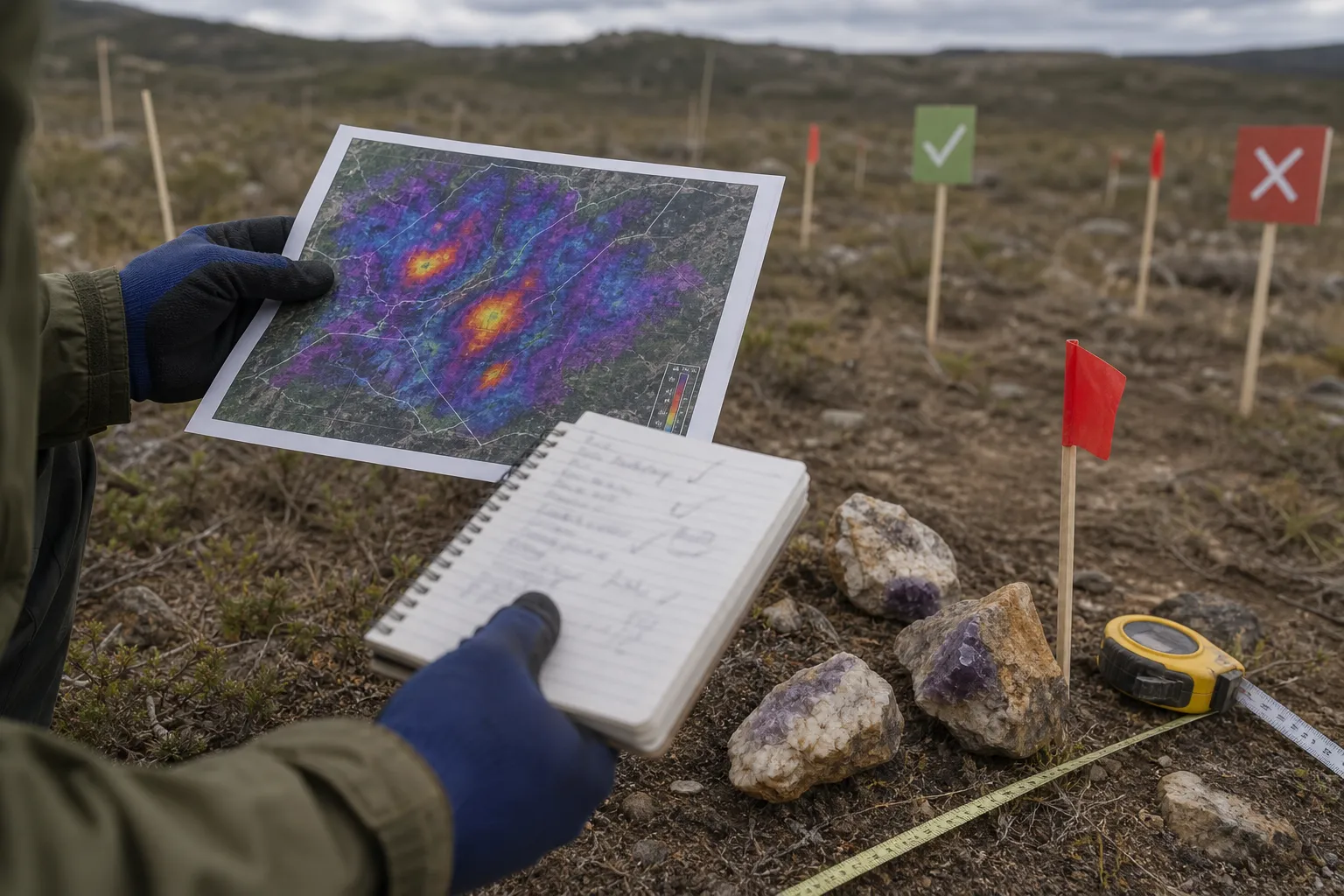
Common Misunderstanding: Technology Is Not Ethical Sourcing
A crystal source can be mapped with advanced tools and still raise unresolved questions about land access, labor conditions, ecological damage, repair obligations, or marketing transparency. Technical sophistication is not the same as ethical assurance.
The better question is not, “Was advanced technology used?” It is, “Did the method reduce unnecessary disturbance, and can that be explained plainly?”
A sourcing story that leans on drones, sensors, or “zero impact” language still deserves careful reading. Technology can support accountability, but it can also make ordinary extraction sound cleaner than the evidence allows.
Another common mix-up is between lower-disturbance exploration and lower-impact mining. The first concerns the search phase: where to look, where not to look, and how much ground must be checked physically. The second concerns the full life of the site, including extraction, access, waste, water, closure, and repair. Improving the first stage does not automatically solve the second.
Remote sensing also does not remove the need for judgment. Used responsibly, it should make people slower to disturb land without a reason, not faster to chase every promising signal.
How to Read Future Zero-Trace Claims
If a seller, mine, project, or technology provider uses Zero-Trace Mining language, the phrase should prompt questions rather than immediate trust. A reader does not need to become a remote-sensing specialist. The point is to check whether the claim is specific, limited, and connected to observable practice.
Useful questions include:
- Is the claim about exploration only, or the whole mining process?
- What disturbance was avoided?
- Was ground-truthing acknowledged?
- Are environmental claims measured, or only suggested?
- Are land access, permissions, and repair handled separately?
- Does the language allow uncertainty, or does it imply an impact-free result?
The strongest version of the idea would sound modest. It might say that remote imaging helped narrow survey areas before field inspection, that some locations were avoided, and that later work still required verification and site management.
The weakest version would use Zero-Trace Mining as decoration, without explaining what trace was reduced, how it was measured, or what impacts remained.
The Bottom Line
Hyperspectral imaging could have a future role in lower-disturbance crystal exploration because it may help teams make more selective decisions before physical work begins. That is the careful promise: more restrained exploration, more targeted field checks, and better documentation when paired with validation and credible environmental review.
But Zero-Trace Mining should not be read as literal impact-free mining. The available evidence for this page does not support claims that hyperspectral imaging reliably detects crystal deposits, replaces ground-truthing, confirms ethical sourcing, reduces environmental impact by a known amount, or removes the need for permits, land agreements, repair, and accountability.
The future worth watching is not a mine with no footprint. It is a more disciplined sourcing chain where exploration disturbs less ground where possible, claims stay narrower than the marketing language, and every “zero-trace” promise is tested against what actually happened at the site.