Amethyst Heat Treatment
The Dichroscope Defense: Detecting Heat Treatment in Seconds
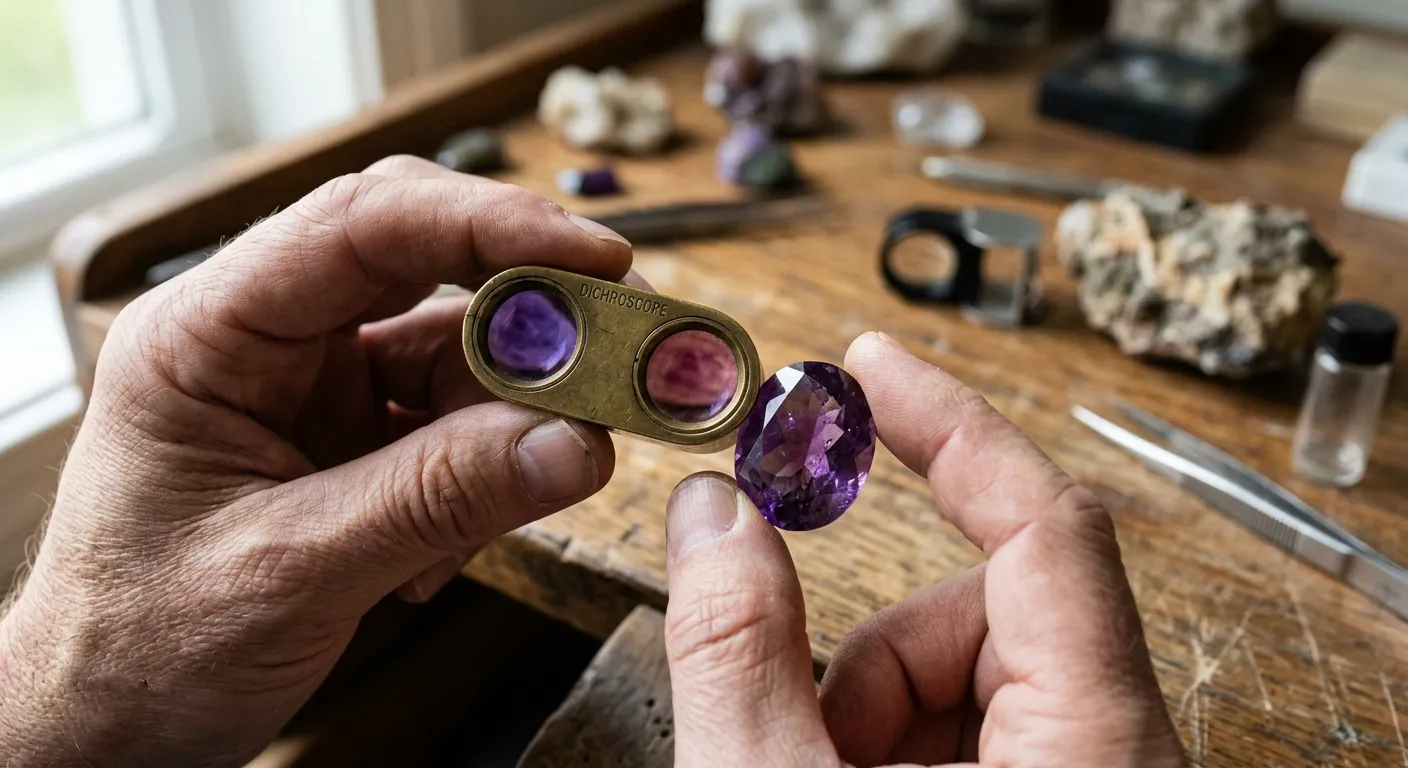
A calcite dichroscope can screen an amethyst in seconds, but it cannot determine Amethyst Heat Treatment on its own.
What it can show is simpler: whether the stone displays visible color separation when viewed through the tool. That optical clue is related to dichroism or pleochroism, and it can be useful when you are comparing stones, checking a seller’s description, or deciding whether a piece deserves closer review.
Use the dichroscope as a fast defensive check, not as a final treatment verdict. If “heated” or “unheated” affects price, disclosure, resale, or collector value, the quick view has to be weighed with better evidence.
broader context
Broader amethyst guide
This narrower page lands better after the broader amethyst context page.
What the calcite dichroscope is actually showing
Amethyst is the purple variety of quartz. A dichroscope does not read the stone’s history. It does not reveal furnace exposure, mine origin, seller accuracy, or the full reason a color looks the way it does.
A calcite dichroscope separates light so you can compare two side-by-side color impressions from the same stone. In plain buyer language, you are asking:
Do the two viewing windows show the same purple impression, or do they separate into noticeably different tones or hues?
That difference is the useful observation. You might describe it as:
- visible color separation
- weak color separation
- no clear separation under the viewing conditions
- an inconsistent result because of lighting, orientation, zoning, mounting, or stone depth
The key is not to turn the observation into more than it is. Visible dichroscope color separation does not automatically mean unheated amethyst. No visible separation does not automatically mean heat treated amethyst.
A quick screening routine that stays honest
If you already have a calcite dichroscope, keep the check short and controlled.
Use steady light, not shifting colored illumination. Look through the dichroscope and rotate the amethyst slowly. Watch whether the two windows stay visually similar or show a split in tone, depth, or hue.
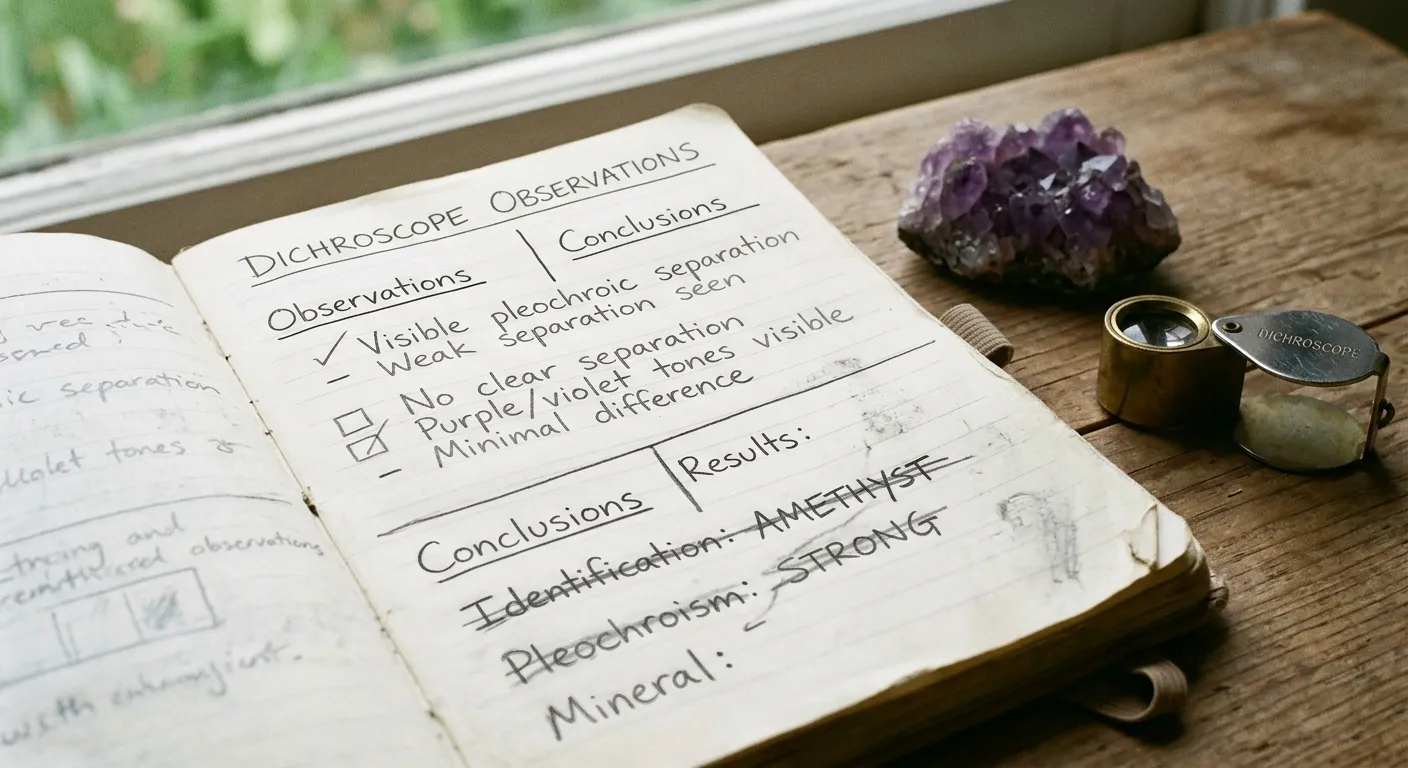
Write the result in observation language:
- “Visible separation seen through the dichroscope.”
- “Only weak separation seen.”
- “No clear separation seen in this lighting.”
- “Difficult to judge because the stone is dark, mounted, uneven, or strongly zoned.”
That wording protects the conclusion. “No clear separation seen” is not the same as “heated.” “Visible separation seen” is not the same as “natural, untreated, and higher value.”
The most useful part of the check often comes afterward. If the dichroscope result conflicts with the sales claim, ask what supports the claim. If the stone is expensive or being sold specifically as unheated, a hand-tool observation should not carry the whole decision.
How to read visible, weak, or missing color separation
The common mistake is treating one optical clue as a yes-or-no rule. Amethyst does not make that reliable.
Visible color separation means the tool is revealing an optical behavior. It may be a useful clue, especially when comparing similar stones, but it is not a documented treatment history.
Weak separation is easy to overread. A faint difference can be affected by lighting, stone orientation, color saturation, cutting, thickness, inclusions, or how the viewer is holding the tool.
Missing or unclear separation has its own trap. Some buyers assume that if heat can change gem color, a quiet dichroscope view must point to heating. That shortcut is not reliable. One handheld check may simply be limited by the setup or by the stone’s position.
The dichroscope defense works because it gives you a fast observation. It does not give you certainty in a few seconds.
Why heated amethyst and citrine create confusion
Many buyers search for Amethyst Heat Treatment because they have heard that heated amethyst can be connected with citrine in the gem trade. That connection is real market context: citrine descriptions often discuss yellow to orange quartz material associated with heating amethyst.
But that does not make every amethyst question a citrine question.
The confusion comes from overlapping sales language: purple quartz, yellow quartz, “natural citrine,” “heated amethyst,” and “unheated amethyst.” It is tempting to want one pocket tool that separates clean claims from questionable ones immediately.
A dichroscope cannot do that. It does not identify commercial history, resolve every quartz trade label, or decide whether a stone was heated to produce a citrine-like color. For amethyst, its narrower role is to help you look for color separation that may become one clue in a broader judgment.
Where the dichroscope fits in a buyer’s decision
A calcite dichroscope is most useful as a screening aid. It can slow down a rushed purchase, help you compare two stones, and give you a more precise question to ask.
It is less useful when it is treated as a substitute for documentation or gemological evaluation.
For an inexpensive decorative amethyst, a dichroscope check may simply satisfy curiosity. You can note what you saw without making a stronger claim later.
For a collector-grade amethyst sold specifically as unheated, the stakes are different. A quick optical clue should not be the only support for the description.
Other observations may still matter: color zoning, overall hue, transparency, inclusions, cutting style, and provenance. But those details do not make the dichroscope conclusive either. When treatment status changes value, the next step is stronger evidence, not more confidence in a handheld tool.
A careful seller should not need you to pretend the dichroscope can do more than it can. If a listing makes a strong claim about unheated amethyst, it is reasonable to ask what supports that claim. “Look at the color” or “it passes a quick tool check” is not the same as documented treatment status.
What to say after using the tool
The most useful habit is to separate observation from conclusion.
Instead of saying, “The dichroscope confirms it is unheated,” say:
“The stone showed visible color separation through a calcite dichroscope.”
Instead of saying, “No separation means it was heated,” say:
“I did not see clear separation under this light.”
That language is less dramatic, but it is more accurate. It also makes your notes more useful if you later compare stones or ask for a more formal opinion.
Use this simple framework:
- Use the dichroscope to look for quick optical behavior.
- Treat visible or weak color separation as a clue, not a certificate.
- Do not treat missing separation as proof of heating.
- Keep citrine-related market claims separate from individual amethyst screening.
- Seek stronger evaluation when treatment status affects value or disclosure.
The tool helps most when it defends you from overclaiming as much as from overpaying.
Quick answers
Can a calcite dichroscope identify unheated amethyst?
Not by itself. It may show dichroism or pleochroic color separation, but unheated amethyst status needs broader support than a single handheld optical observation.
Does strong color separation mean an amethyst was not heated?
No. Visible separation is an optical clue, not a treatment certificate. It is worth noting, but it should not be treated as a final answer about heat history.
Does no color separation mean the amethyst was heated?
No. A weak or absent result can come from viewing conditions, stone orientation, saturation, mounting, or practical limits of the check. It does not automatically establish Amethyst Heat Treatment.