Crystal Pocket Hunting
Pocket Hunting: Tracking the "Swollen" Zones in Quartz Veins
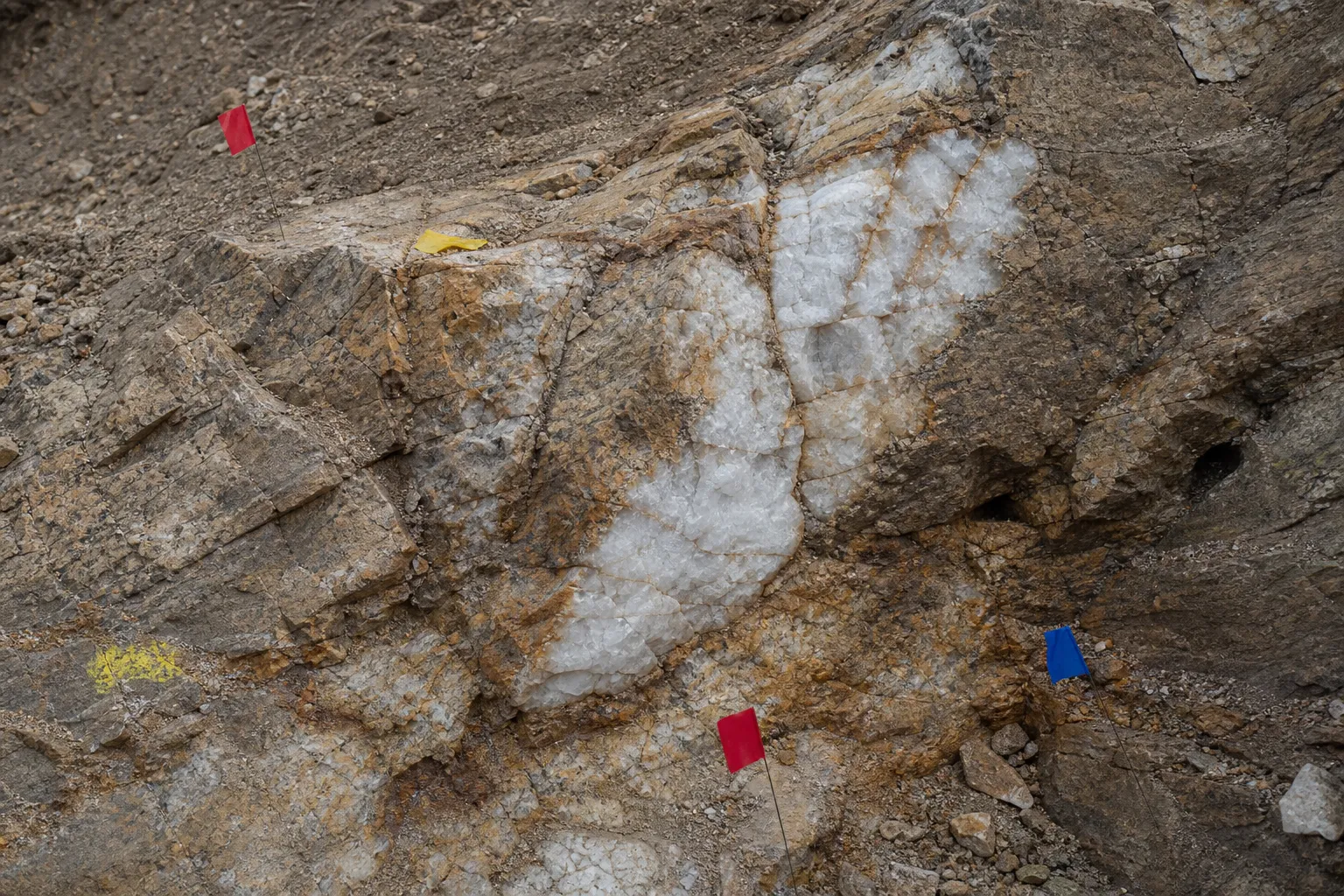
A swollen-looking quartz vein can earn a closer look during Crystal Pocket Hunting, but it should not be read as proof of a pocket. The better answer is narrower: a thicker, bulging, or interrupted part of a vein may be one possible clue when it appears with other changes, such as small openings, crumbly seams, iron-stained breaks, or a shift from tight massive quartz into more broken material.
That is still only an observation point. The available research pack for this page does not include usable public sources or confirmed field reports, so this article should not claim that swollen quartz veins, clay seams, or vein texture changes reliably predict quartz vein pockets. They can help you decide where to slow down and compare; they cannot confirm what is hidden inside the rock.
broader context
Amethyst context note
This narrower page lands better after the broader amethyst context page.
Treat Swelling as a Question, Not a Signal
When a quartz vein widens, pinches, bends, or looks “fat” compared with the surrounding run, many rockhounds become curious. The thought is understandable: crystal pockets are imagined as places where the vein had room to open, and a swollen zone looks like a place where something changed.
The mistake is turning that curiosity into a rule. A bulge may reflect a real change in fracture width, repeated quartz filling, broken host rock, weathering, or simply the angle of exposure. From the surface, those possibilities can look similar.
For an amethyst or quartz collector, the useful field question is not “Is this the pocket?” but “What else changes here?” A swollen section deserves more attention only when the surrounding evidence also changes. Look for texture shifts, looseness, seams, staining, small cavities, or a change in the contact between quartz and host rock. If the quartz remains dense, solid, and uniform through the thickened area, the swelling alone may not say much.
Purple color, sparkle, and attractive crystal faces can pull the eye toward the prettiest part of a specimen. Pocket hunting asks a plainer material question: where might there have been open space for crystals to grow? Beauty can make a clue more tempting; it does not make it stronger.
Clues That Make a Swollen Zone More Worth Inspecting
A swollen vein becomes more interesting when several possible pocket hunting clues appear together. None confirms a pocket, but the combination can help you choose where to observe carefully instead of breaking randomly.
Small Openings
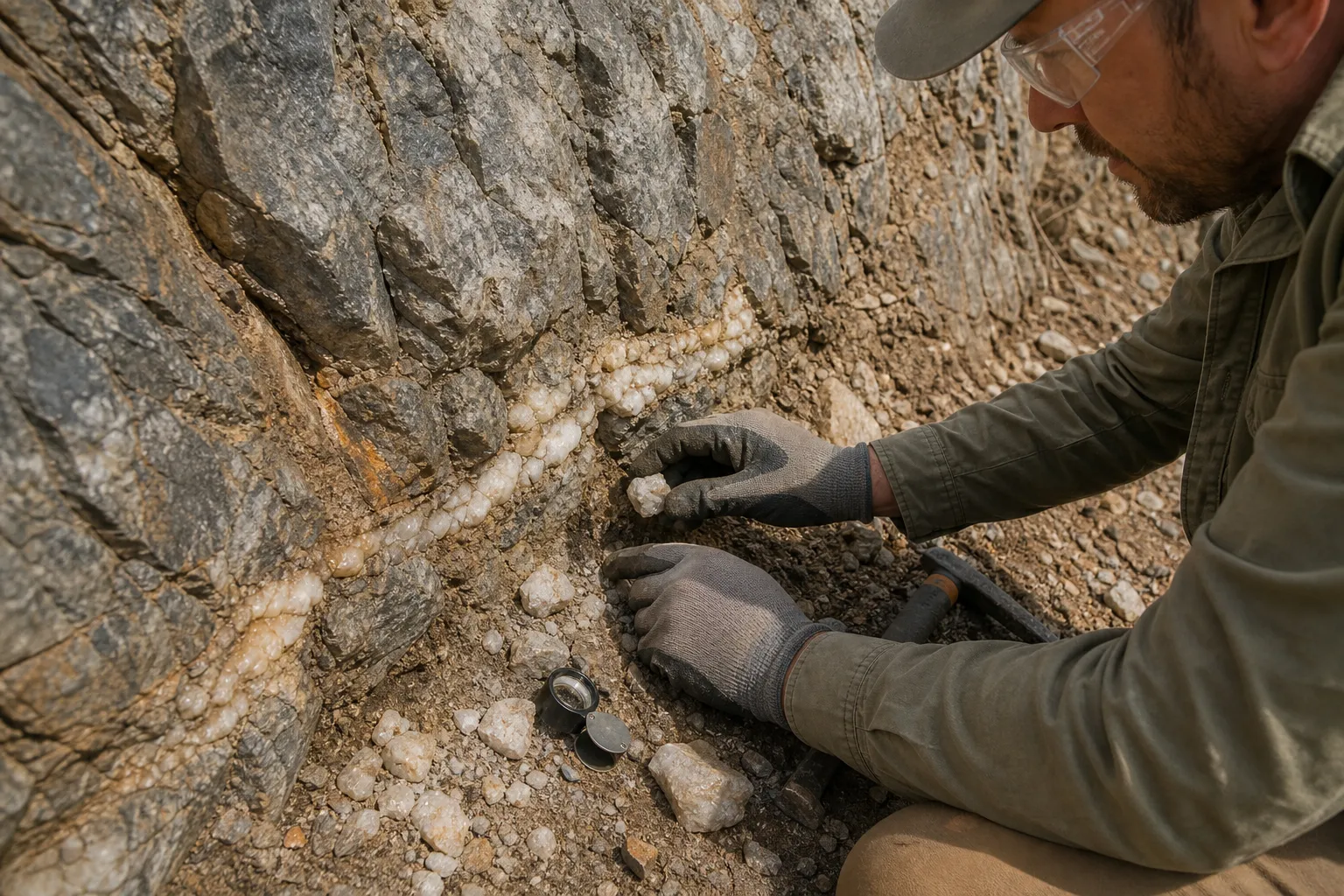
Small openings are the clearest surface clue. If you can already see tiny cavities, hollow spots, or partial vugs in quartz veins, the rock is showing some open space at the exposed surface. Collectors often use “vug” for a cavity lined or partly lined with crystals, though field use can be loose. For this question, the practical distinction is simple: a visible opening is stronger than a mere bulge.
Texture Change
Texture change is another reason to pause. A tight, glassy quartz vein may become more fractured, sugary, crumbly, iron-stained, or uneven. That shift can make the swollen zone read less like one solid lump and more like a disrupted part of the vein. It still does not prove a pocket, but it may separate “worth a closer look” from “just thicker quartz.”
Clay Seams
Clay seams in quartz are often mentioned in pocket-hunting talk because soft or earthy material feels different from clean, hard quartz. A seam may mark a break, a weathered zone, or a contact between materials. It should not be romanticized as a pocket marker. Clay can appear without crystals, and crystals can occur without an obvious clay seam. In cautious use, a seam is a texture change to examine gently where allowed, not a promise of a chamber nearby.
Edges and Contacts
Edges matter as much as the middle. A swollen zone with abrupt contacts, broken margins, or crumbly side material may invite closer inspection along the boundary between quartz and host rock. A smooth, solid, evenly exposed thickening may be less informative. The difference is not certainty; it is where your attention goes first.
Field Conditions That Can Change the Reading
The same swollen shape can mean different things in different ground. Because this page does not have source-backed geology for a specific district, it should not pretend that one rule works everywhere. The reading depends on the vein, the surrounding rock, the exposure, and the collecting setting.
Weathering can exaggerate forms. Softer host rock may erode away and leave quartz standing proud, making one section look larger than it was inside the rock. A bulge may be a true widening of the vein, or it may be the more resistant material left behind after the surrounding rock wore back.
Exposure can also mislead. A vein seen on a slope, creek bank, roadcut, or old dig face may show only a slice of the structure. What looks like swelling from one angle might be a bend, a broken lens, or a projection. If access and conditions allow, compare the visible length of the vein before reading one swollen spot as a clue.
Scale matters. A hand-sized thickening may be useful for specimen-level inspection. A broad zone of broken quartz may be too ambiguous without stronger local knowledge. For practical crystal pocket hunting, the more useful clue is often a specific transition: dense quartz into crumbly quartz, solid vein into small openings, or clean fracture into seam material.
Local collecting history would matter too, but it cannot be invented. If a known area has documented pocket habits, that information should come from credible local sources, land managers, clubs, or careful field reports. Without that support, the swollen-zone method remains a cautious observation habit rather than a verified local technique.
Common Confusion Around Vugs, Clay Seams, and Bulges
The largest misunderstanding is treating a swollen vein like a sealed container waiting to be opened. The surface of a quartz vein rarely gives that kind of simple promise. Swelling may invite inspection, but it does not announce contents.
Another confusion is using “vug” too loosely. A visible cavity with crystal faces is different from a rough pit, a weathered hole, or a missing piece of quartz. Field language often blends these together, but your judgment improves when you separate what you can see from what you hope is hidden. “I can see an opening” is stronger than “this looks pockety.”
Clay seams create a similar problem. A soft seam may feel meaningful because it is easier to work than solid quartz, but clay does not guarantee crystal growth, crystal quality, or continuation into a larger hollow. It can simply be a weak, weathered, or dirty zone. Treat it as a change in texture first.
Color can distract as well. In amethyst ground, purple flashes may suggest a more desirable specimen, but color alone does not show that a pocket lies behind it. A rich purple face, pale quartz crust, or stained seam can all be visually compelling. Pocket judgment still depends on structure, openings, and careful comparison.
What “Closer Inspection” Should Mean
For a leaf answer like this, “inspect” should not become an excavation lesson. Keep the limit plain: work only where collecting is allowed, where the face is stable, and where local rules permit the tools you plan to use. Eye protection, awareness of loose rock, and avoiding unstable faces are basic boundaries for this kind of field attention.
Hand tools can help reveal whether a small seam, weathered edge, or loose piece is worth examining, but they do not turn weak evidence into certainty. If a swollen zone requires forceful prying, deep digging, undercutting, or working into unstable material, the method has outrun the clue. A possible pocket is not worth treating a dangerous face as a puzzle box.
This limit also protects specimens. Random heavy striking can destroy the crystals a collector hopes to find. When a zone already shows small openings, delicate faces, or loose seam material, slower observation is more consistent with specimen care. It does not guarantee success; it simply respects the fragile nature of quartz and amethyst crystals.
A good stopping point is any moment when the rock no longer reads clearly. If the swelling disappears into solid quartz, if the seam closes, if the face becomes unstable, or if permission and rules are uncertain, stop. The absence of a clearer next clue is information.
A Compact Reading Checklist for Swollen Quartz Veins
Use this as a field-thinking aid, not a scoring system.
A thicker or bulging vein section
Possible inspection point, not proof of a pocket.
Small visible cavities or crystal-lined openings
More direct than swelling alone, but limited to what is exposed.
Clay or earthy seam material
A texture change worth noting, not a reliable pocket sign.
Sudden change from massive to broken quartz
Possible structural change; compare with nearby vein sections.
Iron staining or crumbly margins
May mark weathered or broken areas; inspect gently if allowed.
Uniform solid quartz through the bulge
Swelling alone may have little practical meaning.
Unstable rock, unclear access, or restricted land
Stop; the field condition overrides the collecting question.
The main discipline is comparison. Do not judge one dramatic bulge in isolation. Compare it with the vein before and after, the host rock beside it, and any exposed cavities or seams nearby. The more your conclusion depends on one swollen spot, the weaker the inference becomes.
What the Evidence Limit Means Here
There are no visible public references in the supplied research pack for this article. That means this page cannot responsibly claim that swollen quartz veins reliably indicate pockets, that clay seams predict vugs, that a particular hand-tool method is validated, or that the field boundaries here are complete. The article can only frame these as cautious observation categories for readers already operating within legal and stable collecting conditions.
That limit does not make the question useless. It changes the answer from “follow this sign” to “rank this spot for closer observation.” Swollen zones in veins may belong on your attention map, especially when paired with visible openings, seams, or texture changes. They should not become the reason to ignore access rules, unstable rock, or the ordinary fact that quartz often looks promising without opening into a collectible pocket.
For amethyst and quartz collectors, the distinction keeps the specimen first. A pocket, if present, is a physical feature in rock, not a reward promised by surface language. Spiritual symbolism can make a found crystal personally meaningful later, but it does not verify a field clue. The honest sequence is material observation, careful collecting judgment, and then whatever meaning the specimen takes on in your own space.
FAQ
Are swollen quartz veins good places to look for crystal pockets?
They can be reasonable places to inspect more closely, especially if swelling appears with small vugs, clay seams, or clear vein texture changes. Swelling by itself should not be treated as a reliable pocket indicator.
Do clay seams in quartz mean a pocket is nearby?
Not necessarily. Clay seams may help you notice a change in the vein, but the available material for this page does not support treating them as a dependable sign of quartz vein pockets.
Should I break open every swollen section I find?
No. A swollen zone is only a possible clue. Legal access, local rules, unstable rock, specimen preservation, and hand tool limits all matter. If the only evidence is “it looks bigger here,” compare it with nearby vein sections, inspect gently where allowed, and stop when the rock gives no clearer sign.