The "Jelly" Look: When High Clarity Indicates a Simulant
A purple stone that looks like clear grape jelly deserves a slower look when the clarity, color, and surface all feel unnaturally smooth together. Jelly amethyst is a market phrase, not a gemological diagnosis; high clarity alone does not prove a fake. Many faceted amethysts can be eye-clean, and fine material may show strong purple color without obvious zoning.
The useful question is narrower: does the stone look glassy, uniformly saturated, and short on the small irregularities you would expect from quartz, while the seller context also feels thin? When those signs gather in one object, the "jelly" look becomes a warning sign for a possible simulant, especially glass.
broader context
Amethyst context note
This narrower page lands better after the broader amethyst context page.
When the Jelly Look Becomes Suspicious
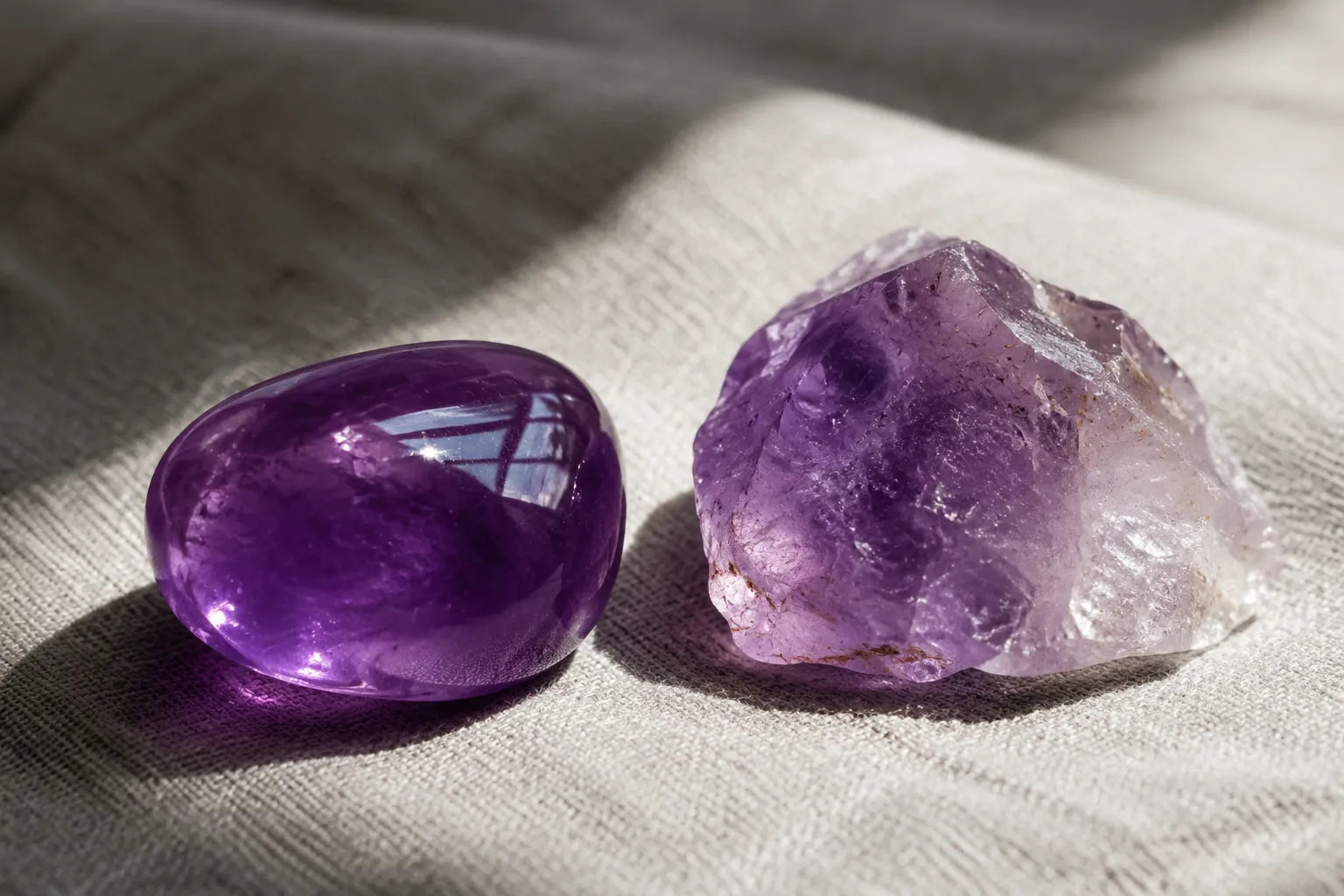
The suspicious version is not simply "clear amethyst." It is a syrupy amethyst appearance: very even purple, a polished or molded-looking surface, high transparency, and little natural-looking internal variation. In buyer language, it is the stone that looks too perfect: shiny, smooth, deeply purple all the way through, and almost candy-like.
That combination matters because colored glass can imitate the visual appeal of a vivid purple gem without being violet quartz. Gemological sources discuss glass simulants and enhancement categories as real identification issues, even though public material on this exact "jelly amethyst" look is limited. That limit matters: this is a screening clue, not a complete identification method.
A glass simulant concern becomes stronger when several clues line up
- The purple looks unusually even from edge to edge.
- The stone has suspicious clarity plus a syrupy or glass look.
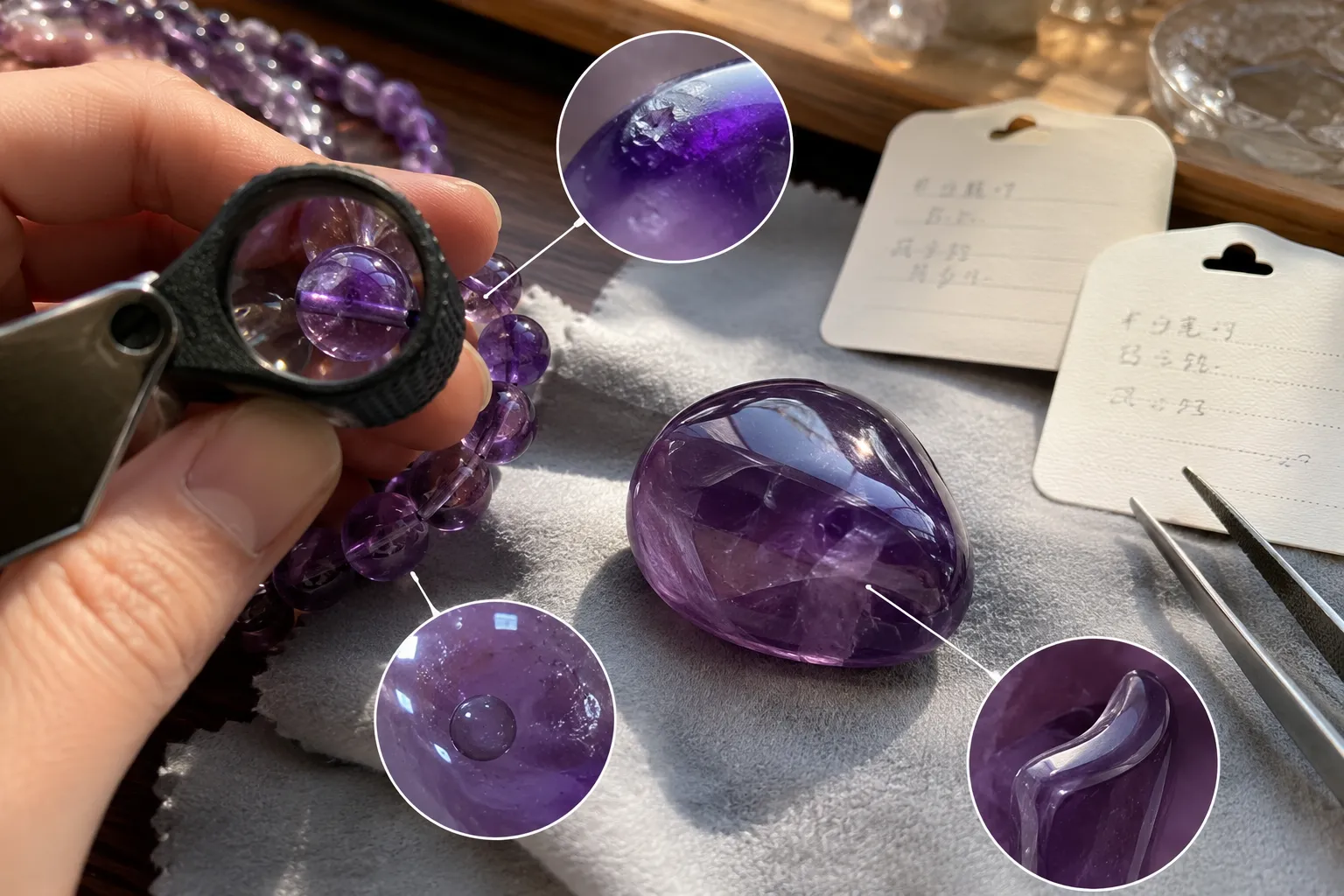
- Rounded bubbles or bubble-like features appear under magnification.
- The shape or surface looks molded rather than cut, carved, or naturally formed.
- Purple seems concentrated in cracks, pits, or surface-reaching areas, which can suggest dye in some material.
- The price, listing, setting, or seller description does not fit the claimed material.
None of these signs is a final verdict by itself. The collector decision is whether to pause, ask better questions, inspect without damage, or involve someone qualified before treating the piece as natural amethyst.
Why Clarity Alone Is Not Enough
The main mistake is assuming that a clear amethyst must be glass. Stronger gemological boundaries do not support that shortcut. GIA describes much faceted amethyst as eye-clean, meaning a natural stone may lack inclusions visible to the unaided eye. GIA also describes top amethyst color as strong reddish purple or purple with no visible color zoning. That matters because simple online checklists often treat "no inclusions" or "lack of zoning" as if they settled the question.
They do not.
A clean, bright, well-cut amethyst can look elegant, transparent, and saturated. In a ring, pendant, or loose faceted gem, it may have very few features visible without magnification. Some natural material also presents color more evenly than the banded or patchy crystal-shop pieces people keep in mind. Lack of zoning becomes meaningful only when it sits beside other red flags.
The reverse is also true. Visible amethyst color zoning can support a natural-looking impression, but zoning does not automatically prove natural origin. Some non-natural or treated materials may still show uneven color or internal-looking effects. Color pattern belongs in the conversation; it is not the whole answer.
The practical boundary is simple: eye-clean amethyst is normal enough that clarity should be treated as context, not proof. Suspicious clarity in amethyst means clarity inside a broader too-perfect picture.
What to Look At Before You Decide
Start with the whole object. A loose faceted stone, tumbled crystal, carved point, bead strand, and geode cluster do not create the same expectations. A polished bead may look smoother than a rough crystal point; a faceted gem may look cleaner than a cluster. The same glass look means different things depending on form.
For non-destructive amethyst visual screening, compare these areas in ordinary light and then with magnification if you have it.
Color behavior
Natural amethyst often rewards close looking because purple can shift in density through the stone. That does not mean every real piece must show obvious bands. Fine material may have no visible color zoning. Still, completely uniform purple saturation across many beads, a large carving, or a polished sphere becomes more questionable when nothing else about the piece shows natural variation.
Internal features
Do not demand flaws, but look for whether the specimen has any internal life: slight veils, growth-looking features, faint color changes, or ordinary mineral irregularity. A perfectly clear amethyst appearance is possible, especially in faceted material. A large decorative object that looks like purple hard candy from every angle deserves a slower look.
Bubbles
Rounded bubbles are one of the clearer reasons to suspect glass, especially when they appear trapped and circular rather than like mineral inclusions, surface pits, or reflections. Even here, stay careful. Dust, chips, polishing marks, and light reflections can be misread. Magnification helps; it does not turn a home check into final identification.
Surface and shape
Molded-looking seams, repeated identical bead shapes, overly softened details, or surfaces that feel more like cast decorative glass than cut stone add weight to the concern. This is especially relevant when an object is sold as a natural crystal form but lacks the angularity, crystal habit, or variation expected from quartz.
Dye-like color concentration
GIA notes that lower-quality light-colored amethyst and light-colored quartz have been dyed purple. That does not mean every vivid stone is dyed. It does mean purple strongest in cracks, pits, or surface-reaching lines deserves attention.
The aim is not to gather enough clues to make yourself certain. It is to decide whether the piece has moved from "beautifully clear" into "needs verification."
Common Confusions Around "Too Perfect" Amethyst
"Too perfect amethyst" is useful buyer language because it captures a real reaction. It is also easy to overuse.
A fine faceted amethyst may look clean because the cutter selected good material and oriented the stone well. That is a quality feature, not a fraud signal. A small gem in jewelry can be vivid, transparent, and free of eye-visible inclusions. Calling it fake from a photo would go too far.
A large decorative object raises a different question. A polished sphere, point, bead strand, or carving with high saturation, no visible variation, and a uniform glassy body may deserve more caution. Size and format change the expectation. The more material you can see, the more surprising it becomes when every area looks identical.
Another confusion is treating glass simulant, synthetic amethyst, dyed quartz, and treated amethyst as the same thing. They are not the same claim. Glass is a different material imitating the look. Synthetic quartz, dyed quartz, enhanced amethyst, and natural amethyst belong to different identification questions. A jelly-like surface may make someone think "glass," but appearance alone cannot separate all those categories cleanly.
There is also a symbolic or home-aesthetic layer to this topic. A purple crystal may be chosen for atmosphere, ritual language, or personal meaning, but symbolism does not authenticate the material. If the object matters mainly as room color or a contemplative object, the practical stakes may be lower. If it is sold as natural amethyst, priced as a gem, inherited, disputed, or set in jewelry, the material question deserves more care.
When to Ask for Better Verification
Ask for better verification when the jelly look affects a purchase, return window, insurance question, inheritance decision, or meaningful collector claim. Sensible next steps are simple and non-destructive: request clearer photos in different lighting, ask whether the seller identifies the material as natural amethyst, dyed quartz, glass, or another simulant, and inspect under magnification without scratching the piece.
Avoid casual hardness testing on finished jewelry, polished stones, bead strands, or mounted pieces. It can damage the stone, setting, or nearby material, and it still may not answer the full identification question. A scratch test is a poor trade when the object has personal, decorative, or monetary value.
For valuable, mounted, inherited, disputed, or return-sensitive stones, a qualified gemologist or laboratory is the better route. Not because every jelly-looking stone is fake, but because visual clues can only triage the concern when the answer matters.
A Short Screening Rule
A glassy amethyst look is most suspicious when high clarity, uniform purple saturation, lack of natural-looking variation, possible bubbles, molded-looking features, dye-like color concentration, and weak seller context appear together.
It is much less meaningful when the only concern is that the stone is clear. Eye-clean natural amethyst exists, and fine purple color without visible zoning can also be natural. The collector's task is to weigh the cluster of signs, not punish a specimen for being beautiful.
A purple stone can still hold visual charm on a shelf or in a quiet corner of a room, even when its identity needs more caution. Treat it first as an object with observable material clues, then as a symbol if that belongs in your practice; the "jelly" look belongs on the evidence side of that line, where careful looking helps but shine alone does not settle the material.