Meditation Language, Kept in Its Lane
The Science of High Vibration: Why Vera Cruz Amethyst is Prized in Meditation
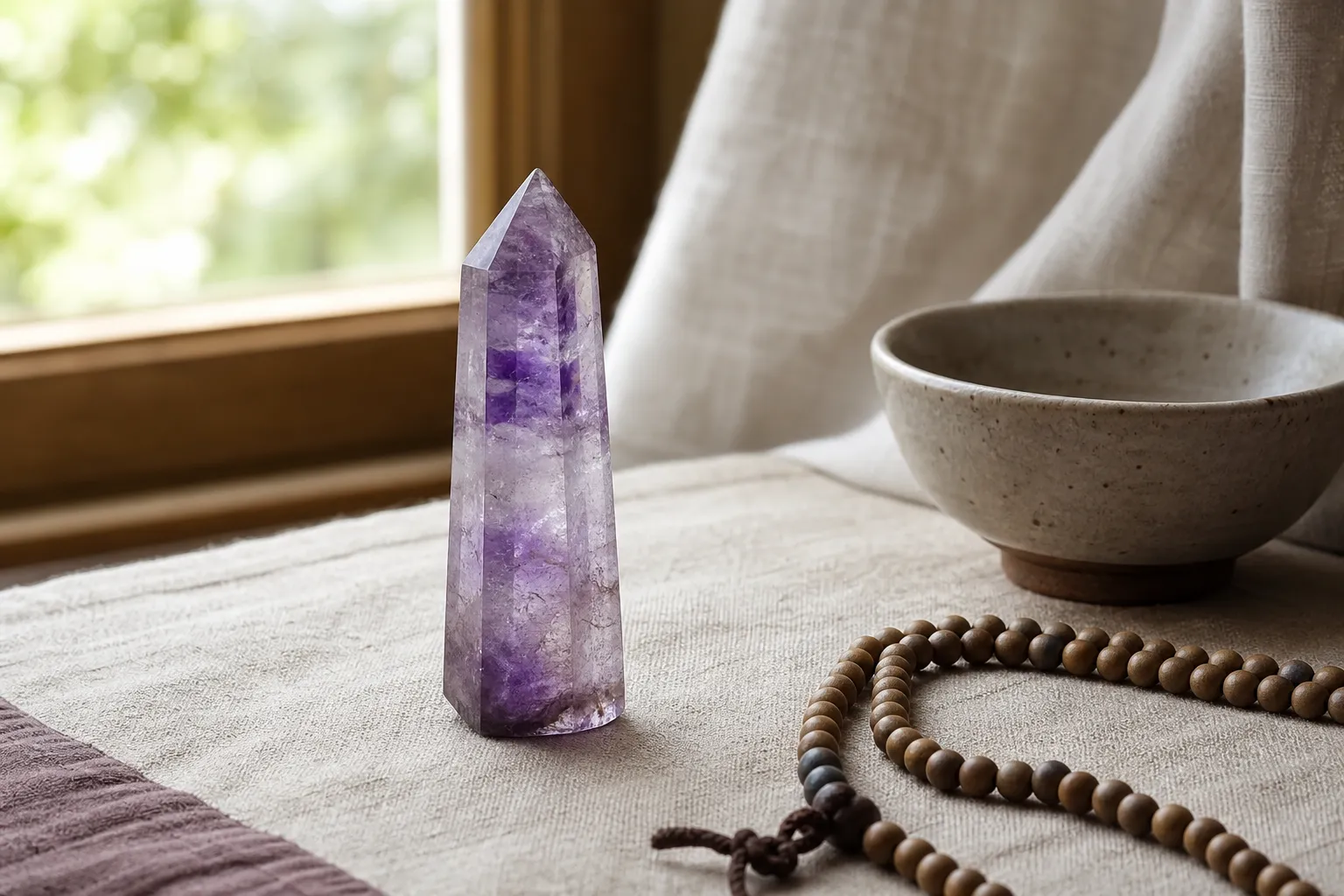
A slender Vera Cruz amethyst point does not read like a heavy purple cluster. It can look lighter, clearer, and more directional, especially when the crystal forms as a narrow point. That visual character is one reason the phrase Vera Cruz High Vibration appears so often in meditation culture.
The direct answer: “high vibration” is not a verified mineral frequency, a measured brain effect, or proof of a special physical action. It is crystal-spiritual language. Practitioners use it to describe a specimen that feels clear, refined, focused, and well suited to contemplative attention.
That distinction matters. Vera Cruz amethyst can be discussed as a quartz specimen, a meditation object, and a symbolic crystal. It should not be presented as causing theta waves, measurably activating the crown chakra, or producing a guaranteed inner state.
broader context
Broader amethyst guide
This narrower page lands better after the broader amethyst context page.
What “High Vibration” Means Here
In crystal meditation circles, “high vibration” usually points to a felt or symbolic quality rather than a measured property. The phrase often suggests lightness, clarity, refinement, and association with upper-body or spiritual themes. For Vera Cruz Amethyst meditation, it is tied to the way these crystals are commonly described: pale violet, delicate, lucid, and more visually ethereal than darker or chunkier amethyst forms.
That language can be meaningful inside a practice. A person may use a crystal as a quiet focal point, the same way another person may use a candle, breath count, mala bead, or simple image. The object helps mark attention; it does not become scientific proof of an outcome.
The most grounded reading is this: Vera Cruz amethyst is prized because its appearance and symbolism make it easy to use as a focus object. A clear point, a soft violet body, or a narrow wand-like shape can invite stillness and visual attention. The stone becomes part of a ritual setting; the claim remains cultural, not clinical.
Why Vera Cruz Amethyst Gets This Reputation
Vera Cruz amethyst sits at the meeting point of appearance, collector language, and spiritual use. The current source set does not establish detailed claims about locality, grade, formation, or physical superiority, so the safer discussion is narrower: Vera Cruz is a named identity in crystal culture, and its reputation is shaped by how these specimens are seen, described, and used.
Meditation objects are not chosen only for mineral facts. They are often chosen for how they shape attention. A slim crystal point can feel more directional than a broad cluster. A transparent or softly colored specimen may appear visually quiet. A delicate point may suit a small altar, a hand-held pause before practice, or a simple breathing ritual better than a large display piece.
This is where “laser wand” language often enters. In shops and practitioner circles, a “laser wand crystal” usually refers to a pointed, wand-like form imagined as directing energy. For this page, that phrase belongs to metaphysical and market vocabulary, not mineralogical function. The shape may be visually directional; that does not establish an energetic beam or a measurable meditation result.
The same restraint applies to rarity language. A seller may use rarity to make a Vera Cruz specimen feel more special. A collector should separate visible features and provenance questions from spiritual description. If the crystal is being considered for meditation, size, clarity, stability, and personal resonance may matter. If it is being considered as a collectible, origin and authenticity need better support than metaphysical wording.
A useful conclusion is simple: the reputation comes from the way the crystal is seen and used, not from evidence that it performs differently in the body or brain.
Theta Waves and Crown Chakra Language
Two phrases create most of the confusion around Vera Cruz High Vibration: “theta wave” and “crown chakra.” They may appear near meditation language, but they do not carry the same kind of evidence.
“Theta wave” is a neuroscience term. In broad meditation discussions, it may refer to certain brain-wave contexts or relaxed states, depending on the method and source. The current material for this page does not include credible evidence linking Vera Cruz amethyst to theta-wave production. So the article cannot responsibly say that holding or viewing this crystal creates a specific brain state.
The better wording is narrower: some crystal-meditation language borrows terms such as theta wave to make inner experience sound more scientific. Without direct support, that borrowing is a misconception risk.
“Crown chakra” belongs to spiritual and metaphysical vocabulary. In many modern crystal settings, amethyst is associated with upper chakras, intuition, contemplation, and spiritual awareness. For Vera Cruz amethyst, crown chakra language may describe why the stone is chosen for meditation or altar placement. It should stay belief-framed unless a specific cultural or tradition-based source is supplied.
The boundary is clarifying, not dismissive. Crown chakra language can matter inside a spiritual practice. It is not neurological evidence, a health-outcome claim, or an authentication method for a crystal.
The terms can stay in the conversation; they should not carry claims they cannot support.
What Can Change the Answer
The answer depends on what “prized” means.
In meditation culture, Vera Cruz amethyst may be prized because it fits a symbolic mood: light, quiet, elevated, precise. In collecting, it may be prized for specimen identity, crystal habit, condition, or documented origin. In a home setting, it may be valued because pale violet color and pointed form create a calm visual atmosphere.
Those are different judgments. A practitioner may choose the crystal because it marks the beginning of practice. A collector may ask whether the specimen is accurately represented. A home-aesthetic reader may care most about scale, placement, and the way the purple tone works with light. None of those uses requires a promise of a spiritual, physical, or neurological result.
A practical way to sort the language
- If a statement describes appearance, shape, or use as a meditation focus, it may be reasonable as a general observation.
- If it describes belief, chakra association, or practitioner preference, it should be labeled as spiritual language.
- If it describes brain waves, health outcomes, or guaranteed effects, it needs strong evidence that this page does not have.
- If it describes origin, rarity, or authenticity, it needs collector-level support rather than metaphysical vocabulary.
This sorting keeps the answer from becoming either flat debunking or uncritical belief. Vera Cruz amethyst can be meaningful in meditation without being treated as a scientific instrument.
Common Misunderstandings
The first misunderstanding is treating “high vibration” as a measurable number. In this setting, the phrase is better understood as cultural shorthand. It gathers impressions of clarity, refinement, spiritual attention, and ritual preference. It does not identify a confirmed physical frequency that separates Vera Cruz amethyst from other amethyst.
The second is assuming that a more delicate-looking specimen must be more powerful. A slender point may feel elegant or focused to a practitioner, but that is an interpretive response. In collector literacy terms, appearance can support appreciation; it should not be converted into performance language.
The third is using theta wave context as a shortcut to credibility. Meditation and brain activity are complex topics, and a broad neuroscience term does not automatically validate a crystal claim. Without a direct source connecting Vera Cruz amethyst meditation to measured theta-wave changes, no such link is established here.
The fourth is treating crown chakra language as universal or self-proving. Chakra terms are used across varied spiritual and modern metaphysical settings. A crystal page can acknowledge that vocabulary without presenting it as an objective effect.
The final misunderstanding is letting “laser wand” do too much work. A pointed crystal can be visually directional and symbolically useful in ritual. Shape can support practice as an object of attention; it does not verify a hidden function.
A Careful Way to Say It
The cleanest wording keeps three layers separate.
Specimen Layer
Color impression, transparency, point shape, surface condition, size, and how the crystal sits in a room or in the hand. These visible details matter because they support careful attention rather than vague enthusiasm.
Practice Layer
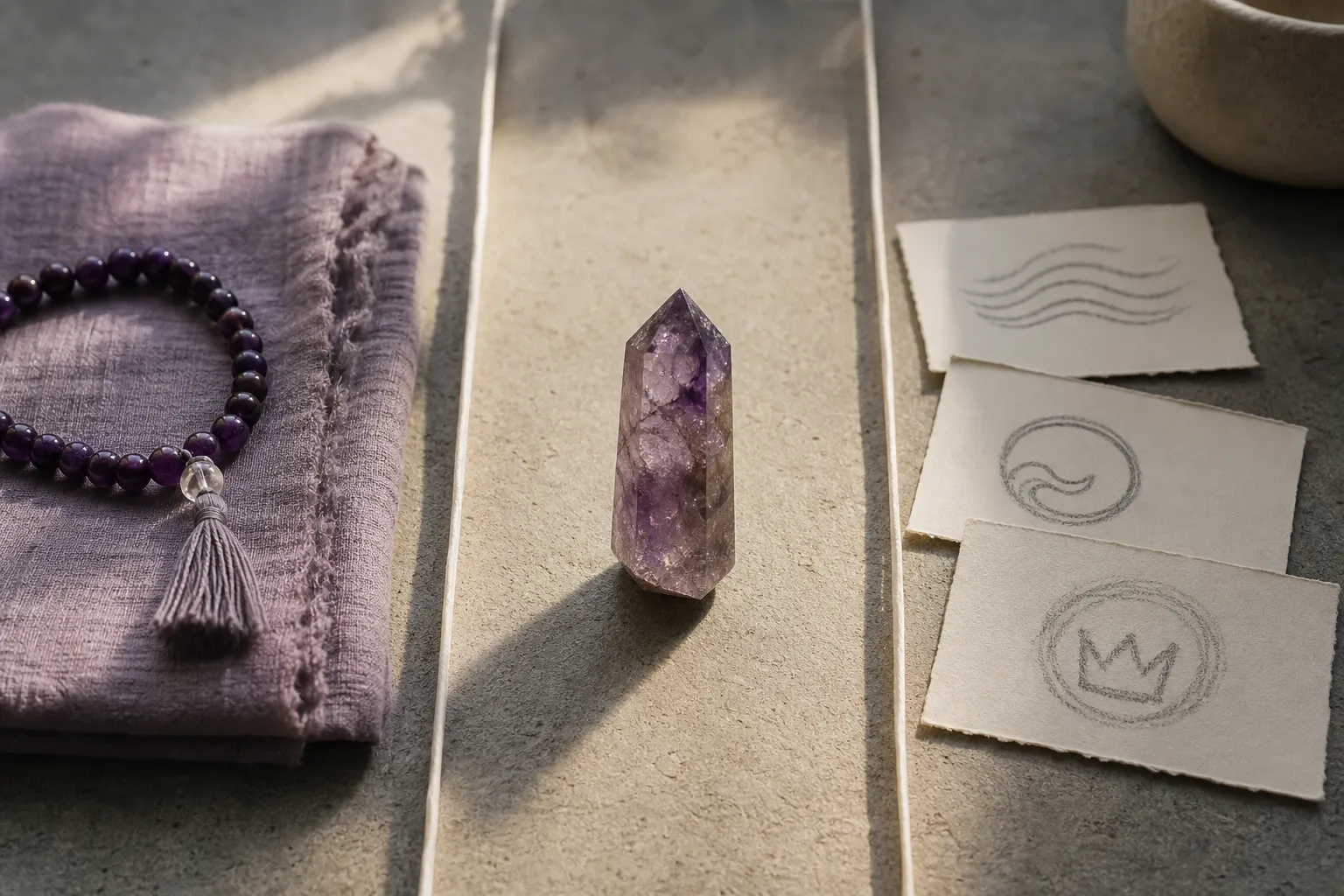
A person may place the crystal near a cushion, hold it briefly before meditation, or use it as a visual reminder to return to the breath. The crystal is part of the setting, not proof of a result.
Symbolic Layer
This is where phrases such as Vera Cruz High Vibration, crown chakra, and laser wand belong. They can describe intention, meaning, and tradition-shaped imagination. They should be phrased as “many practitioners describe,” “within crystal-spiritual language,” or “in metaphysical use,” rather than as verified fact.
“In crystal meditation culture, Vera Cruz amethyst is often described as high vibration because its pale, pointed, visually clear form is associated with refined attention and crown chakra symbolism.”
That sentence respects the vocabulary and keeps the claim in the right lane.
So, Why Is Vera Cruz Amethyst Prized?
Vera Cruz amethyst is prized in meditation culture because it gives practitioners a strong symbolic object: a purple quartz specimen associated with clarity, vertical attention, and refined spiritual language. Its pointed or wand-like forms can feel visually focused, and its place in crystal vocabulary makes it easy to connect with crown chakra themes.
The evidence-limited answer is just as important: the current source set does not support claims that Vera Cruz amethyst causes theta waves, changes brain activity, measurably activates chakras, or produces reliable meditation outcomes. “High vibration” is best read as practitioner language, not scientific proof.
For a spiritually curious reader, that boundary does not empty the crystal of meaning. It places meaning where it belongs. Vera Cruz amethyst can be chosen as a meditation companion because its form, color, and symbolism help shape attention. For a collector, it remains a specimen first: something to observe carefully, describe honestly, and keep separate from claims that outrun the evidence. Crystals should also not replace professional medical, psychological, or mental-health care.