Jewelry care app
Digital Care Mapping: Automating Your Jewelry Maintenance and Cleaning Schedules
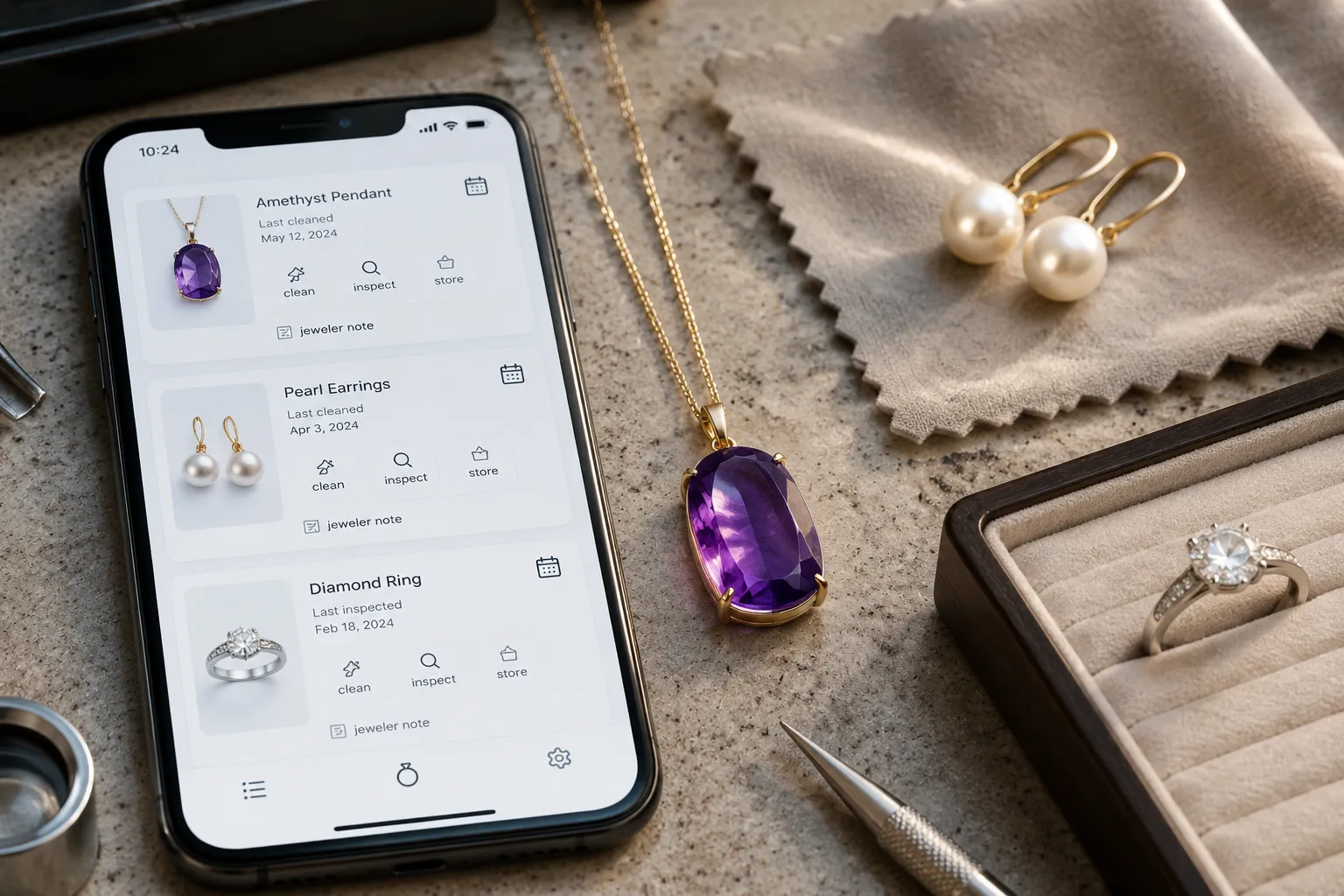
An amethyst ring with visible color zoning, a pearl earring with a delicate surface, and a diamond solitaire with tiny prongs should not receive the same care prompt. A Jewelry care app becomes useful when it gives each item its own digital care map: what the piece is, how it is worn, which care methods are allowed or avoided, when it was last checked, and what should happen next.
The direct answer: use the app to automate the remembering, not the judgment. Cleaning, inspection, storage, documents, and professional service should be separate, configurable reminders tied to the individual piece. Gem identity, treatment history, setting condition, and jeweler instructions still decide the care method.
broader context
Begin with the main amethyst page
This narrower page lands better after the broader amethyst context page.
What a digital care map should store
A digital care map is more than a calendar note that says “clean ring.” It is a jewelry asset record with care limits attached. The more specific the record, the less likely a reminder becomes a one-size-fits-all instruction.
For each piece, include the details that affect care:
Identity and visible record
- Piece name and photos: “Amethyst silver pendant,” “grandmother’s brooch,” “engagement ring,” or another label you will recognize quickly.
- Gemstone identity: amethyst, diamond, pearl, emerald, unknown stone, mixed gems, or “needs confirmation.”
- Metal and setting type: sterling silver, gold, platinum, prongs, bezel, pavé, glued component, antique mounting, or other visible details.
Care limits and history
- Treatment or uncertainty notes: known treatment, unknown treatment, fragile surface, heat sensitivity concern, or “ask jeweler before cleaning.”
- Wear habits: daily wear, occasional wear, formal wear, travel use, or storage-only.
- Care method notes: gentle at-home cleaning, polishing cloth only, storage check only, no soaking, no steam, no ultrasonic cleaner unless confirmed, or jeweler-only cleaning.
- Dates and status: last cleaned, last inspected, next due, overdue, completed, snoozed, or postponed.
- Documents: receipt, appraisal, insurance information, repair notes, jeweler comments, and condition photos.
This is where asset management becomes practical for jewelry. The app is not simply counting days. It is preserving context: what the item is made of, what is known, what is uncertain, and what should trigger professional attention.
For an amethyst pendant, the map might include its quartz identity, silver chain, pendant setting, last gentle cleaning, and a storage reminder. For an heirloom brooch with unknown stones, the map should be more cautious: document photos, avoid home-cleaning instructions, and set a professional inspection reminder before wear.
The reminders that make the map useful
Jewelry maintenance is not one task. Cleaning, inspection, storage, and documentation each answer a different need.
| Reminder type | What it helps you remember | When caution matters |
|---|---|---|
| At-home cleaning reminder | Wipe, rinse, brush, or clean only by the method already marked for that item | If the gemstone, treatment, setting, or surface is uncertain |
| Jewelry inspection reminder | Check for loose stones, bent prongs, worn clasps, cracks, or visible damage | If anything looks loose or damaged, stop wearing and ask a jeweler |
| Professional cleaning reminder | Schedule cleaning or service with a jeweler | Especially for complex, valuable, antique, or sentimental pieces |
| Storage check | Confirm the item is dry, separated, padded, and not rubbing against harder materials | Useful for pearls, soft materials, silver, and mixed collections |
| Document review | Update photos, receipts, appraisal records, or insurance notes | Important after repair, resizing, inheritance, or purchase |
| Method confirmation | Ask whether ultrasonic, steam, soaking, or polishing is appropriate | Necessary when compatibility is unknown |
Public care guidance from GIA, GIA 4Cs, AGS, and Jewelers of America supports the broader care boundary: gemstone identity, treatments, setting condition, and professional guidance matter before choosing a method. In a digital care map, that principle becomes a flag, not a lecture.
Useful prompts might read:
- “Clean gently with approved method.”
- “Check prongs before wearing.”
- “Storage check only.”
- “Review appraisal and insurance record.”
- “Confirm gemstone identity before cleaning.”
- “Do not use ultrasonic cleaner unless jeweler has confirmed compatibility.”
- “Stop wearing until inspected.”
That last prompt matters. If a stone feels loose, a prong catches on fabric, or a setting looks bent, the app should not push a routine cleaning task. It should move the item into an inspection pathway.
Cleaning schedules should be configurable, not universal
Commercial jewelry-care language often mentions weekly cleaning, six-month professional cleaning, annual inspection, and similar intervals. Those phrases are familiar because they match how people think about shine, loose settings, heirloom care, and service visits. They should be treated as starting templates, not universal rules.
A configurable cleaning schedule can reflect:
- How often the item is worn
- Whether it touches skin, lotion, soap, perfume, or hair products
- Whether the setting has small stones or delicate prongs
- Whether the piece is antique, repaired, glued, hollow, plated, or mixed-material
- Whether the gemstone is known, treated, porous, fractured, heat-sensitive, or uncertain
- Whether a jeweler has given item-specific instructions
A diamond ring worn daily may need more frequent attention than a pendant stored most of the month. A silver chain may need a tarnish-related reminder rather than a gemstone-cleaning reminder. A pearl strand, opal ring, or mixed-gem antique piece should not be pushed into the same workflow as a simpler, more durable item.
For amethyst jewelry, the app should still avoid overconfidence. Amethyst is a quartz variety, but jewelry care depends on more than mineral name. Setting condition, surface wear, metal, treatments, adhesives, and neighboring stones can all change the right action. The record should say what you know; it should also preserve what you do not know.
That is the quiet strength of a digital care map: it stores exceptions beside dates.
Where ultrasonic cleaner caution belongs
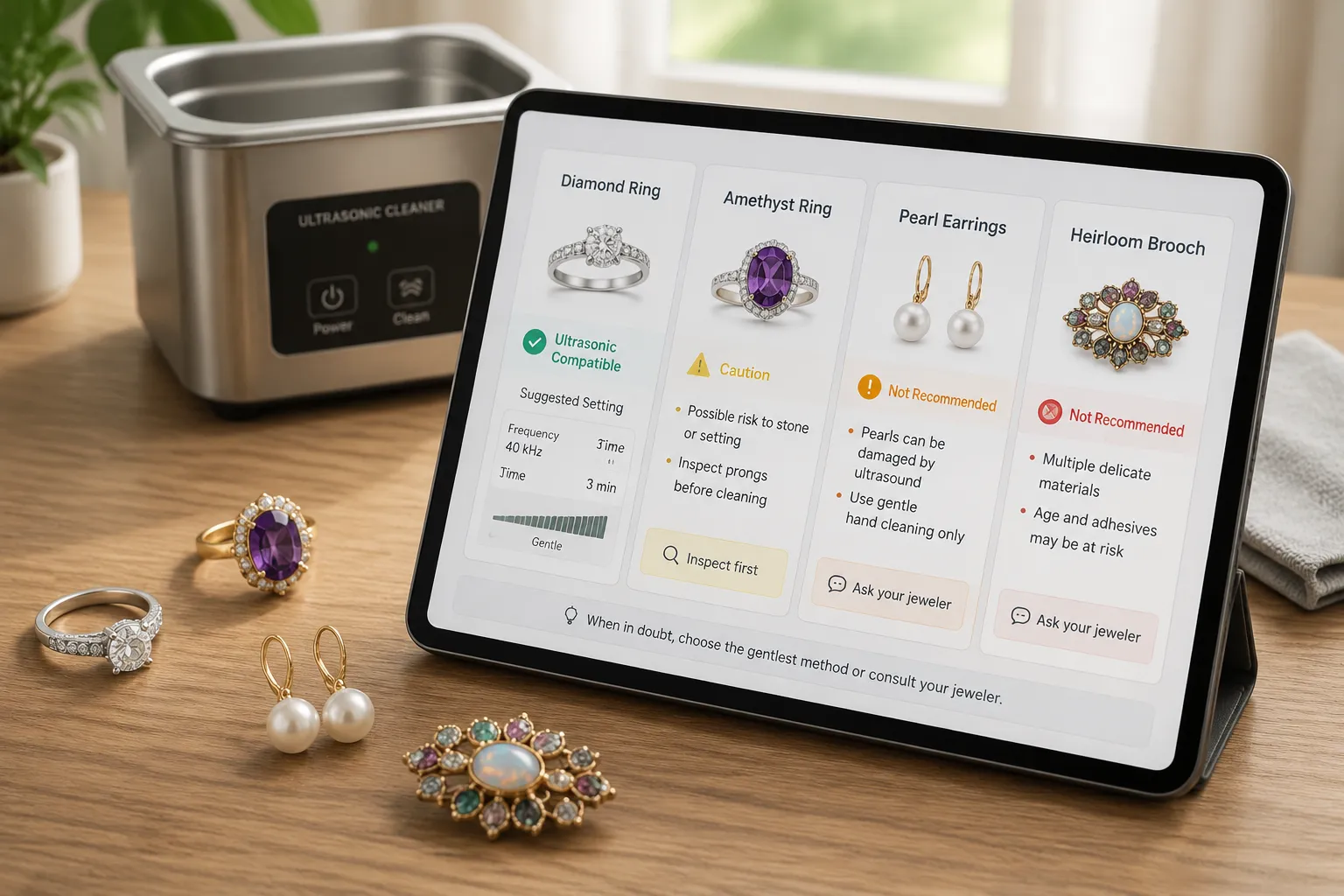
Ultrasonic cleaners create one of the most common jewelry-care misunderstandings. Many owners want a simple list of stones that are always compatible or always incompatible. A better app design is conditional: ultrasonic cleaning should be an opt-in care method only after compatibility has been confirmed for that specific item.
GIA’s public guidance describes ultrasonic use as dependent on gemstone type, treatments, inclusions, and setting condition. The same visible jewel can carry hidden variables: a loose stone, a filled fracture, a fragile mounting, adhesive, or an unknown treatment history. A piece may look sturdy and still deserve a professional check before vibration-based cleaning.
In a jewelry care app, this belongs as a material sensitivity reminder, not as a generic warning banner on every item:
Diamond ring with confirmed compatible setting
Ultrasonic reminder may be allowed if jeweler guidance supports it.
Amethyst ring with unknown setting condition
Mark “confirm before ultrasonic” rather than scheduling machine cleaning.
Pearl earrings
Avoid generic machine-cleaning prompts; use storage, wipe-down, or jeweler-guided care notes.
Heirloom brooch with mixed stones
Set professional inspection and documentation reminders before cleaning.
The point is not fear of tools. It is matching the tool to the item, with uncertainty made visible before a method is chosen.
How document storage changes jewelry maintenance
Jewelry care is often discussed as shine, but maintenance also includes memory, ownership records, repair history, and insurance paperwork. A digital care map can hold the details that are easy to misplace: receipts, appraisal documents, insurance notes, resizing records, stone replacement notes, and photographs taken before repair or travel.
This is especially useful for heirloom pieces and collector jewelry. Sentimental value does not always arrive with complete paperwork. If a ring was inherited, the app can store what is known: family note, documented age if available, jeweler inspection date, gemstone uncertainty, and photos of the setting. If the material is not confirmed, the record should say so plainly.
For amethyst collectors, document storage can also separate visible evidence from seller language. A listing may describe rarity, origin, treatment, or spiritual symbolism, but those claims are not the same as confirmed identification. The app can keep seller notes in one place while leaving care decisions tied to confirmed material information and jeweler guidance.
Useful document reminders include:
- “Photograph item after cleaning or repair.”
- “Upload appraisal document.”
- “Review insurance note.”
- “Record jeweler’s inspection comments.”
- “Mark gemstone identity as confirmed or unknown.”
- “Update condition photos before travel.”
This turns the app into more than a cleaning scheduler. It becomes a record of stewardship.
Common misunderstanding: the app reminds, but the jeweler still judges
The main misunderstanding is expecting the app to know what is appropriate for every piece. A reminder tool can store instructions, repeat intervals, overdue status, photos, notes, filters, categories, and completion history. It can show which pieces have been neglected and make professional cleaning reminders easier to keep.
It does not identify a gemstone by itself, verify treatments, tighten prongs, or decide that an ultrasonic cleaner is appropriate.
A well-built jewelry care app should therefore include decision points:
- If the gemstone is unknown, create an identification or jeweler reminder before cleaning.
- If a stone is loose, create a stop-wearing and inspection reminder.
- If the setting is damaged, skip routine home cleaning and schedule service.
- If the care method is unconfirmed, mark the task as “verify first.”
- If the piece is sensitive, set storage or documentation reminders instead of aggressive cleaning tasks.
This matters for mixed collections: a daily ring, a silver chain, an amethyst pendant, pearl earrings, a watch, and an inherited brooch do not share one maintenance personality. They share an owner. The app’s job is to keep that owner from relying on memory alone.
A simple setup pattern for a jewelry care app
Start with the pieces where a missed reminder would matter most: daily-wear rings, sentimental heirlooms, valuable pieces, fragile gems, and anything with uncertain materials.
For each item, create one record and assign only the reminders that fit:
- 1. Identify the piece. Add name, photos, gemstone, metal, setting, and uncertainty notes.
- 2. Separate care actions. Do not combine cleaning, inspection, storage, and documents into one vague task.
- 3. Choose intervals as placeholders. Weekly, monthly, semiannual, or annual prompts are only starting points unless a jeweler has given item-specific timing.
- 4. Add care flags. Note “no ultrasonic,” “ask first,” “storage only,” “jeweler cleaning,” or “check prongs.”
- 5. Use status tracking. Mark tasks as upcoming, overdue, completed, or postponed so neglected pieces become visible.
- 6. Keep a history. Completion history and jeweler notes help you see patterns, such as a clasp that repeatedly needs repair.
The most useful version of this system is not the busiest one. It is the one that prevents a generic “clean jewelry” reminder from becoming the wrong instruction for a specific piece.
A digital care map works best when it treats every jewel as a material object with its own limits, records, and history. Let the app carry the dates, photos, overdue prompts, and paperwork; let confirmed care guidance and a jeweler’s inspection shape the method. That keeps the amethyst pendant, the heirloom brooch, and the daily ring in the same calendar without pretending they need the same care.