Collection traceability
The Future of Traceability: How NFC-Enabled Smart Packaging Protects Your Collection's Value
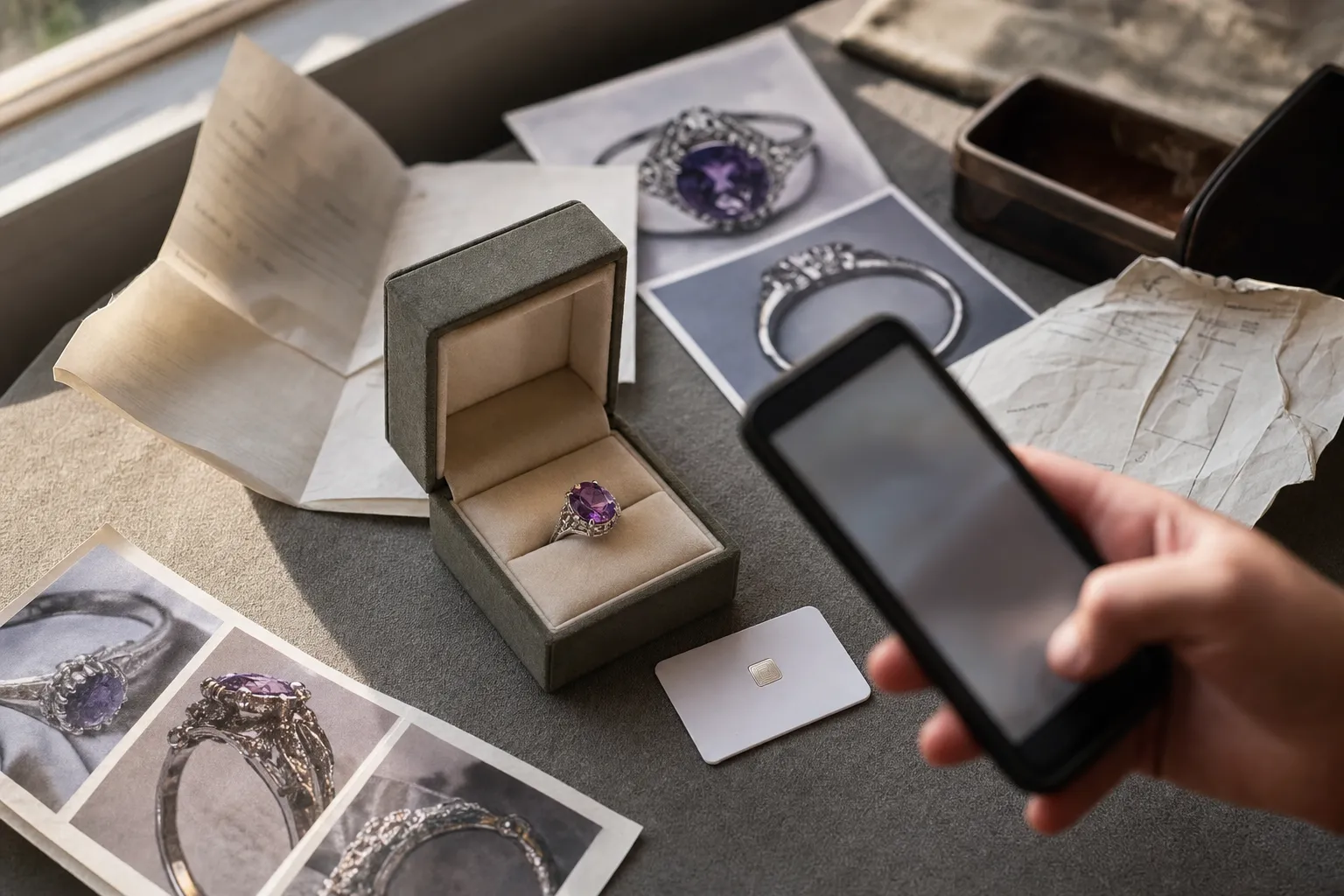
A fine amethyst ring can hold visible clues in its color zoning, setting, wear, and workmanship. Its supporting story often lives elsewhere: a receipt, a certificate, a repair note, a photo folder, or a family memory. NFC jewelry tracking may help by linking the physical jewel, box, card, or tag to jewelry digital records that are easier to find when the collector needs them.
That is the real form of protection here: not guaranteed authenticity, security, insurance acceptance, or resale value, but better access to the records that help people understand a piece. NFC-enabled smart packaging can keep documentation, care notes, and ownership context closer to the object. Its usefulness depends on what the record contains, who created it, how clearly it is labeled, and whether future buyers, appraisers, insurers, or family members can read it without guessing.
broader context
Begin with the main amethyst page
This narrower page lands better after the broader amethyst context page.
What NFC Smart Packaging Can Actually Do for Jewelry
NFC smart packaging is a bridge between a physical jewelry object and a digital record. A small NFC chip in a box, card, tag, or display component can be scanned by a compatible phone. The scan may open a digital page, item profile, storage folder, or platform record connected to that piece.
For a jewelry owner, that linked record may organize practical material such as:
- Jewelry certificate records for a gemstone, metal, maker, or purchase.
- Jewelry provenance notes, including where and when the item was acquired.
- Jewelry care information, such as cleaning cautions, storage preferences, and repair history.
- Photos of hallmarks, inclusions, prongs, clasps, color shifts, and surface wear.
- Jewelry ownership history, when that history is known and responsibly described.
- Collection management workflows, such as inventory notes, appraisal reminders, or display location.
This is where “protects your collection’s value” needs a careful reading. The NFC chip does not create value by itself. It may help protect the context around value by reducing the chance that important records become separated from the jewel. For an amethyst pendant, that might mean keeping treatment notes, setting details, and care cautions near the piece instead of scattered across email, paper folders, and old photo albums.
That is useful collector literacy, not proof. A digital record is only as strong as the information placed inside it.
Record Access Is Not Authentication
The common misunderstanding is easy to see. A jewel with a smart tag, digital passport, or polished scan page can feel more certain than one with loose paperwork. But NFC jewelry tracking does not, by itself, show that a gemstone is natural, that a metal mark is accurate, that a designer attribution is correct, or that an antique history is true.
NFC can point to information. It does not inspect the stone, test the metal, evaluate a maker’s mark, or settle ownership. If a record says an amethyst is untreated, the important question is not whether the statement appears on a digital page. The question is who made the statement, what supports it, and whether the underlying document can stand on its own.
This distinction matters for collectors who care about both authenticity and atmosphere. A purple quartz jewel may be loved for its presence in a room or its personal meaning, but a purchase still asks for practical judgment: material identity, setting condition, repairs, treatments, and seller claims. Smart packaging can keep those questions together. It cannot answer all of them.
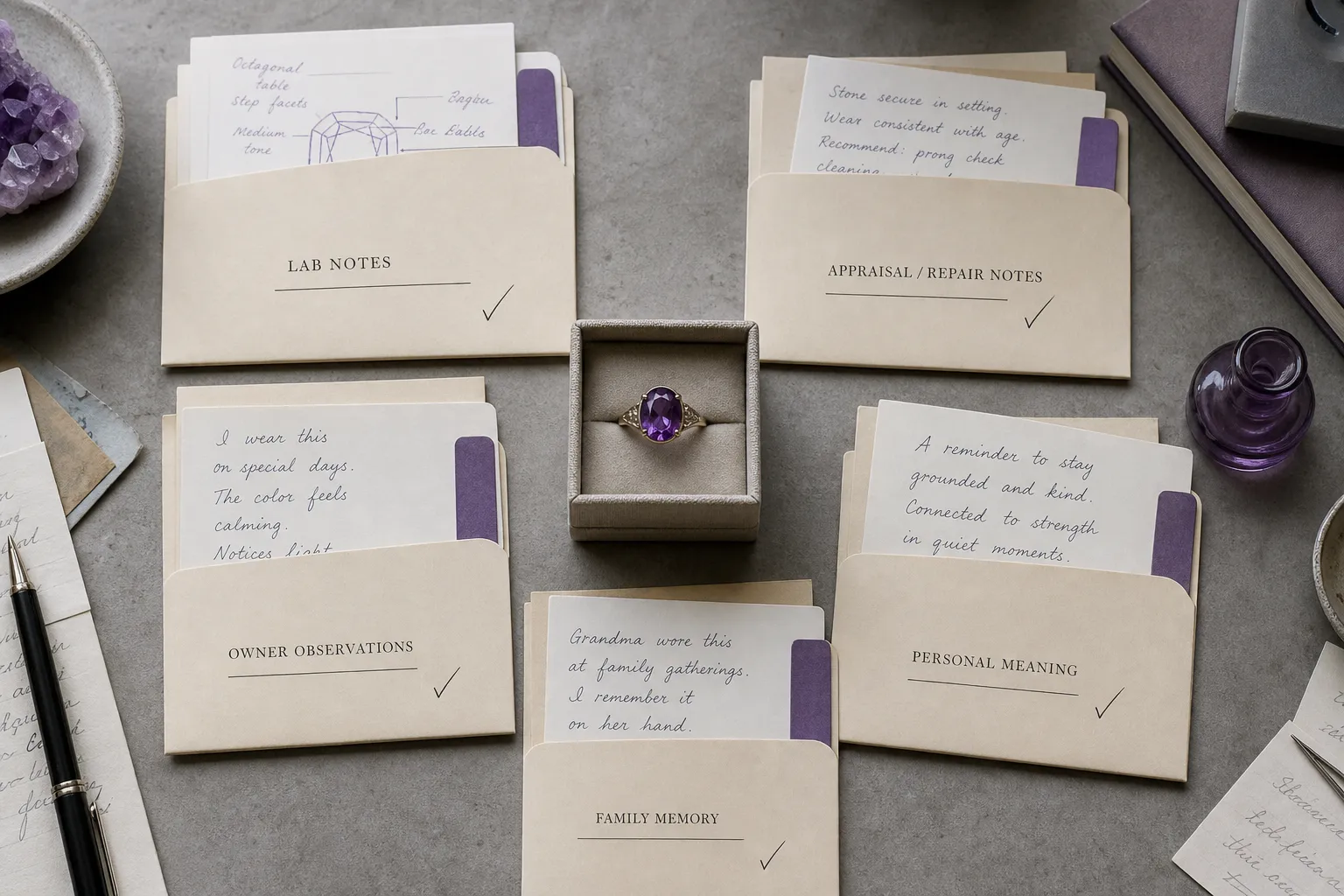
A good physical jewelry digital record should label its sources plainly. “Seller description,” “owner note,” “laboratory document,” “appraisal note,” “repair record,” and “family history” should not be blended into one confident story. The clearer the categories, the more useful the record becomes.
Digital Twins, Blockchain Authenticity, and Their Limits
Two phrases often appear around NFC smart packaging: digital twin and blockchain authenticity. Both can sound more final than they are.
Digital twin
A digital twin, in this jewelry context, is a structured digital profile for a physical item. It may include images, identifiers, documents, care notes, purchase information, repair history, and owner-entered details. For a collection with multiple rings, pendants, bracelets, loose stones, or inherited pieces, that profile can give each object a digital place to live.
But a digital twin is still a record about the jewel, not the jewel itself. If the first profile contains vague or weak information, the digital twin preserves that weakness. If it is built from credible documents, detailed photos, and dated notes, it becomes more useful as a collection file.
Blockchain authenticity
Blockchain authenticity has a related limit. A blockchain-style record may be described as difficult to alter after information is entered, but that does not mean the original information was accurate. A durable record of an unsupported claim remains an unsupported claim. The value depends on the checking process before the entry, not on the technology label alone.
Digital product passport
Digital product passports raise similar expectations. Broadly, they describe digital records attached to products, often with information about identity, materials, history, or care. For jewelry collectors, the appeal is clear: the object and its story often drift apart. Without specific platform documentation or independent review, though, a digital passport should be treated as a recordkeeping format rather than an authority.
The collector’s rule is simple: the technology can organize a trail; it cannot make every step in that trail trustworthy.
When NFC Packaging Supports Collection Value Best
NFC-enabled packaging works best when it strengthens habits a careful owner already needs. It is most useful as part of a documentation routine, not as a decorative smart feature.
An NFC-linked profile may help a jewelry owner retrieve purchase details before a resale conversation, show care instructions before cleaning, locate repair notes before visiting a jeweler, or compare old photos with the current condition of prongs, clasps, and surface wear. For an amethyst ring, it may keep color photos, setting information, and care cautions together, especially because amethyst is often discussed through both material observation and personal symbolism.
The answer changes when the records are thin. If the NFC scan opens a beautiful page with broad claims and no documents, the packaging adds presentation more than substance. If it links to dated photos, item descriptions, receipts, appraisal notes, relevant certificate records, repair invoices, and owner updates, it becomes a stronger collection file.
A smart jewelry box can play a similar role if it connects storage with inventory. The box itself should not be treated as a security system unless its specific design and documentation support that use. Its simpler value is organization: helping an owner remember what is stored where, which records belong to which piece, and what care information should stay close to each item.
Inherited or sentimental jewelry needs extra labeling discipline. A family note can be meaningful, but it should be marked as family history rather than formal provenance. A spiritual association with amethyst can be personally important, but it should not be treated as material evidence. Keeping those categories distinct protects both sides of the object: the specimen and the symbol.
Questions to Ask Before You Trust the Record
Because this article does not have usable public reference links for specific NFC platforms, independent owner testing, jewelry-insurance acceptance, or technical performance claims, the answer should stay narrow. NFC smart packaging may support record access and collection organization. It should not be presented as protection against counterfeit goods, loss, theft, disputed ownership, rejected insurance claims, or weak resale interest.
Before relying on any NFC-linked jewelry record, ask:
- Who created the record: the seller, owner, platform, jeweler, appraiser, or another party?
- What does it contain: documents, photos, care notes, claims, or marketing language?
- Can the important files be downloaded, printed, or preserved outside the platform?
- Does the profile separate documented records from owner memories or seller descriptions?
- What happens if the NFC chip, box, app, website, or account stops working?
- Is the physical item matched to the profile through photos, marks, measurements, or other identifiers?
These questions are the practical heart of traceability. A collection’s story becomes more resilient when it can survive a lost box, a changed phone, a closed platform, or a future owner who does not know the original context.
For higher-stakes decisions, smart packaging should sit beside ordinary due diligence. Appraisals, insurance requirements, authentication reviews, purchase agreements, and legal ownership questions each have their own standards and decision-makers. An NFC-linked profile may help gather materials for those conversations, but it does not decide their outcome.
A Grounded Way to Use NFC Jewelry Records
Treat NFC packaging as the front door to a collection file. The scan should lead to organized information, while essential records should also exist in durable backup form.
For each significant piece, a jewelry owner can keep a simple structure: item photos, identifying details, purchase or inheritance notes, care information, certificate records when available, repair history, and dated updates. If the piece is amethyst, the notes might include color observations, setting metal, known treatment statements, cleaning cautions, and a clear separation between material facts and personal meaning.
That last distinction matters on a site where amethyst is often approached through collecting, care, and inner life. A ring may be chosen for memory, beauty, meditation, or room atmosphere. Those meanings can be recorded with respect, but they should not be used as evidence of origin, quality, or market strength.
The future of traceability is not a chip replacing judgment. It is a better path back to the records a careful owner already needs. NFC-enabled smart packaging can protect the usefulness of a collection’s story when it keeps documents, provenance notes, care details, and ownership context close to the jewel. The stone, the setting, the paperwork, and the personal meaning still need to be read separately; that is where collector discernment keeps its value.